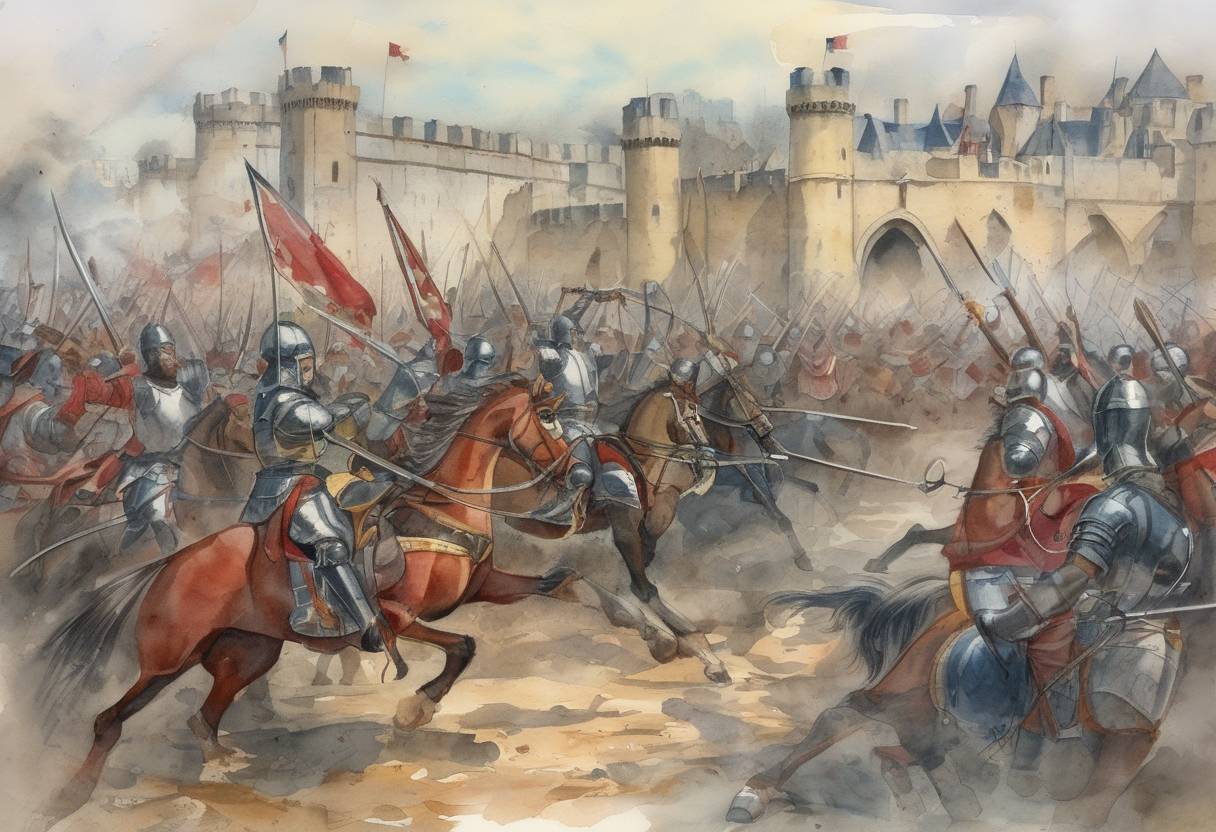
The Battle of Poitiers: September 19, 1356
The Battle of Poitiers, a pivotal conflict during the Hundred Years’ War, occurred on September 19, 1356. This battle was marked by the decisive victory of the English forces, led by Edward, the Black Prince, over the French army commanded by King John II of France. The outcome of this battle had significant implications for the course of the war and the political landscape of medieval Europe.
Context and Prelude
The Hundred Years’ War (1337-1453) was a protracted series of conflicts between the Kingdom of England and the Kingdom of France, primarily over claims to the French throne and territorial disputes. By the mid-14th century, the war had seen several phases of intense military engagement.
In 1355, Edward, the Black Prince, the eldest son of King Edward III of England, launched a series of raids known as chevauchées across southern France. These raids aimed to weaken French morale and economic stability. By 1356, the Black Prince had led his forces northward, threatening the French heartland.
The Battle
Forces Involved
- English Army: Commanded by Edward, the Black Prince, the English forces numbered around 6,000 men, including longbowmen, men-at-arms, and mounted troops.
- French Army: Led by King John II, the French army was significantly larger, estimated at around 11,000 to 12,000 troops, comprising knights, infantry, and crossbowmen.
The Engagement
The battle took place near the city of Poitiers in western France. The English forces, though outnumbered, were strategically positioned on a ridge, utilizing natural defenses and the effective use of longbowmen to counter the French cavalry charges.
Initial Skirmishes: The French attempted to engage the English with cavalry charges, but the English longbowmen inflicted heavy casualties, disrupting the French formations.
Main Assault: King John II ordered a full-scale assault. However, the English defensive position and tactical use of terrain led to the fragmentation of the French attack.
Capture of King John II: In the chaos of battle, King John II and his youngest son, Philip, were captured by the English. This capture was a significant blow to French morale and leadership.
Aftermath and Consequences
- Ransom and Treaty: King John II’s capture led to the Treaty of Brétigny in 1360, where France ceded territories to England and agreed to a substantial ransom for the king’s release.
- Impact on France: The defeat exacerbated internal strife within France, leading to political instability and economic hardship.
- English Prestige: The victory at Poitiers bolstered English prestige and military reputation, enhancing the Black Prince’s status as a formidable military leader.
Broader Historical Significance
The Battle of Poitiers was a critical moment in the Hundred Years’ War, demonstrating the effectiveness of English military tactics, particularly the use of longbowmen. It underscored the vulnerabilities of traditional knightly warfare against more flexible and strategically adept forces. The battle also highlighted the shifting dynamics of medieval warfare and the growing importance of infantry and ranged weaponry.
In summary, the Battle of Poitiers was not only a significant military victory for England but also a turning point that influenced the political and military strategies of both nations in the years that followed.