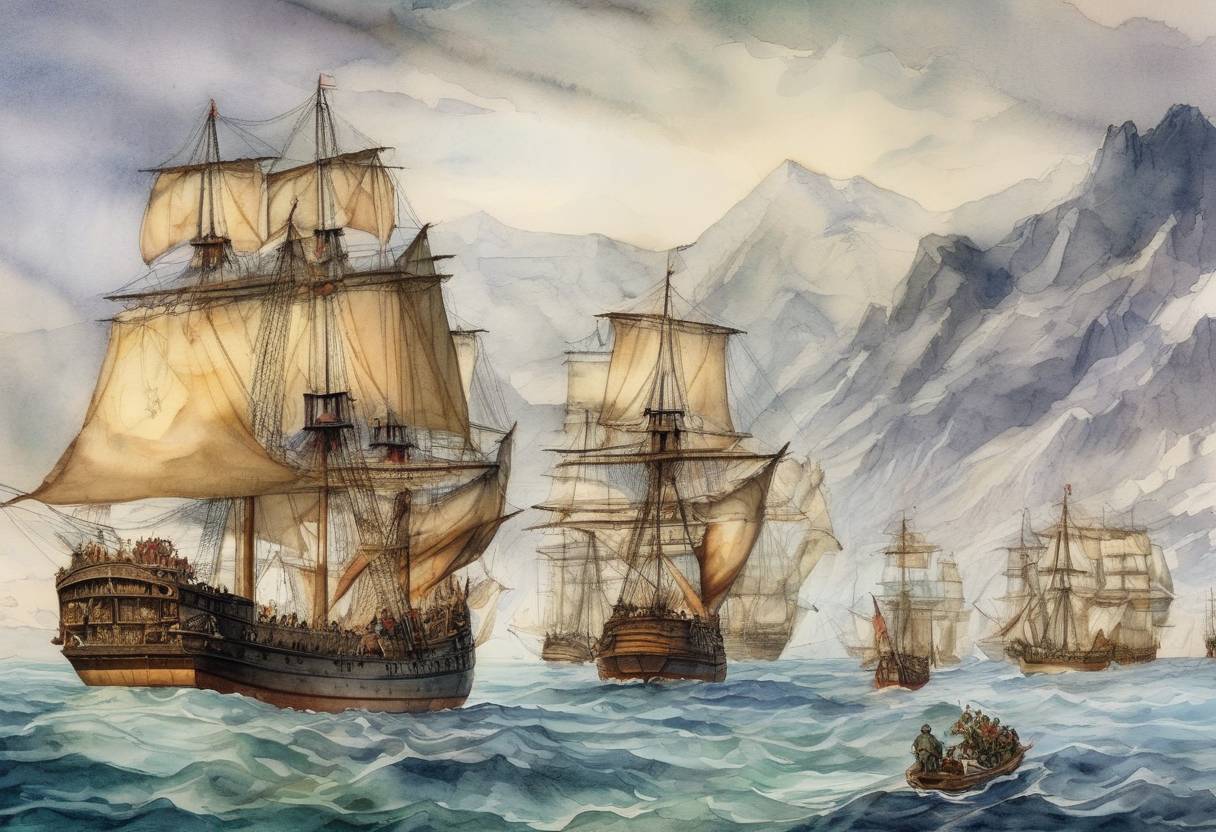
Ferdinand Magellan and the First Navigation of the Strait of Magellan
On November 28, 1520, the Portuguese explorer Ferdinand Magellan and his fleet achieved a significant milestone in the Age of Exploration by completing the first navigation of the strait that would later bear his name, the Strait of Magellan, and entering the vast expanse of the Pacific Ocean.
Background
Ferdinand Magellan, born in Portugal around 1480, was a skilled navigator and sailor. He sought to find a westward route to the Spice Islands (the Moluccas) for Spain, as the eastern route was dominated by the Portuguese. In 1519, under the patronage of King Charles I of Spain (later Holy Roman Emperor Charles V), Magellan set sail with a fleet of five ships: the Trinidad, San Antonio, Concepción, Victoria, and Santiago.
The Journey to the Strait
The fleet departed from Seville in September 1519 and faced numerous challenges, including mutinies, harsh weather, and difficult navigation. After crossing the Atlantic Ocean and navigating the coast of South America, Magellan’s expedition sought a passage through the continent to reach the Pacific Ocean.
Discovery and Navigation of the Strait
In October 1520, Magellan’s fleet entered what is now known as the Strait of Magellan, a natural passage located at the southern tip of South America. The strait is approximately 570 kilometers (350 miles) long and is characterized by its complex network of channels and fjords, making navigation challenging.
The fleet spent over a month navigating the strait, enduring treacherous waters and unpredictable weather. On November 28, 1520, they successfully emerged from the strait into the Pacific Ocean. This marked the first recorded navigation of the strait, proving the existence of a westward maritime route from the Atlantic to the Pacific.
Significance and Aftermath
The successful navigation of the Strait of Magellan was a monumental achievement in the history of exploration. It opened a new maritime route that would later be used by explorers and traders, significantly impacting global trade and exploration.
Magellan’s expedition continued across the Pacific Ocean, facing immense hardships, including scurvy and starvation. Although Magellan himself was killed in the Philippines in 1521, his fleet, under the command of Juan Sebastián Elcano, completed the first circumnavigation of the Earth in 1522, proving the world was round and interconnected.
The discovery of the Strait of Magellan and the subsequent circumnavigation had profound implications for European exploration, leading to increased interest in global navigation and the eventual establishment of trade routes that connected the continents.
Conclusion
Ferdinand Magellan’s navigation of the strait that now bears his name was a pivotal moment in the Age of Exploration. It demonstrated the feasibility of a westward route to Asia and laid the groundwork for future explorations, significantly altering the course of world history.