The Burning of The Globe Theatre - June 29, 1613
1613 · London, England
The Globe Theatre in London, associated with William Shakespeare, burned down after a cannon shot during a performance of Henry VIII ignited the thatched roof.
December 8, 1660
The first actress to appear on an English public stage, Margaret Hughes, performed as Desdemona in a production of Shakespeare's 'Othello'.
London, England | Theatre Royal
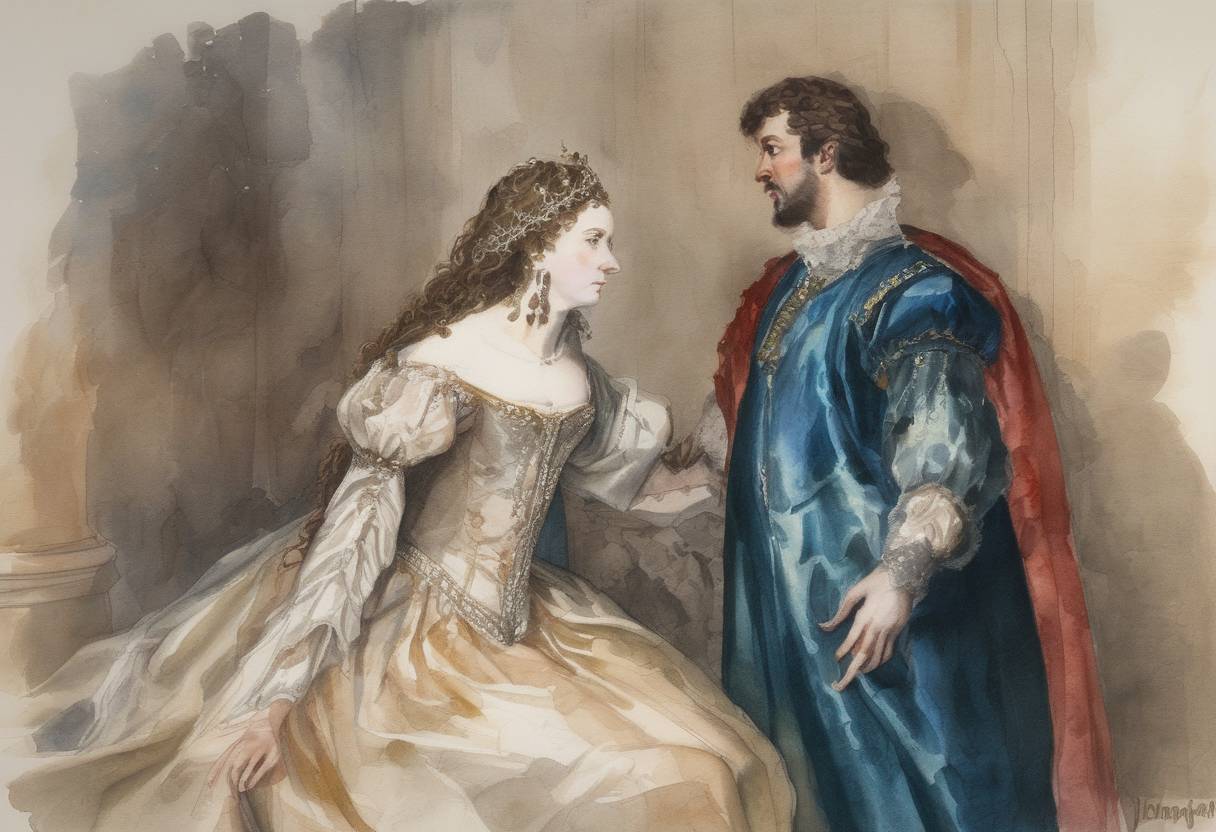
On December 8, 1660, Margaret Hughes made history by becoming the first professional actress to perform on the English public stage. She took on the role of Desdemona in a production of William Shakespeare’s “Othello.” This event marked a significant turning point in English theater, as it broke the longstanding tradition of male actors playing female roles.
Prior to the Restoration period, English theater was dominated by male actors, with young boys often cast in female roles. This practice was rooted in societal norms and legal restrictions that barred women from performing on stage. However, the Restoration of the monarchy in 1660, with King Charles II ascending to the throne, brought about significant cultural and social changes, including a more liberal attitude towards theater.
King Charles II, influenced by the theatrical traditions he had observed during his exile in France, where women were already performing on stage, issued a royal decree allowing women to act in public theaters. This decree paved the way for actresses like Margaret Hughes to enter the profession.
Margaret Hughes’s performance as Desdemona took place at the Vere Street Theatre in London. Her appearance was not only a novelty but also a bold statement that challenged the existing norms of English theater. Hughes’s portrayal of Desdemona was reportedly well-received, and her presence on stage was a catalyst for the acceptance of women in theatrical roles.
The inclusion of women on the English stage had a profound impact on the development of theater. It allowed for more authentic portrayals of female characters and opened up new opportunities for women in the arts. Margaret Hughes’s pioneering role paved the way for future generations of actresses, contributing to the evolution of theater as a more inclusive and diverse art form.
In the years following Hughes’s debut, many other women joined the ranks of professional actresses, and the practice of casting women in female roles became the norm. This shift also influenced the writing and production of plays, as playwrights began to create more complex and nuanced female characters.
Margaret Hughes’s legacy is remembered as a milestone in the history of English theater, symbolizing a broader cultural shift towards gender equality in the performing arts. Her courage and talent helped to redefine the theatrical landscape of the time, leaving an indelible mark on the history of performance.
Source: www.britannica.com