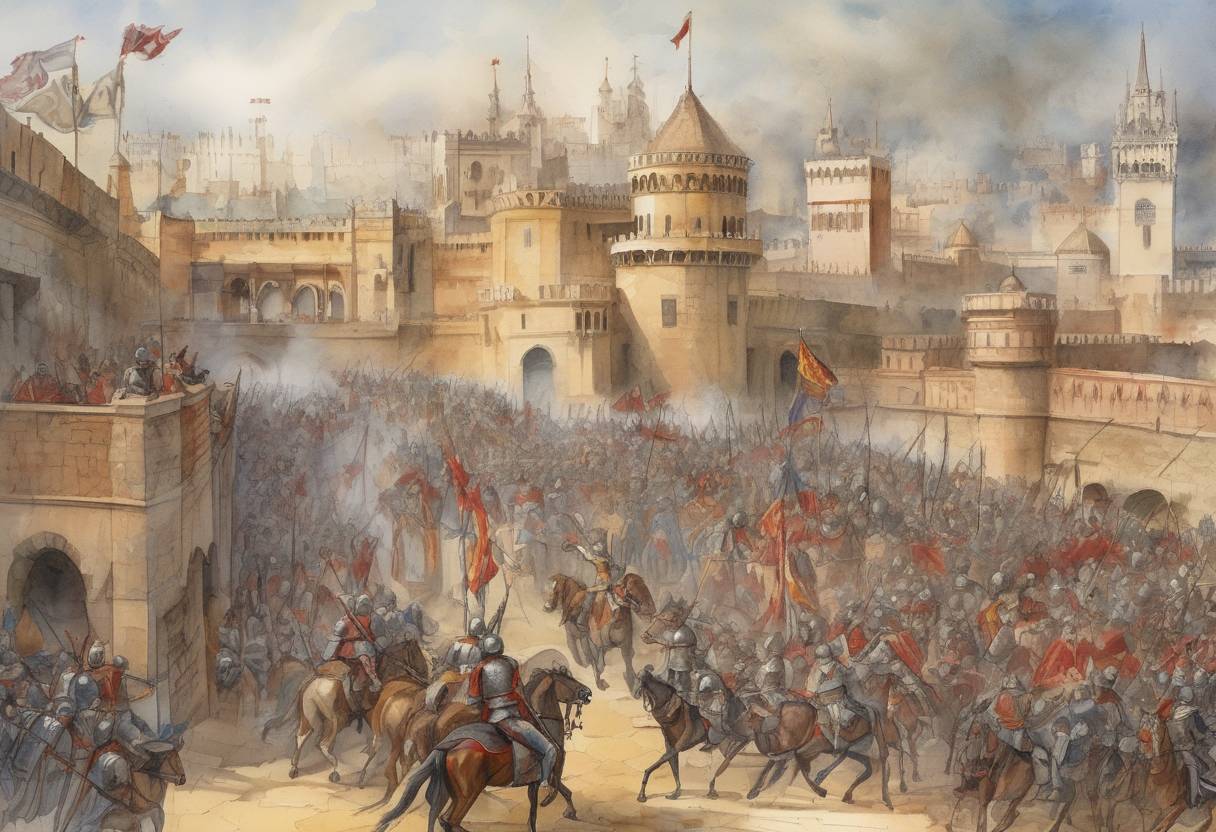
The Conquest of Seville: November 23, 1248
The Conquest of Seville on November 23, 1248, was a pivotal event in the Reconquista, the protracted series of military campaigns by Christian states to reclaim territories on the Iberian Peninsula from Muslim rule. This conquest was led by King Ferdinand III of Castile, a key figure in the Christian reconquest efforts during the 13th century.
Context and Background
- The Reconquista: This was a series of campaigns spanning over several centuries, beginning in the early 8th century, aimed at reclaiming Iberian territories from Muslim control, which had been established following the Umayyad conquest of Hispania in 711.
- Ferdinand III of Castile: Ascending to the throne in 1217, Ferdinand III was a significant monarch in the Reconquista. He successfully united the crowns of Castile and León, strengthening his position and resources to pursue military campaigns against the Moors.
The Siege and Conquest
- Strategic Importance: Seville was one of the largest and most prosperous cities in Al-Andalus, the Muslim-controlled territories of the Iberian Peninsula. Its capture was crucial for the Christian forces as it would provide a strategic and economic advantage.
- The Siege: The siege of Seville began in 1247. Ferdinand III’s forces, comprising soldiers from Castile and León, as well as support from other Christian kingdoms, laid siege to the city for over a year. The Christian forces employed both land and naval blockades to cut off supplies and reinforcements to the city.
- Surrender and Aftermath: On November 23, 1248, after enduring a prolonged siege, the Muslim defenders of Seville surrendered. The terms of surrender allowed for the safe passage of the Muslim inhabitants to other Muslim-held territories.
Significance and Consequences
- Cultural and Demographic Changes: The conquest led to significant demographic shifts, with many Muslims leaving the city and Christian settlers moving in. This also marked a cultural transformation as churches replaced mosques, and Christian customs and laws were established.
- Further Christian Advances: The fall of Seville was a major blow to Muslim power in the region and paved the way for further Christian advances in southern Iberia. It was a crucial step towards the eventual completion of the Reconquista in 1492 with the fall of Granada.
- Legacy of Ferdinand III: Ferdinand III was later canonized as a saint by the Catholic Church, and his efforts in the Reconquista are remembered as a significant part of Spanish history.
The Conquest of Seville marked a turning point in the Reconquista, symbolizing the growing momentum of Christian forces in reclaiming the Iberian Peninsula and reshaping the cultural and political landscape of medieval Spain.