The Great Bhola Cyclone of November 9, 1970
1970 · Bhola, Bangladesh
The Great Bhola Cyclone ravages the area of the Bay of Bengal, killing an estimated 300,000 to 500,000 people in modern-day Bangladesh and West Bengal, India.
November 13, 1970
The Bhola cyclone strikes East Pakistan (now Bangladesh) and West Bengal, India, killing an estimated 500,000 people.
Chittagong, Pakistan (now Bangladesh) | none
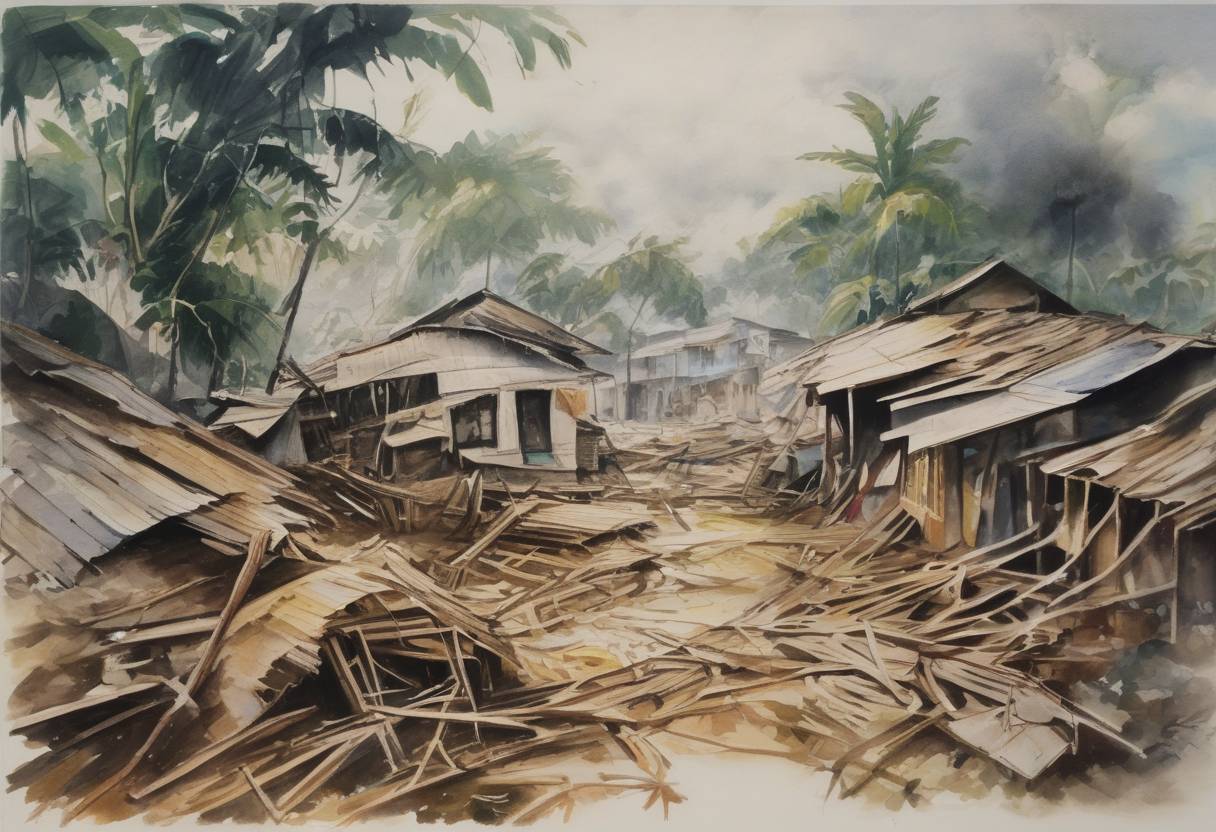
On November 13, 1970, the Bhola cyclone struck the coastal regions of East Pakistan (present-day Bangladesh) and the Indian state of West Bengal. It remains one of the deadliest tropical cyclones on record, with an estimated death toll of around 500,000 people. The cyclone’s catastrophic impact was felt most severely in the low-lying areas of the Ganges Delta.
The Bhola cyclone developed over the central Bay of Bengal on November 8, 1970. It intensified rapidly as it moved northward, reaching its peak intensity on November 12. By the time it made landfall on November 13, the cyclone had sustained winds of approximately 115 mph (185 km/h), equivalent to a Category 3 hurricane on the Saffir-Simpson scale.
The Bhola cyclone is a stark reminder of the vulnerability of coastal regions to natural disasters, particularly in densely populated and impoverished areas. It highlighted the need for improved disaster preparedness and response mechanisms, which have since become a focus in the region. The cyclone also played a pivotal role in shaping the political landscape of South Asia, influencing the eventual independence of Bangladesh.
The Bhola cyclone of 1970 stands as a tragic event in history, underscoring the devastating power of natural disasters and their far-reaching impacts on human societies. Its legacy continues to influence disaster management practices and political developments in the region.
Source: en.wikipedia.org