Deposition of Byzantine Emperor Philippicus and Ascension of Anastasius II
713 · Constantinople, Byzantine Empire
The Byzantine Emperor Philippicus is deposed by conspirators, and Anastasius II is proclaimed emperor.
October 4, 0610
Heraclius arrives by ship from Africa at Constantinople, overthrows Byzantine Emperor Phocas, and is crowned as the new emperor.
Constantinople, Byzantine Empire | Byzantine Empire
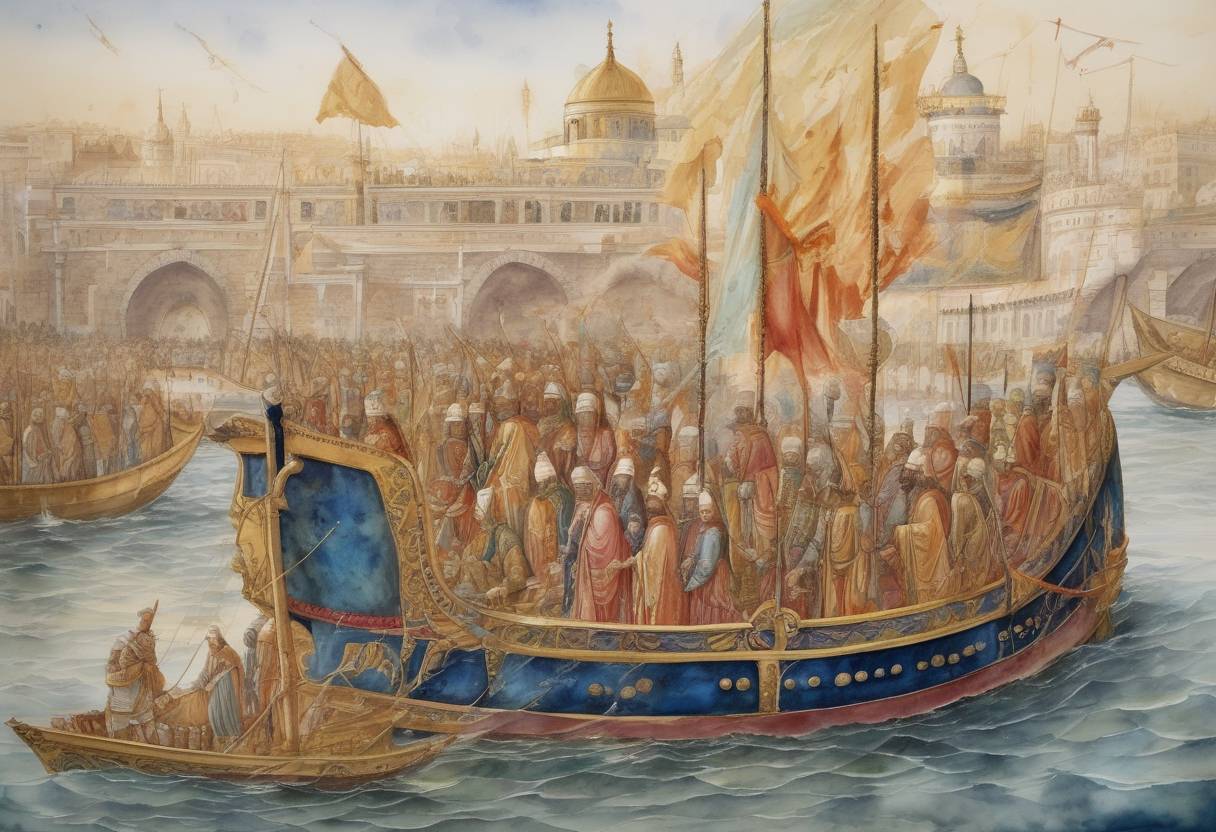
On October 4, 610, a pivotal event unfolded in the Byzantine Empire that would significantly alter its trajectory. Heraclius, a prominent military leader, arrived by ship from Africa at Constantinople and successfully overthrew the reigning Byzantine Emperor, Phocas. This marked the beginning of Heraclius’s reign as the new emperor, a period that would see substantial military and administrative reforms.
The Byzantine Empire, during the early 7th century, was embroiled in internal strife and external threats. Phocas, who had seized power in 602 through a coup against Emperor Maurice, was widely regarded as a tyrannical and ineffective ruler. His reign was characterized by heavy taxation, military defeats, and widespread discontent among the populace and the aristocracy.
Heraclius, the son of the Exarch of Africa, Heraclius the Elder, was initially stationed in Carthage. Recognizing the instability and unpopularity of Phocas, Heraclius the Elder and his son planned a revolt. They garnered support from various factions disillusioned with Phocas’s rule, including the military and influential political figures.
In 610, Heraclius embarked on a daring expedition to Constantinople. Sailing from Africa with a fleet, he approached the capital, where his arrival was met with anticipation by those eager for change. The city’s defenses were weak, and Phocas’s support had dwindled significantly.
Upon reaching Constantinople, Heraclius’s forces encountered little resistance. The populace, weary of Phocas’s oppressive regime, largely welcomed Heraclius. Phocas was captured and executed, ending his tumultuous reign.
Following the successful coup, Heraclius was crowned as the new Byzantine Emperor. His ascension marked the beginning of a new era for the empire. Heraclius implemented several reforms aimed at revitalizing the Byzantine state. He reorganized the military, introduced the theme system to improve administrative efficiency, and worked to stabilize the empire’s finances.
Heraclius’s reign is noted for its significant military campaigns, particularly against the Sassanian Empire and later the emerging Islamic Caliphate. His efforts to reclaim lost territories and fortify the empire’s defenses were crucial in maintaining Byzantine sovereignty during a period of intense external pressure.
Moreover, Heraclius’s reign saw the introduction of Greek as the official language of the empire, replacing Latin, which reflected the cultural and administrative shifts within the Byzantine state.
In summary, Heraclius’s overthrow of Phocas on October 4, 610, was a decisive moment in Byzantine history. It not only ended a period of internal turmoil but also set the stage for a series of reforms and military campaigns that would shape the empire’s future.
Source: en.wikipedia.org