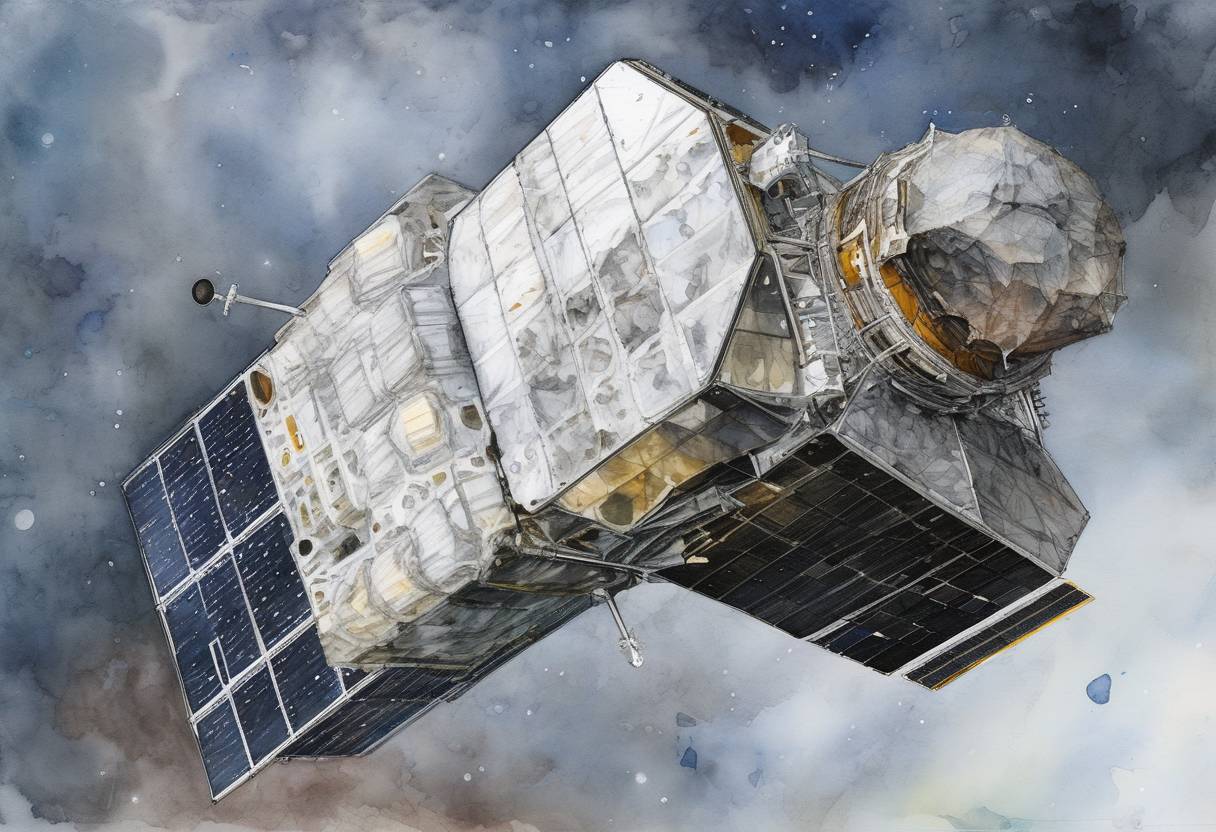
Reactivation of the Rosetta Spacecraft: January 17, 2014
On January 17, 2014, the European Space Agency’s (ESA) Rosetta spacecraft was successfully reactivated after a 31-month hibernation period. This marked a significant milestone in its mission to study Comet 67P/Churyumov-Gerasimenko, a mission that would provide unprecedented insights into the composition and behavior of comets.
Background
Launch and Mission Objective: Rosetta was launched on March 2, 2004, with the primary objective of conducting a detailed study of Comet 67P/Churyumov-Gerasimenko. The mission aimed to enhance our understanding of the early solar system by analyzing the comet’s nucleus and its interaction with the solar wind.
Hibernation Phase: To conserve energy during its long journey through space, Rosetta was placed into a deep-space hibernation mode on June 8, 2011. During this period, most of its systems were powered down, and it traveled over 800 million kilometers from the Sun.
Reactivation
Reactivation Process: On January 17, 2014, ESA initiated the reactivation sequence. The spacecraft was programmed to autonomously wake up, warm up its systems, and re-establish communication with Earth.
Signal Reception: After a tense waiting period, the first signal from Rosetta was received at ESA’s European Space Operations Centre in Darmstadt, Germany, on January 20, 2014. This confirmed that the spacecraft had successfully exited hibernation and was operational.
Mission Continuation
Approach and Orbit: Following its reactivation, Rosetta continued its journey toward Comet 67P. It executed a series of maneuvers to gradually approach and eventually enter orbit around the comet in August 2014.
Philae Lander: One of the mission’s highlights was the deployment of the Philae lander, which successfully landed on the comet’s surface on November 12, 2014, despite a challenging landing sequence.
Significance
Scientific Contributions: Rosetta’s mission provided invaluable data on the composition of the comet, including the detection of organic molecules and insights into the comet’s structure and activity. These findings have contributed significantly to our understanding of the building blocks of the solar system.
Legacy: The mission demonstrated the feasibility of long-duration space missions and complex maneuvers in deep space, setting a precedent for future exploratory missions.
The successful reactivation of Rosetta was a testament to the meticulous planning and engineering prowess of the ESA team, marking a pivotal moment in space exploration history.