Pardon of Confederate Soldiers on December 25, 1868
1868 · Washington, D.C., United States
President Andrew Johnson issued a final unconditional pardon to all Confederate soldiers.
December 8, 1863
President Abraham Lincoln issues his Proclamation of Amnesty and Reconstruction, offering pardon and restoration of property to Confederates who swear allegiance to the Union.
Washington, D.C., United States | United States Government
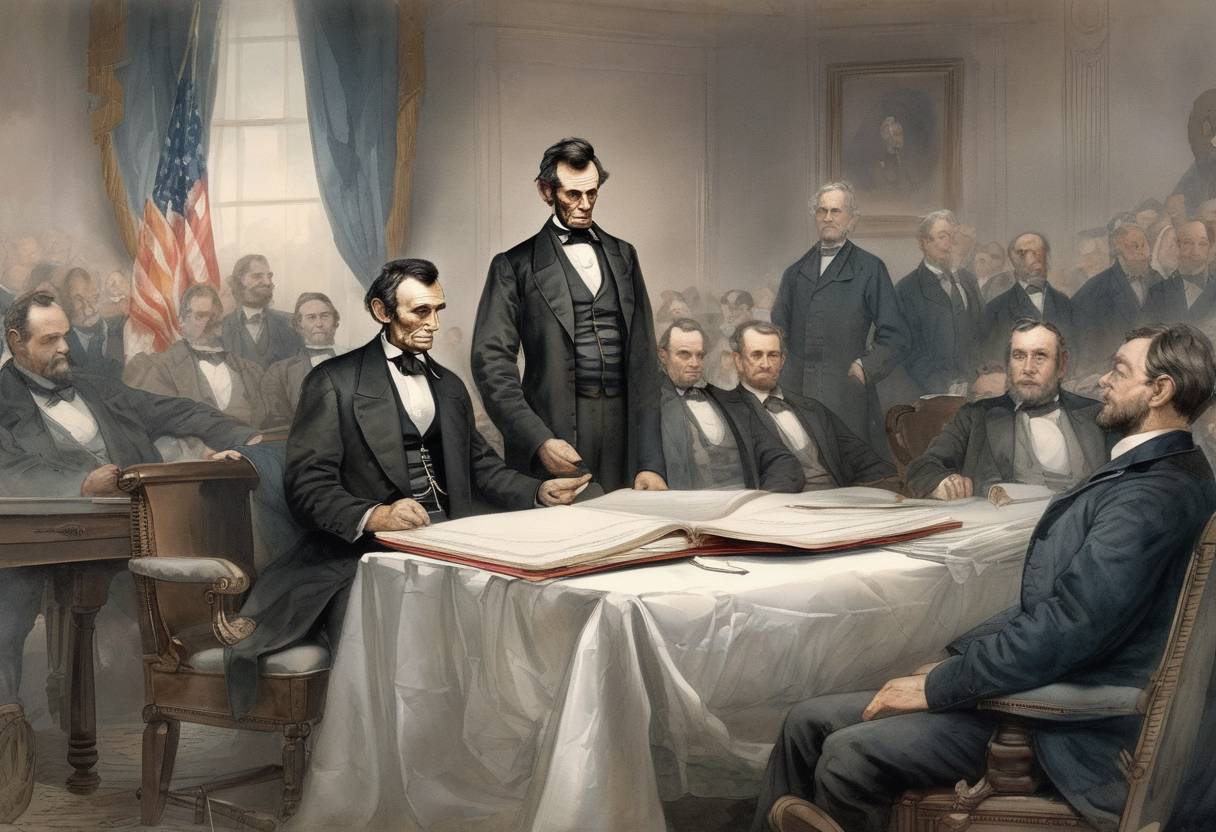
On December 8, 1863, President Abraham Lincoln issued the Proclamation of Amnesty and Reconstruction, a significant step in the process of reunifying the United States during the Civil War. This proclamation outlined Lincoln’s approach to reintegrating the Confederate states back into the Union and offered a pathway for reconciliation and rebuilding.
By late 1863, the Civil War had been raging for over two years, with significant losses on both sides. The Union had begun to gain the upper hand, particularly after key victories at Gettysburg and Vicksburg earlier that year. President Lincoln, recognizing the need to plan for the post-war period, sought to establish a framework for the Southern states to rejoin the Union and for former Confederates to reintegrate into American society.
Pardon and Restoration of Property: The proclamation offered a full pardon and the restoration of property rights (excluding slaves) to all Confederates who would take an oath of allegiance to the Union and accept the end of slavery.
Oath of Allegiance: To qualify for the pardon, individuals had to swear an oath to “faithfully support, protect, and defend the Constitution of the United States, and the union of the States thereunder.”
Exclusions: Certain high-ranking Confederate officials and military leaders were excluded from this offer, reflecting Lincoln’s view that those who had led the rebellion bore greater responsibility.
Reestablishment of State Governments: The proclamation allowed for the reestablishment of state governments in the Southern states once 10% of the voters from the 1860 election took the loyalty oath. This became known as the “Ten Percent Plan.”
Reconstruction Policy: The proclamation marked the beginning of Lincoln’s Reconstruction policy, which aimed to bring the Southern states back into the Union swiftly and with minimal retribution.
Controversy and Opposition: Lincoln’s approach was met with opposition from Radical Republicans in Congress, who believed the plan was too lenient and did not do enough to secure rights for freed slaves. This tension would later shape the more stringent Reconstruction policies implemented after Lincoln’s assassination.
Legacy: The Proclamation of Amnesty and Reconstruction laid the groundwork for the eventual reunification of the nation. It also highlighted the challenges of balancing justice and reconciliation in the aftermath of a civil war.
The assassination of Abraham Lincoln in April 1865 and the subsequent presidency of Andrew Johnson led to significant changes in the Reconstruction policies. Johnson attempted to continue Lincoln’s lenient approach, but his efforts were largely thwarted by Congress, which imposed stricter measures during the Reconstruction era.
The Proclamation of Amnesty and Reconstruction remains a pivotal document in American history, illustrating Lincoln’s vision for healing a divided nation and setting the stage for the complex process of Reconstruction that followed the Civil War.
Source: www.loc.gov