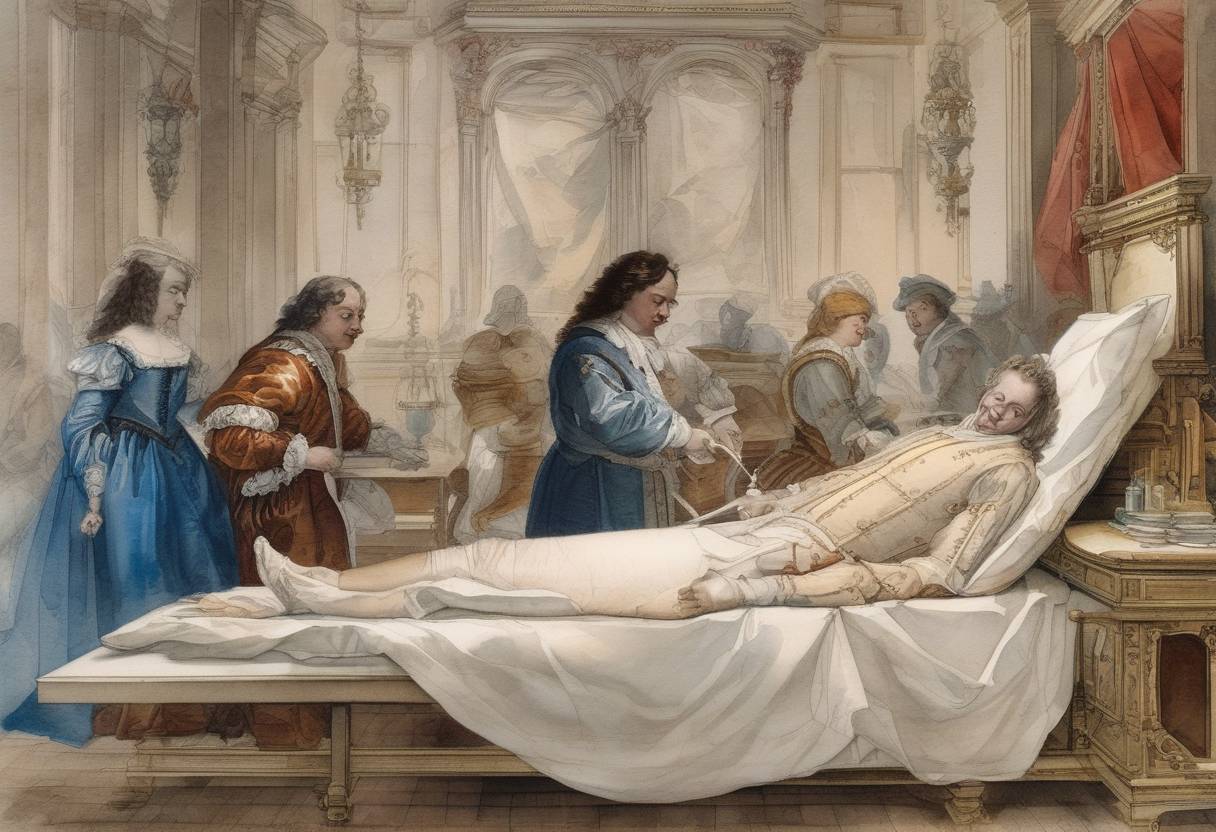
The First Human Blood Transfusion: June 15, 1667
On June 15, 1667, Dr. Jean-Baptiste Denys, the physician to King Louis XIV of France, performed the first documented human blood transfusion. This groundbreaking medical procedure marked a significant milestone in the history of medicine and transfusion science.
Background
During the 17th century, the field of medicine was undergoing significant changes, with new discoveries and experimental approaches challenging traditional practices. Blood transfusion was a concept that intrigued many scientists and physicians, as they sought ways to treat various ailments by transferring blood from one being to another.
Dr. Jean-Baptiste Denys, a prominent physician of the time, was influenced by earlier experiments conducted by English scientist Richard Lower, who had successfully transfused blood between animals. Inspired by these developments, Denys aimed to explore the potential of blood transfusion in humans.
The Procedure
The first human blood transfusion performed by Dr. Denys involved transfusing blood from a sheep into a 15-year-old boy who was suffering from a fever. The choice of a sheep was based on the belief that the animal’s blood was mild and less likely to cause adverse reactions. The procedure was carried out using a rudimentary apparatus, which included a quill and a silver tube to facilitate the transfer of blood.
Outcome and Impact
Remarkably, the boy survived the procedure and reportedly showed signs of improvement, which was considered a success at the time. Encouraged by this outcome, Denys continued to perform transfusions on other patients. However, subsequent attempts were not always successful, and some patients experienced severe reactions, leading to fatalities.
The mixed results of Denys’s experiments, along with ethical and religious concerns, led to a temporary ban on human blood transfusions in France and England. Despite these setbacks, Denys’s pioneering work laid the foundation for future advancements in transfusion medicine.
Historical Significance
Dr. Jean-Baptiste Denys’s experiments with blood transfusion were a crucial step in the evolution of medical science. Although his methods were primitive by modern standards, they sparked interest and debate that eventually led to the development of safer and more effective transfusion techniques.
The challenges faced by Denys and his contemporaries highlighted the need for a deeper understanding of blood compatibility and the immune response, which would not be fully realized until the discovery of blood groups by Karl Landsteiner in the early 20th century.
In summary, the first human blood transfusion on June 15, 1667, was a bold and innovative endeavor that paved the way for future breakthroughs in medical treatment, ultimately saving countless lives through the advancement of transfusion medicine.