Abraham Lincoln's Second Inauguration: March 4, 1865
1865 · Washington, D.C., United States
Abraham Lincoln was inaugurated for his second term as President of the United States.
November 8, 1864
Abraham Lincoln was re-elected as President of the United States, defeating Democratic candidate George B. McClellan during the American Civil War.
Washington, D.C., United States | United States government
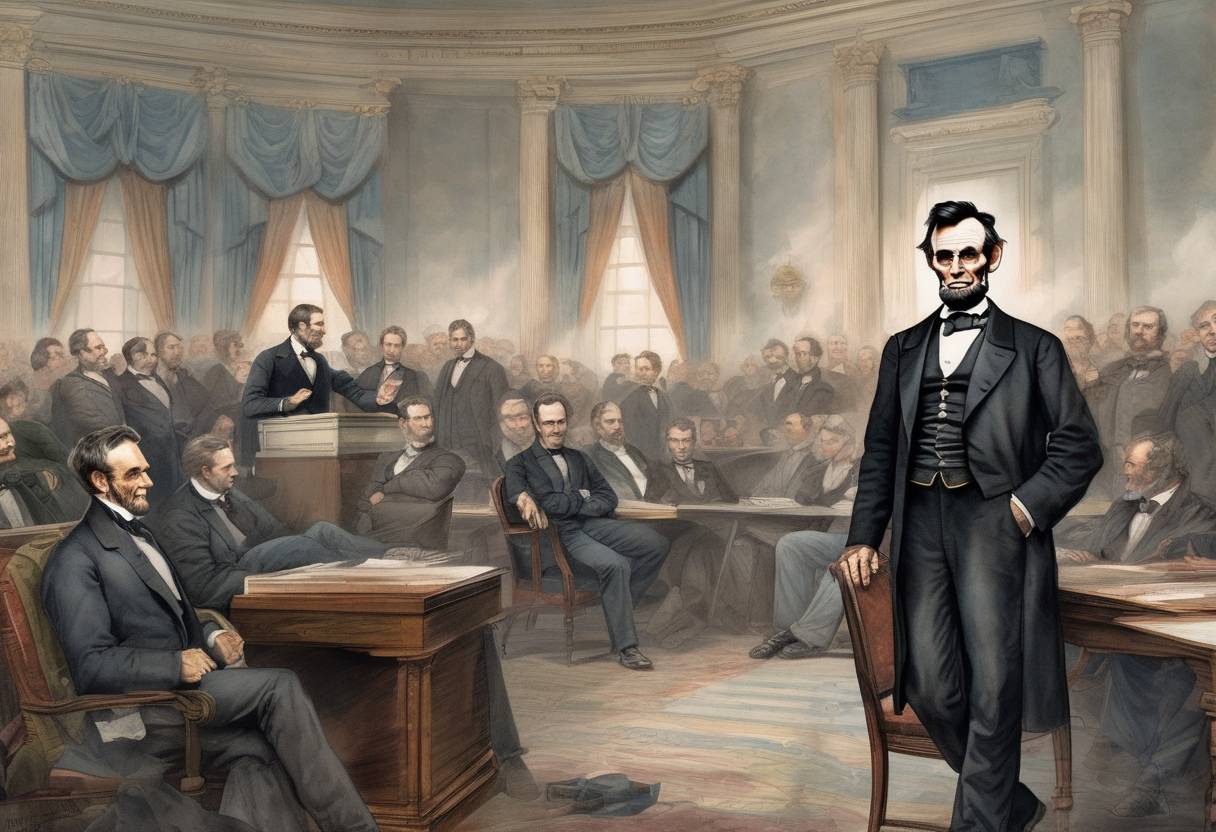
On November 8, 1864, during the height of the American Civil War, Abraham Lincoln was re-elected as President of the United States. This election was a pivotal moment in American history, as it occurred amidst a nation deeply divided by war.
The Civil War: By 1864, the Civil War had been raging for over three years. The Union and the Confederacy were locked in a brutal conflict that had resulted in significant casualties and widespread destruction.
Lincoln’s Presidency: Abraham Lincoln, the 16th President, had been in office since 1861. His leadership during the war, particularly his issuance of the Emancipation Proclamation in 1863, had made him a polarizing figure. While he was seen as a strong leader by many in the North, others criticized his handling of the war and his stance on slavery.
The Democratic Opposition: Lincoln’s main opponent in the 1864 election was George B. McClellan, a former Union general. McClellan ran as the Democratic candidate, advocating for a negotiated peace with the Confederacy, which appealed to war-weary voters.
Union Victories: The election campaign was heavily influenced by recent Union military successes. Notably, General William Tecumseh Sherman’s capture of Atlanta in September 1864 boosted Northern morale and strengthened Lincoln’s position.
Political Climate: The National Union Party, a temporary name for the Republican Party, supported Lincoln and his running mate, Andrew Johnson, a Southern Democrat who remained loyal to the Union. This bipartisan ticket aimed to appeal to a broader range of voters.
Public Sentiment: Despite the ongoing war, Lincoln’s commitment to preserving the Union and ending slavery resonated with many voters. His re-election campaign emphasized the need to continue the fight until the Union was restored.
Electoral Victory: Lincoln won a decisive victory, securing 212 of the 233 electoral votes. He received approximately 55% of the popular vote, reflecting strong support in the Northern states.
McClellan’s Defeat: McClellan’s platform of peace negotiations did not gain enough traction, as many voters were unwilling to compromise on the Union’s integrity or the abolition of slavery.
Impact on the Civil War: Lincoln’s re-election ensured that the war would continue until the Union achieved victory. It also reinforced his policies, including the push for the Thirteenth Amendment, which would ultimately abolish slavery.
Legacy: Lincoln’s leadership during this critical period solidified his legacy as one of America’s most revered presidents. His re-election marked a turning point in the Civil War, leading to the eventual surrender of the Confederate forces in 1865.
In summary, Abraham Lincoln’s re-election on November 8, 1864, was a crucial event that not only determined the course of the Civil War but also shaped the future of the United States by affirming the Union’s commitment to ending slavery and preserving the nation.
Source: www.history.com