Tennessee Secedes from the Union
1861 · Nashville, United States
Tennessee becomes the 11th and last state to secede from the Union during the American Civil War.
March 16, 1861
Edward Clark becomes the Governor of Texas, succeeding Sam Houston, who was removed from office for refusing to take an oath of loyalty to the Confederacy.
Austin, United States | Confederate States of America
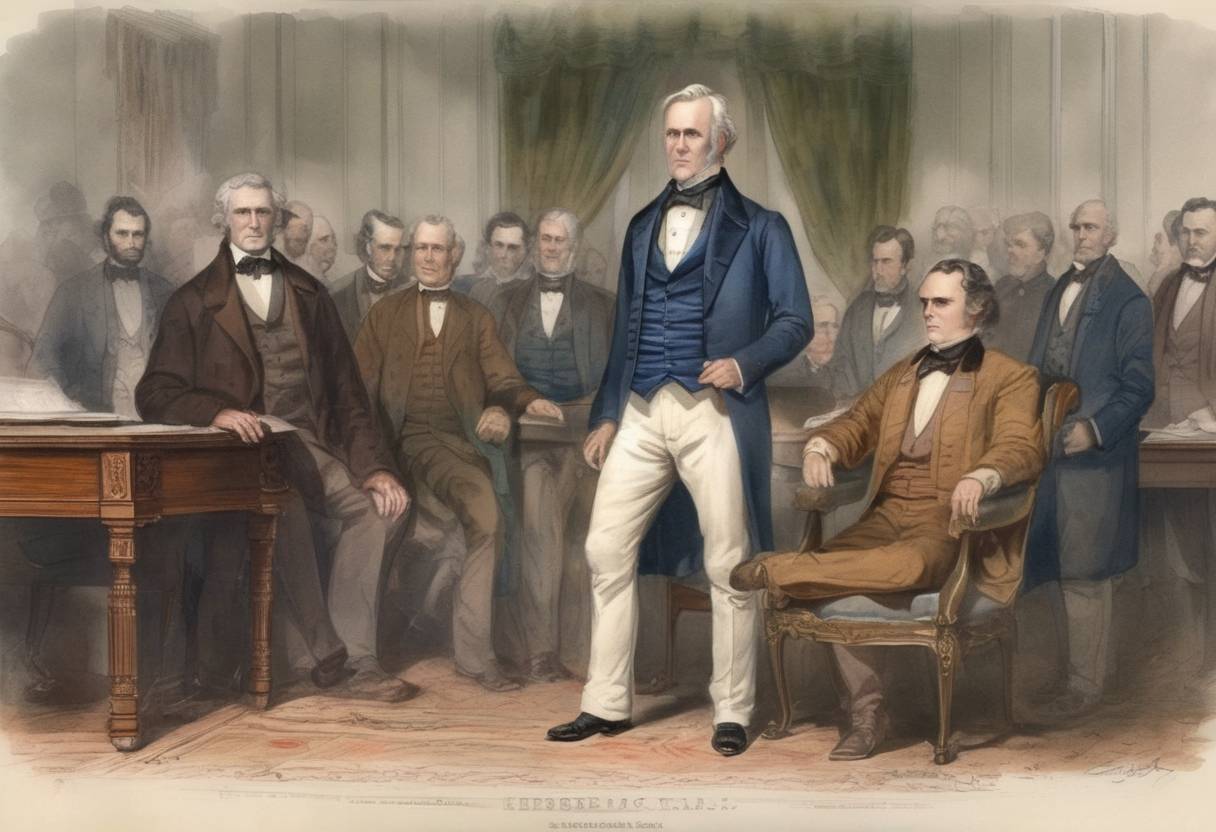
On March 16, 1861, Edward Clark assumed the role of Governor of Texas, succeeding Sam Houston. This transition marked a significant moment in the history of Texas during the tumultuous period leading up to the American Civil War.
Secession and the Confederacy: In the early months of 1861, the United States was on the brink of civil war. Following the election of Abraham Lincoln in November 1860, several Southern states began to secede from the Union, forming the Confederate States of America. Texas joined this movement, seceding from the Union on February 1, 1861, and officially joining the Confederacy on March 2, 1861.
Sam Houston’s Stance: Sam Houston, a prominent political figure and the sitting governor of Texas, was a staunch Unionist. Despite the growing secessionist sentiment in Texas, Houston opposed the state’s decision to leave the Union. He believed that secession would lead to unnecessary conflict and was detrimental to the interests of Texas.
Refusal to Take the Oath: After Texas joined the Confederacy, all public officials were required to take an oath of loyalty to the Confederate States. Sam Houston refused to take this oath, standing by his Unionist principles. As a result, he was removed from office on March 16, 1861.
Edward Clark’s Ascension: Edward Clark, who was serving as the Lieutenant Governor of Texas at the time, was next in line for the governorship. Upon Houston’s removal, Clark was sworn in as the Governor of Texas. Clark was a supporter of the Confederacy and took the oath of loyalty, aligning Texas more closely with Confederate policies.
Houston’s Legacy: Sam Houston’s removal from office was a poignant moment in Texas history. Despite his removal, Houston remained a respected figure, known for his leadership during the Texas Revolution and his efforts to maintain peace and stability.
Clark’s Governorship: Edward Clark’s tenure as governor was relatively short. He served until November 1861, when he was defeated by Francis Lubbock in the gubernatorial election. Clark’s administration was marked by efforts to support the Confederate war effort and manage the state’s resources during the early stages of the Civil War.
Broader Implications: The transition of power in Texas reflected the broader national conflict between Unionist and Confederate loyalties. It underscored the deep divisions within states and communities as the nation headed towards civil war.
In summary, the removal of Sam Houston and the appointment of Edward Clark as Governor of Texas on March 16, 1861, was a pivotal event that highlighted the complex political landscape of the time and the challenges faced by leaders during the secession crisis.
Source: www.tshaonline.org