Margaret Chase Smith Elected to the U.S. Senate
1948 · Washington, D.C., United States
Margaret Chase Smith was elected to the U.S. Senate, becoming the first woman to serve in both houses of the United States Congress.
March 4, 1917
Jeannette Rankin of Montana becomes the first woman member of the United States House of Representatives.
Washington, D.C., United States | United States House of Representatives
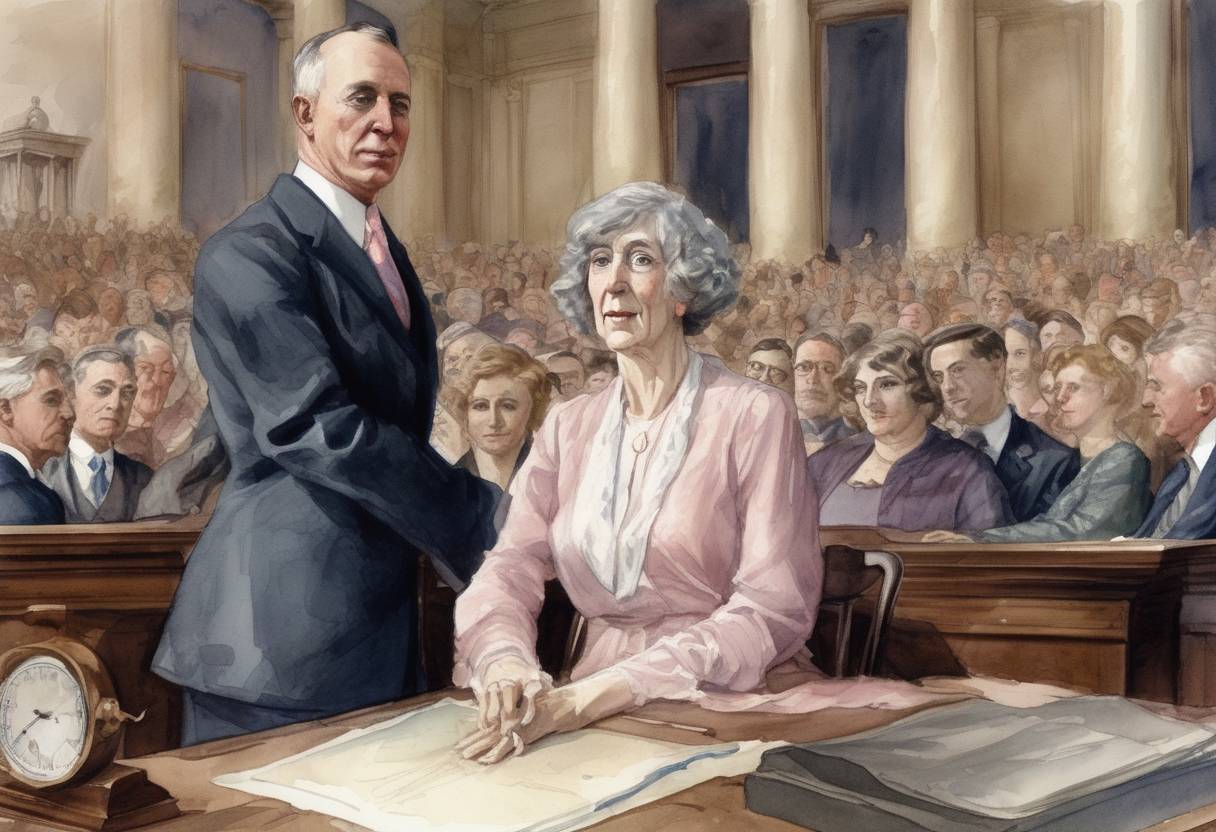
On March 4, 1917, Jeannette Rankin of Montana made history by becoming the first woman to serve in the United States House of Representatives. Her election was a significant milestone in the women’s suffrage movement and marked a pivotal moment in American political history.
Jeannette Rankin was born on June 11, 1880, near Missoula, Montana. She was the eldest of seven children in a family that valued education and civic engagement. Rankin graduated from the University of Montana in 1902 and later attended the New York School of Philanthropy (now Columbia University School of Social Work). Her early career involved social work and activism, particularly focusing on women’s rights and suffrage.
Rankin’s entry into politics was fueled by her commitment to social reform and her belief in women’s suffrage. She was actively involved in the suffrage movement, working with organizations such as the National American Woman Suffrage Association. Her efforts contributed to Montana granting women the right to vote in 1914, a significant achievement that set the stage for her political career.
In 1916, Rankin ran as a Republican for one of Montana’s at-large congressional seats. Her campaign focused on issues such as women’s rights, child welfare, and pacifism. Despite the challenges of running as a woman in a predominantly male political landscape, Rankin’s message resonated with voters, and she won the election.
Rankin’s election to Congress was groundbreaking. As the first woman to hold federal office in the United States, she broke barriers and challenged the status quo. Her presence in Congress symbolized the growing influence of women in American politics and underscored the importance of the suffrage movement.
During her tenure, Rankin was known for her pacifist stance. She famously voted against the United States’ entry into World War I, one of only 50 representatives to do so. Her vote was controversial and highlighted her commitment to her principles, even in the face of significant opposition.
Rankin’s legacy extends beyond her time in Congress. She continued to advocate for peace and social justice throughout her life. In 1940, she was re-elected to Congress and again voted against U.S. involvement in World War II, remaining consistent in her pacifist beliefs.
Jeannette Rankin’s pioneering role in American politics paved the way for future generations of women leaders. Her courage and dedication to her principles continue to inspire those who seek to make a difference in the political arena.
Jeannette Rankin’s election to the U.S. House of Representatives on March 4, 1917, was a landmark event in American history. It represented a significant step forward for women’s rights and set a precedent for female participation in government. Her legacy is a testament to the power of perseverance and the impact of principled leadership.
Source: en.wikipedia.org