Death of Saint Wenceslas, Duke of Bohemia
935 · Stará Boleslav, Czech Republic
Death of Saint Wenceslas, Duke of Bohemia, who later became the patron saint of the Czech Republic.
September 15, 0921
Saint Ludmila, grandmother of Saint Wenceslaus and a key figure in the Christianization of Bohemia, was murdered.
Tetín, Duchy of Bohemia | Duchy of Bohemia
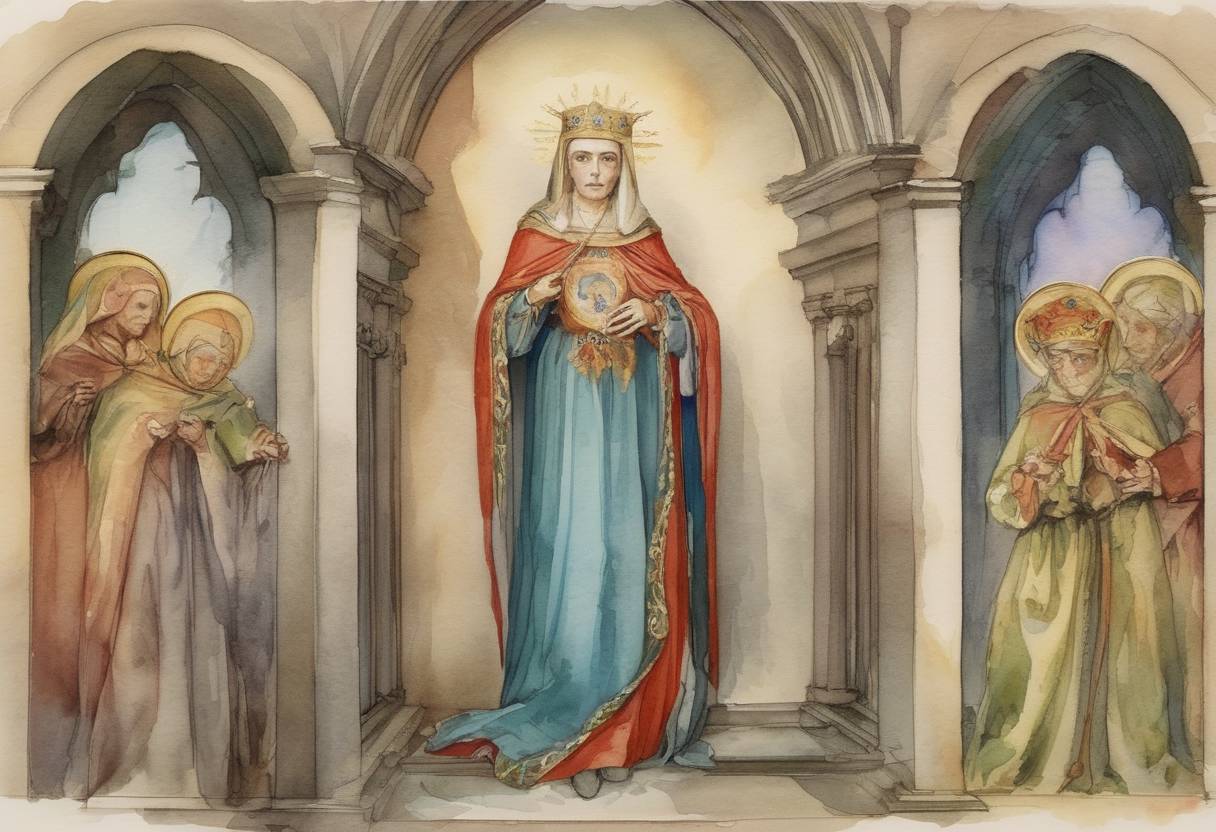
Saint Ludmila, a pivotal figure in the Christianization of Bohemia, met a tragic end on September 15, 921. Her life and death are significant in the history of Central Europe, particularly in the context of the spread of Christianity and the political dynamics of the region.
Ludmila was born around 860 in Mělník, in what is now the Czech Republic. She married Bořivoj I, the first Christian Duke of Bohemia, and together they played a crucial role in introducing Christianity to the region. Their conversion was influenced by Saint Methodius, one of the apostles to the Slavs, who baptized them.
Ludmila and Bořivoj’s efforts laid the groundwork for the Christianization of Bohemia, a process that would continue under their descendants. After Bořivoj’s death, Ludmila became a key advisor to her son, Spytihněv I, and later to her grandson, Wenceslaus (later known as Saint Wenceslaus).
The political landscape of Bohemia during Ludmila’s time was fraught with tension. After the death of her son Vratislaus I, Ludmila became the regent for her young grandson, Wenceslaus. However, this position was contested by Drahomíra, Ludmila’s daughter-in-law and the mother of Wenceslaus, who was a pagan and opposed Ludmila’s Christian influence.
On September 15, 921, Ludmila was murdered at Tetín Castle, reportedly on the orders of Drahomíra. According to tradition, she was strangled with her own veil by two noblemen, Tunna and Gommon. This act was not only a personal vendetta but also a political maneuver to curtail Ludmila’s influence over Wenceslaus and the Christianization efforts.
Ludmila’s death did not halt the spread of Christianity in Bohemia. Her grandson, Wenceslaus, continued her work and became a revered Christian ruler. He was later martyred and canonized as Saint Wenceslaus, becoming the patron saint of the Czech Republic.
Ludmila herself was canonized as a saint, and her feast day is celebrated on September 16. She is venerated as a martyr and a symbol of Christian faith in the face of adversity. Her life and death underscore the complex interplay of religion and politics in medieval Europe and highlight the role of women in the spread of Christianity.
Ludmila’s legacy is preserved in numerous churches and monuments dedicated to her in the Czech Republic, and she remains an enduring figure in the history of Bohemia. Her story is a testament to the transformative power of faith and the enduring impact of her contributions to the Christian heritage of the region.
Source: en.wikipedia.org