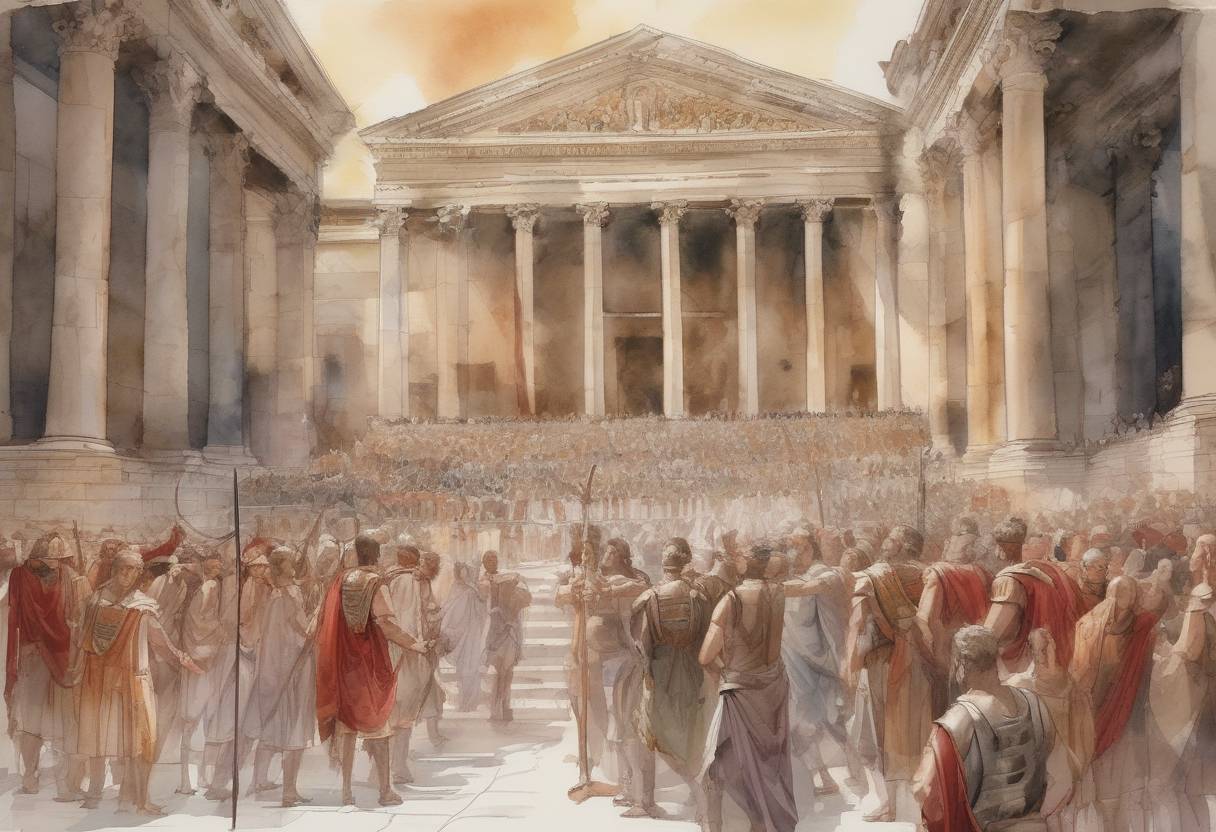
The Diocletianic Persecution Begins: February 23, 303
On February 23, 303, Roman Emperor Diocletian issued the first of a series of edicts that initiated the Diocletianic Persecution, the last and most severe persecution of Christians in the Roman Empire. This marked a significant and brutal chapter in early Christian history, characterized by widespread efforts to suppress the Christian faith across the empire.
Context and Background
Diocletian, who reigned from 284 to 305, was a strong proponent of restoring traditional Roman religious practices and reinforcing the authority of the Roman state. By the late 3rd century, Christianity had grown significantly, both in numbers and influence, which was perceived as a threat to the traditional Roman religious and social order.
The Roman Empire was also undergoing a period of crisis and transformation, with internal strife and external pressures. Diocletian’s reforms aimed to stabilize and strengthen the empire, and he believed that unity in religious practice was essential for this purpose.
The Edicts Against Christians
The first edict, issued on February 23, 303, ordered the destruction of Christian scriptures and places of worship across the empire. It also prohibited Christians from assembling for worship and stripped them of legal rights. Subsequent edicts escalated the persecution, demanding that Christian clergy be arrested and that all Christians be required to sacrifice to the Roman gods or face severe penalties, including imprisonment, torture, and execution.
Key Events and Consequences
Destruction of Churches and Scriptures: The first edict led to the systematic destruction of Christian churches and sacred texts, aiming to dismantle the physical and spiritual infrastructure of Christianity.
Arrests and Executions: Many Christians, including clergy and laypeople, were arrested. Those who refused to renounce their faith and perform sacrifices to the Roman gods faced execution, often in brutal and public spectacles.
Impact on Christian Communities: The persecution created a crisis within Christian communities, testing the faith and resilience of believers. It also led to internal divisions, as some Christians chose to comply with the edicts to avoid persecution, while others became martyrs.
Aftermath and Historical Significance
The Diocletianic Persecution continued until 311, when Emperor Galerius, one of Diocletian’s successors, issued the Edict of Serdica, granting Christians the freedom to practice their religion. This persecution, despite its severity, failed to eradicate Christianity. Instead, it strengthened the resolve of many Christians and highlighted the growing divide between the Roman state and the Christian community.
The persecution is historically significant as it underscored the tensions between the Roman imperial system and the emerging Christian faith. It also set the stage for the eventual legalization and acceptance of Christianity within the Roman Empire, culminating in the Edict of Milan in 313 under Emperor Constantine, which granted religious tolerance to Christians and marked the beginning of Christianity’s rise to prominence in the Roman world.
The Diocletianic Persecution remains a poignant reminder of the struggles faced by early Christians and the enduring impact of religious conflict on societal development.