Impeachment Hearings Against President Bill Clinton
1998 · Washington, D.C., United States
The United States House of Representatives Judiciary Committee began impeachment hearings against President Bill Clinton.
May 9, 1974
The United States House of Representatives Judiciary Committee opened formal and public impeachment hearings against President Richard Nixon over the Watergate scandal.
Washington D.C., United States | U.S. House of Representatives
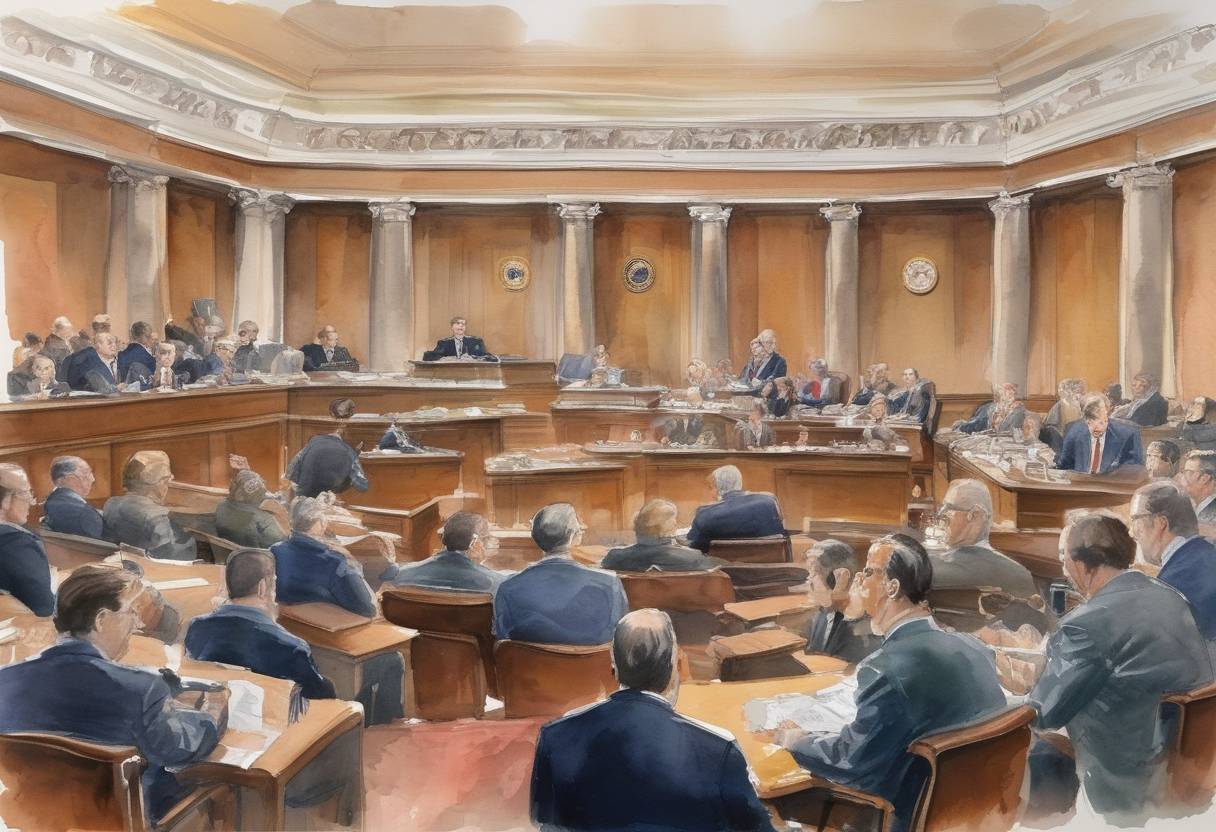
On May 9, 1974, the United States House of Representatives Judiciary Committee commenced formal and public impeachment hearings against President Richard Nixon. This pivotal moment in American history was a direct consequence of the Watergate scandal, a political scandal that had been unfolding since the early 1970s.
The Watergate scandal began with a break-in at the Democratic National Committee headquarters at the Watergate office complex in Washington, D.C., on June 17, 1972. The subsequent investigation revealed a series of abuses of power by members of the Nixon administration, including attempts to cover up the break-in and other illegal activities.
The scandal gradually unraveled, leading to the indictment of several Nixon administration officials. The release of the “Nixon tapes,” which were audio recordings of conversations in the Oval Office, provided undeniable evidence of Nixon’s involvement in the cover-up.
The Judiciary Committee’s hearings were a critical step in the impeachment process. Chaired by Representative Peter Rodino, the committee was tasked with determining whether there was sufficient evidence to impeach President Nixon. The hearings were conducted in a highly publicized and transparent manner, allowing the American public to follow the proceedings closely.
The committee examined evidence related to several charges, including obstruction of justice, abuse of power, and contempt of Congress. The hearings featured testimonies from key witnesses and the presentation of crucial evidence, including the infamous tapes.
The hearings culminated in the committee approving three articles of impeachment against Nixon on July 27, 1974. These articles charged him with obstruction of justice, abuse of power, and contempt of Congress. Faced with the inevitability of impeachment by the full House and likely conviction by the Senate, Nixon chose to resign from the presidency on August 8, 1974, becoming the first U.S. president to do so.
The impeachment hearings and Nixon’s subsequent resignation had profound implications for American politics. They underscored the importance of the rule of law and the checks and balances inherent in the U.S. political system. The scandal also led to reforms aimed at increasing transparency and accountability in government.
The formal and public impeachment hearings against President Richard Nixon on May 9, 1974, marked a significant chapter in U.S. history. They highlighted the resilience of democratic institutions in the face of political corruption and set a precedent for handling presidential misconduct.
Source: www.history.com