Operation Iraqi Freedom: The Beginning of the Iraq War
2003 · Baghdad, Iraq
The United States launched Operation Iraqi Freedom, marking the beginning of the Iraq War, with a coalition of forces invading Iraq to overthrow Saddam Hussein's regime.
March 20, 2003
The United States, along with coalition forces primarily from the United Kingdom, initiates the invasion of Iraq, marking the beginning of the Iraq War. The invasion was justified by the U.S. government on the grounds of eliminating weapons of mass destruction and ending Saddam Hussein's support for terrorism.
Baghdad, Iraq | United States Armed Forces
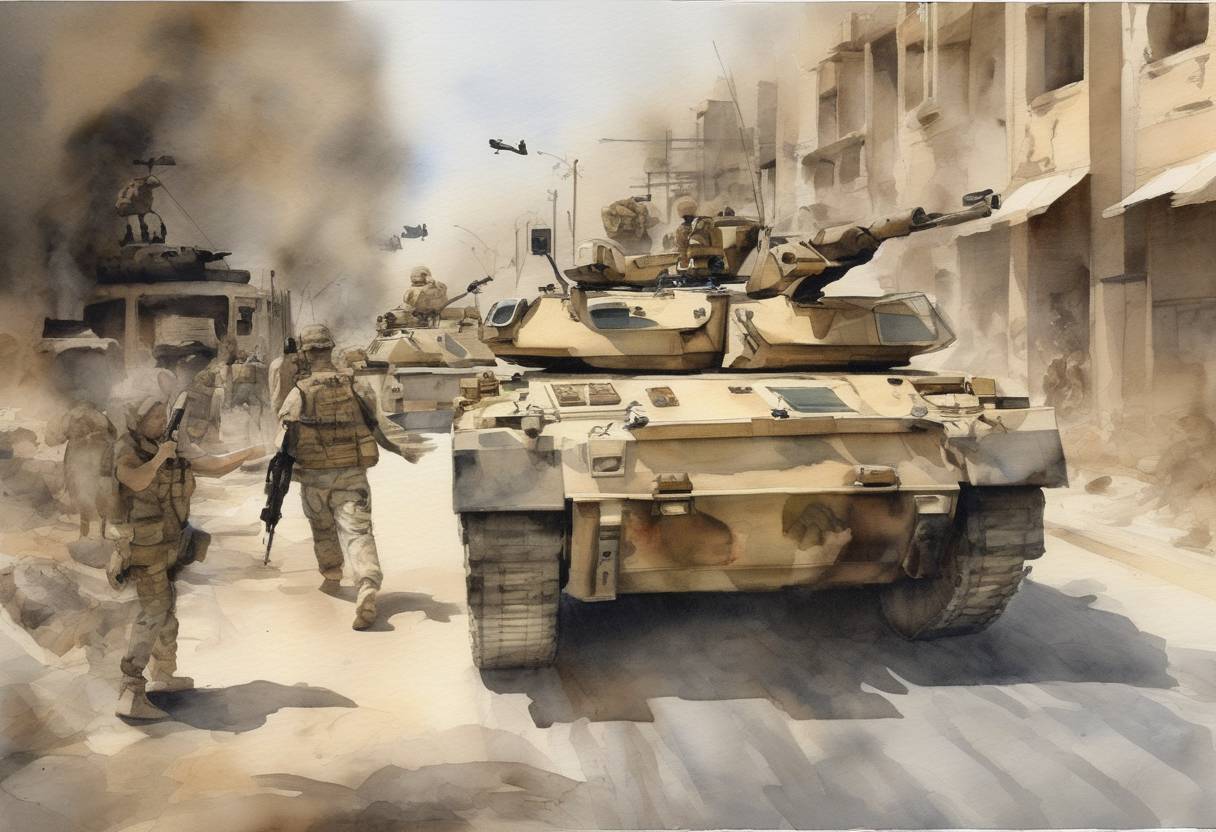
On March 20, 2003, the United States, along with coalition forces primarily from the United Kingdom, initiated the invasion of Iraq, marking the beginning of the Iraq War. This military action was justified by the U.S. government on the grounds of eliminating weapons of mass destruction (WMDs) and ending Saddam Hussein’s support for terrorism.
Post-9⁄11 Security Concerns: In the wake of the September 11, 2001, terrorist attacks, the U.S. government, led by President George W. Bush, adopted a more aggressive stance on global security threats. Iraq, under the dictatorship of Saddam Hussein, was perceived as a potential threat due to its alleged possession of WMDs and supposed links to terrorist organizations.
UN Resolutions and Inspections: The United Nations had imposed sanctions on Iraq following the Gulf War in 1991, demanding disarmament of its WMD programs. Throughout the 1990s and early 2000s, Iraq was subject to UN weapons inspections. However, the U.S. and its allies argued that Iraq was not fully complying with these inspections.
Diplomatic Efforts and Controversy: Leading up to the invasion, there was significant international debate and controversy. While the U.S. and the UK pushed for military action, many countries, including France, Germany, and Russia, advocated for continued inspections and diplomatic solutions. The UN Security Council did not authorize the use of force, leading to a contentious global discourse.
Operation Iraqi Freedom: The military campaign, known as Operation Iraqi Freedom, began with a series of airstrikes aimed at decapitating the Iraqi leadership and crippling military infrastructure. This was followed by a ground invasion involving approximately 160,000 troops from the U.S., the UK, Australia, and Poland.
Rapid Military Success: Coalition forces quickly advanced, capturing the Iraqi capital, Baghdad, by April 9, 2003. The speed of the military campaign was facilitated by the overwhelming technological and logistical superiority of the coalition forces.
Fall of Saddam Hussein: The regime of Saddam Hussein collapsed, and he went into hiding. He was eventually captured by U.S. forces on December 13, 2003, and later tried and executed by the Iraqi government in 2006.
Absence of WMDs: Despite the initial justification for the invasion, subsequent investigations revealed that Iraq did not possess active WMD programs at the time of the invasion. This revelation led to significant criticism and debate over the legitimacy and motivations of the war.
Insurgency and Sectarian Violence: The power vacuum and dismantling of the Iraqi military and government institutions led to widespread insurgency and sectarian violence. Various militant groups, including al-Qaeda in Iraq, gained strength, contributing to prolonged instability.
Long-term Impact: The Iraq War had profound implications for regional and global politics. It strained U.S. relations with several allies, influenced global perceptions of American foreign policy, and contributed to ongoing instability in the Middle East.
The invasion of Iraq remains a highly debated topic, with discussions focusing on its legality, the intelligence used to justify it, and its long-term consequences for Iraq and the broader international community.
Source: en.wikipedia.org