The Newburgh Address: Defusing a Potential Military Coup
1783 · Newburgh, United States
George Washington delivered his Newburgh Address, defusing a potential military coup by the Continental Army.
August 7, 1782
George Washington created the Badge of Military Merit, which later became the Purple Heart, to honor soldiers for their service in the American Revolutionary War.
Newburgh, United States | Continental Army
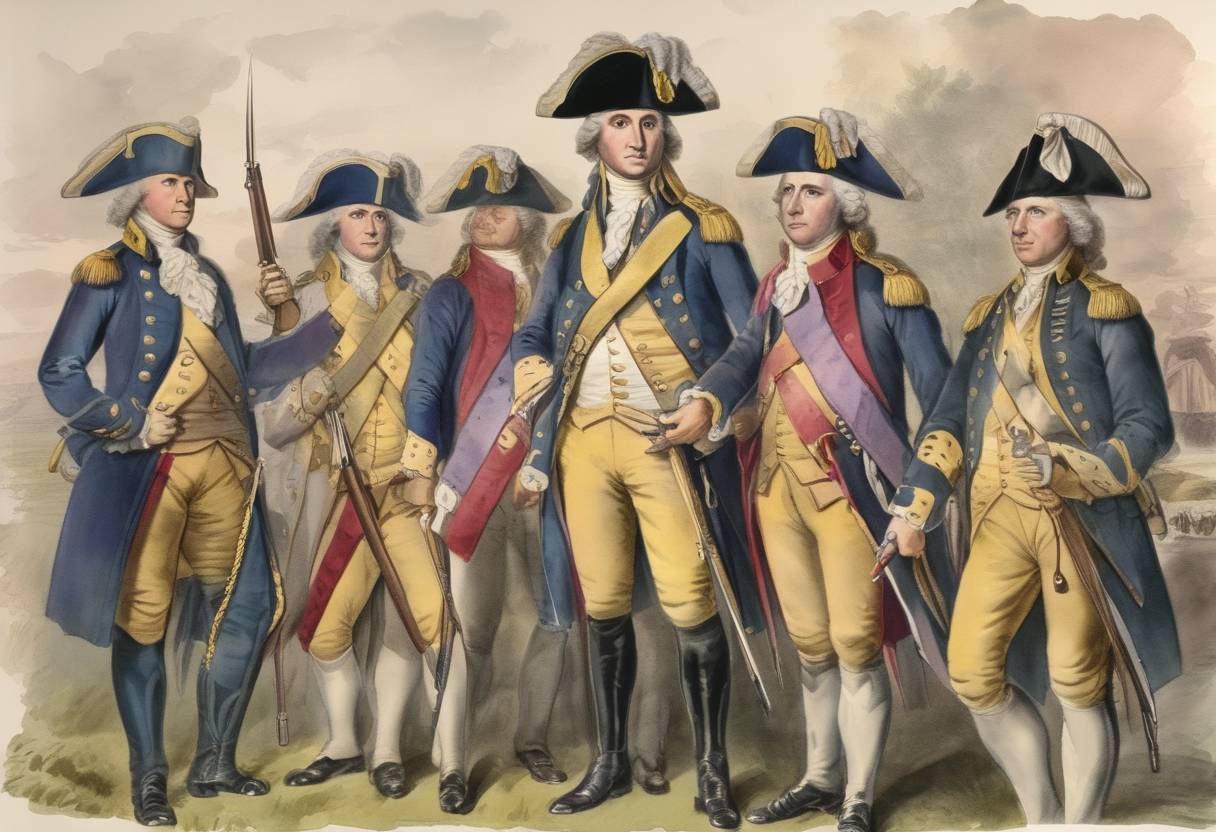
On August 7, 1782, General George Washington, the Commander-in-Chief of the Continental Army during the American Revolutionary War, established the Badge of Military Merit. This significant event marked one of the earliest instances of a formalized military award for valor and merit in the United States.
During the American Revolutionary War, the Continental Army faced numerous challenges, including limited resources and recognition for the soldiers’ sacrifices and achievements. General Washington recognized the need to boost morale and acknowledge the bravery and dedication of his troops. At that time, military honors were typically reserved for officers, leaving the contributions of enlisted men largely unrecognized.
The Badge of Military Merit was conceived as a way to honor non-commissioned officers and soldiers for “any singularly meritorious action.” The award was intended to be a symbol of honor and distinction, recognizing acts of bravery and exceptional service. The badge itself was a heart-shaped purple cloth, which was to be worn over the left breast of the uniform.
Washington’s general orders on August 7, 1782, outlined the criteria for the award, emphasizing that it was not to be given lightly but reserved for truly meritorious actions. The Badge of Military Merit was revolutionary in its inclusivity, as it was one of the first military awards that could be bestowed upon enlisted men.
The Badge of Military Merit fell into disuse after the Revolutionary War, with only a few known recipients. However, its legacy endured, and it laid the groundwork for future military decorations in the United States.
In 1932, on the 200th anniversary of George Washington’s birth, the U.S. War Department revived the concept of the Badge of Military Merit, transforming it into what is now known as the Purple Heart. The modern Purple Heart honors U.S. military personnel who have been wounded or killed in action, continuing Washington’s legacy of recognizing the sacrifices and valor of American soldiers.
The creation of the Badge of Military Merit was a pioneering step in the development of military honors in the United States. It reflected George Washington’s commitment to acknowledging the contributions of all soldiers, regardless of rank, and set a precedent for the inclusive recognition of military service. The evolution of the Badge into the Purple Heart underscores its enduring importance as a symbol of sacrifice and bravery in the U.S. military tradition.
Source: en.wikipedia.org