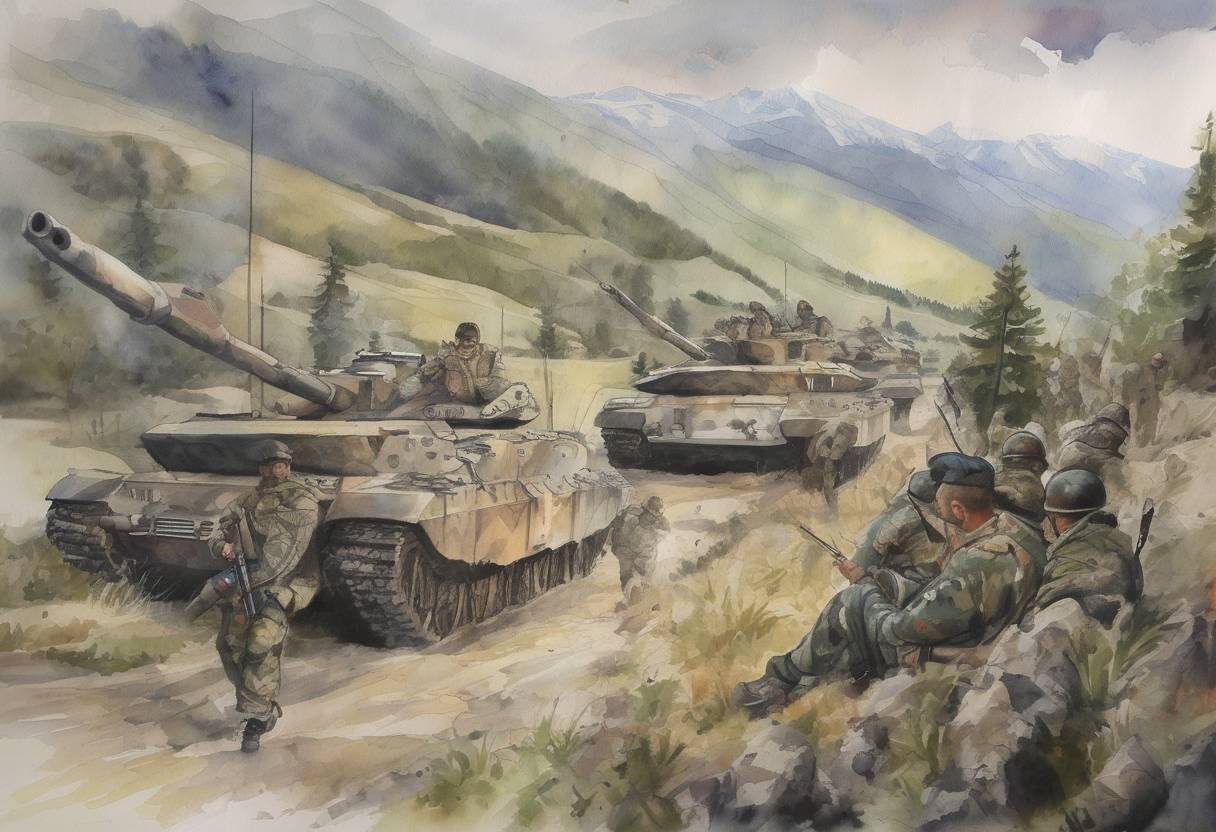
The Russo-Georgian War: August 7, 2008
Background
The Russo-Georgian War, also known as the Five-Day War, was a conflict that erupted in August 2008 between Georgia, Russia, and the Russian-backed self-proclaimed republics of South Ossetia and Abkhazia. The roots of the conflict can be traced back to the dissolution of the Soviet Union in the early 1990s, which led to the emergence of ethnic and territorial disputes in the Caucasus region.
South Ossetia and Abkhazia
- South Ossetia and Abkhazia: These regions sought independence from Georgia following the collapse of the Soviet Union. Georgia, however, maintained that these territories were integral parts of its sovereign state.
- Tensions: The early 1990s saw violent conflicts in both regions, resulting in de facto independence for South Ossetia and Abkhazia, though they were not widely recognized internationally.
Events Leading to August 7, 2008
- Escalating Tensions: Throughout the 2000s, tensions simmered as Georgia, under President Mikheil Saakashvili, pursued closer ties with the West, including aspirations to join NATO. This was viewed unfavorably by Russia, which saw it as a threat to its influence in the region.
- Skirmishes: In the months leading up to August 2008, skirmishes and provocations increased in South Ossetia, with both sides accusing each other of aggression.
The Outbreak of War
- August 7, 2008: On this date, Georgia launched a military operation to regain control over South Ossetia, citing increased attacks on Georgian villages as the catalyst for their actions.
- Russian Response: Russia quickly intervened, deploying troops and launching airstrikes against Georgian forces. Russia justified its intervention by claiming it was protecting Russian citizens in South Ossetia, as many residents had been granted Russian passports.
Key Events
- Battle for Tskhinvali: The Georgian military initially made advances into Tskhinvali, the capital of South Ossetia, but faced a strong counteroffensive from Russian forces.
- Wider Conflict: The conflict soon expanded beyond South Ossetia, with Russian forces moving into other parts of Georgia, including the strategic city of Gori and the region of Abkhazia.
Aftermath and Consequences
- Ceasefire: A ceasefire was brokered on August 12, 2008, by French President Nicolas Sarkozy, who was then holding the presidency of the European Union.
- Recognition of Independence: Following the conflict, Russia recognized South Ossetia and Abkhazia as independent states, a move condemned by Georgia and much of the international community.
- International Relations: The war strained Russia’s relations with the West and highlighted the geopolitical tensions in the post-Soviet space.
Broader Historical Significance
- NATO and EU Relations: The conflict underscored the complexities of NATO and EU expansion in Eastern Europe and the Caucasus, as well as the challenges of balancing relations with Russia.
- Precedent for Future Conflicts: The war set a precedent for Russia’s assertive foreign policy in its near abroad, influencing future events, including the annexation of Crimea in 2014.
The Russo-Georgian War remains a significant event in the post-Cold War era, illustrating the enduring volatility of the Caucasus region and the intricate dynamics of international diplomacy and regional power struggles.