Abraham Lincoln's Cooper Union Address - February 27, 1860
1860 · New York City, United States
Abraham Lincoln delivers a speech at Cooper Union in New York City, which is largely credited with his gaining the Republican nomination for President.
June 16, 1858
Abraham Lincoln delivered his famous 'House Divided' speech in Springfield, Illinois, upon accepting the Illinois Republican Party's nomination as that state's United States senator.
Springfield, United States | Illinois Republican Party
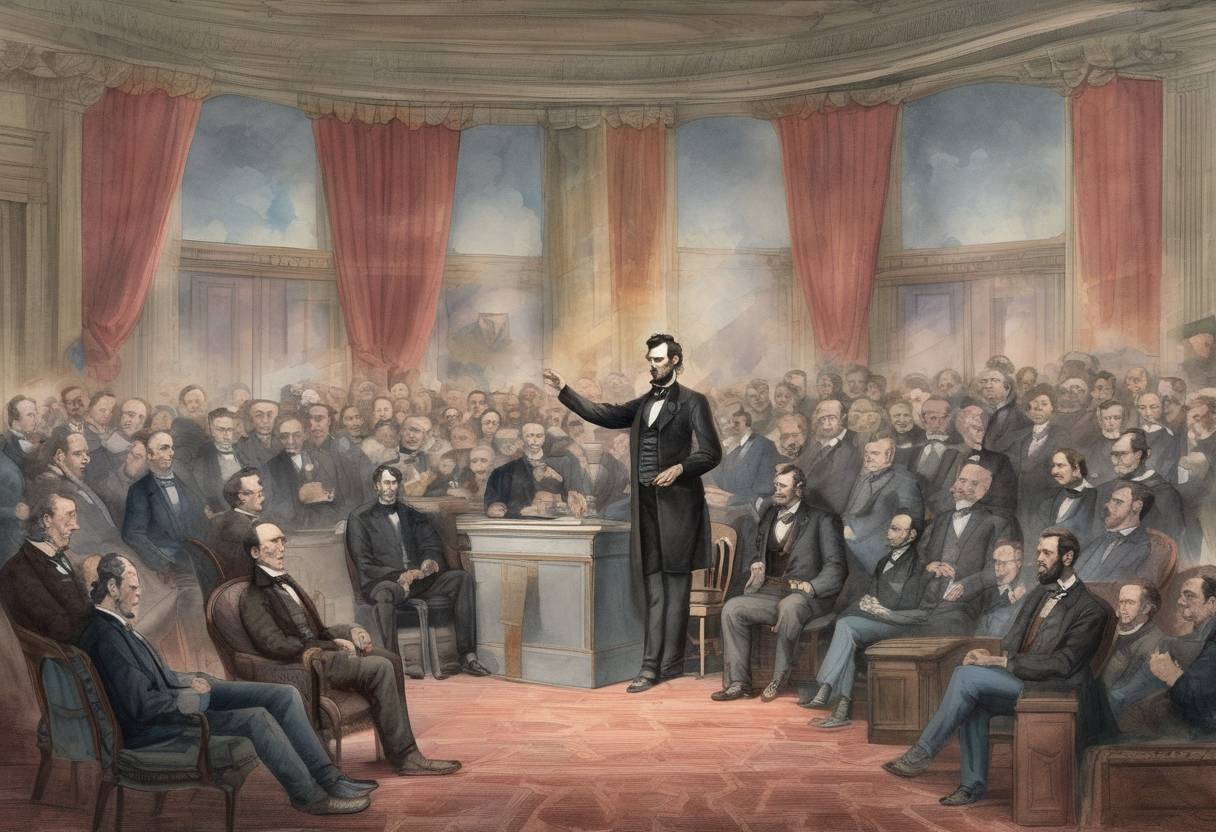
On June 16, 1858, Abraham Lincoln delivered one of his most famous speeches, known as the “House Divided” speech, in Springfield, Illinois. This pivotal moment occurred when Lincoln accepted the Illinois Republican Party’s nomination for the United States Senate, challenging the incumbent, Stephen A. Douglas.
The mid-19th century in the United States was a period of intense national division over the issue of slavery. The Kansas-Nebraska Act of 1854, championed by Douglas, had introduced the concept of popular sovereignty, allowing territories to decide for themselves whether to permit slavery. This act effectively repealed the Missouri Compromise, which had prohibited slavery in certain U.S. territories, and led to violent conflicts known as “Bleeding Kansas.”
Lincoln’s “House Divided” speech was a direct response to the growing tensions over slavery. He famously stated:
“A house divided against itself cannot stand. I believe this government cannot endure, permanently half slave and half free.”
Moral and Political Conflict: Lincoln argued that the nation could not continue to exist as a union of states divided between slavery and freedom. He believed that the country would eventually become all one thing or all the other.
Critique of Popular Sovereignty: Lincoln criticized the doctrine of popular sovereignty, suggesting it was a means to nationalize slavery.
Call for Unity: While acknowledging the deep divisions, Lincoln called for unity and a commitment to the principles of freedom and equality.
Senate Race: Although Lincoln lost the Senate race to Douglas, the debates between them, known as the Lincoln-Douglas debates, gained national attention and elevated Lincoln’s profile as a leading voice against the expansion of slavery.
Presidential Path: The speech and subsequent debates helped position Lincoln as a prominent figure in the Republican Party, eventually leading to his successful presidential campaign in 1860.
Historical Impact: The “House Divided” speech is remembered as a profound statement on the moral and political challenges facing the United States, foreshadowing the Civil War and Lincoln’s role in preserving the Union.
Lincoln’s articulation of the nation’s division and his vision for its future underscored the urgency of addressing the moral and political crisis of slavery, setting the stage for the transformative years that followed.
Source: en.wikipedia.org