Nguyễn Huệ Proclaims Himself Emperor Quang Trung on December 21, 1788
1788 · Phú Xuân (now Hue), Vietnam
Nguyễn Huệ proclaims himself Emperor Quang Trung of Vietnam.
April 11, 1055
Emperor Lý Nhật Tôn ascends to the throne as Emperor of Vietnam, marking an era of consolidation and expansion for the Lý dynasty.
Thăng Long (modern-day Hanoi), Vietnam | Lý dynasty
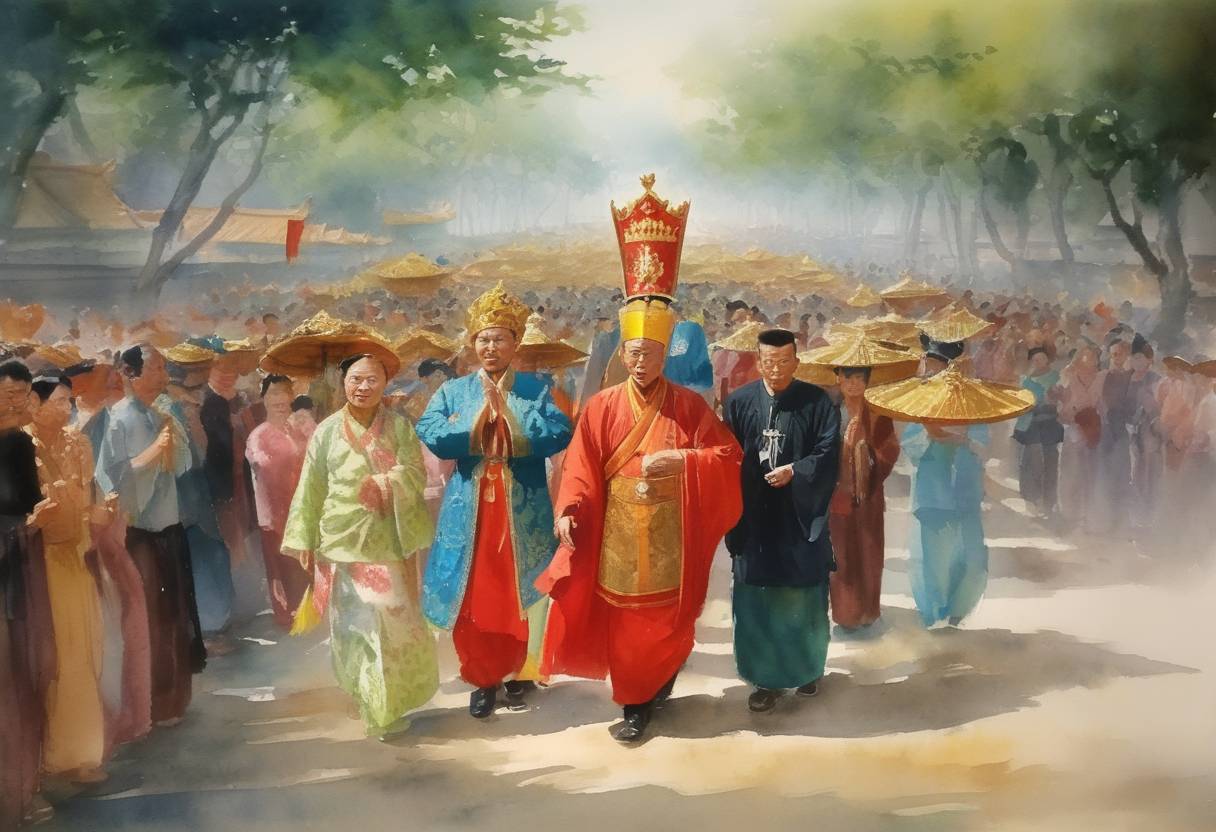
On April 11, 1055, Lý Nhật Tôn ascended to the throne as the Emperor of Vietnam, marking the beginning of a significant era for the Lý dynasty. Lý Nhật Tôn, also known as Lý Thánh Tông, was the third emperor of the Lý dynasty, which is recognized for its consolidation and expansion of Vietnamese power and culture.
The Lý dynasty, founded by Lý Thái Tổ in 1009, had been working to strengthen the foundation of Vietnam as an independent and unified state. His predecessor, Emperor Lý Thái Tông, also contributed significantly by organizing military and administrative reforms and promoting Buddhism as the state religion. These efforts helped in laying the groundwork for a stable governance that Lý Nhật Tôn would further build upon.
Upon his ascension to the throne, Emperor Lý Nhật Tôn focused on both internal consolidation and external expansion:
Cultural and Administrative Reforms: His reign is noted for fostering education and the arts. He continued to promote Buddhism, while also ensuring Confucian principles were integrated into governance, laying the foundation for a more structured civil society.
Military Expansion: Lý Nhật Tôn was also involved in expanding Vietnam’s territory and influence, which included campaigns into Champa territory in the south. His military actions were designed not only to secure Vietnam’s frontiers but also to amplify its regional authority.
Legal Developments: Under his rule, the legal framework of the country was further developed, with a greater emphasis on justice and the centralization of power under the emperor.
Emperor Lý Nhật Tôn’s reign is viewed as a prosperous period that solidified the Lý dynasty’s rule over Vietnam. The consolidation of power and territorial expansions during his reign set the stage for future generations. His leadership played a crucial role in defining Vietnamese sovereignty and cultural identity during the dynastic period.
The legacy of Lý Nhật Tôn’s reign continued to influence Vietnam long after his death, underscoring the importance of his leadership style and political initiatives. His impact helped to reinforce the stability and growth of Vietnam well into subsequent dynasties.
Source: en.wikipedia.org