Edward III Becomes King of England
1327 · London, England
Edward III becomes King of England after his father, Edward II, is deposed.
November 21, 1272
Edward I becomes King of England following the death of his father, King Henry III. Edward, also known as Edward Longshanks, would be known for his military campaigns, including conquests in Wales and conflicts with Scotland.
London, England | English Monarchy
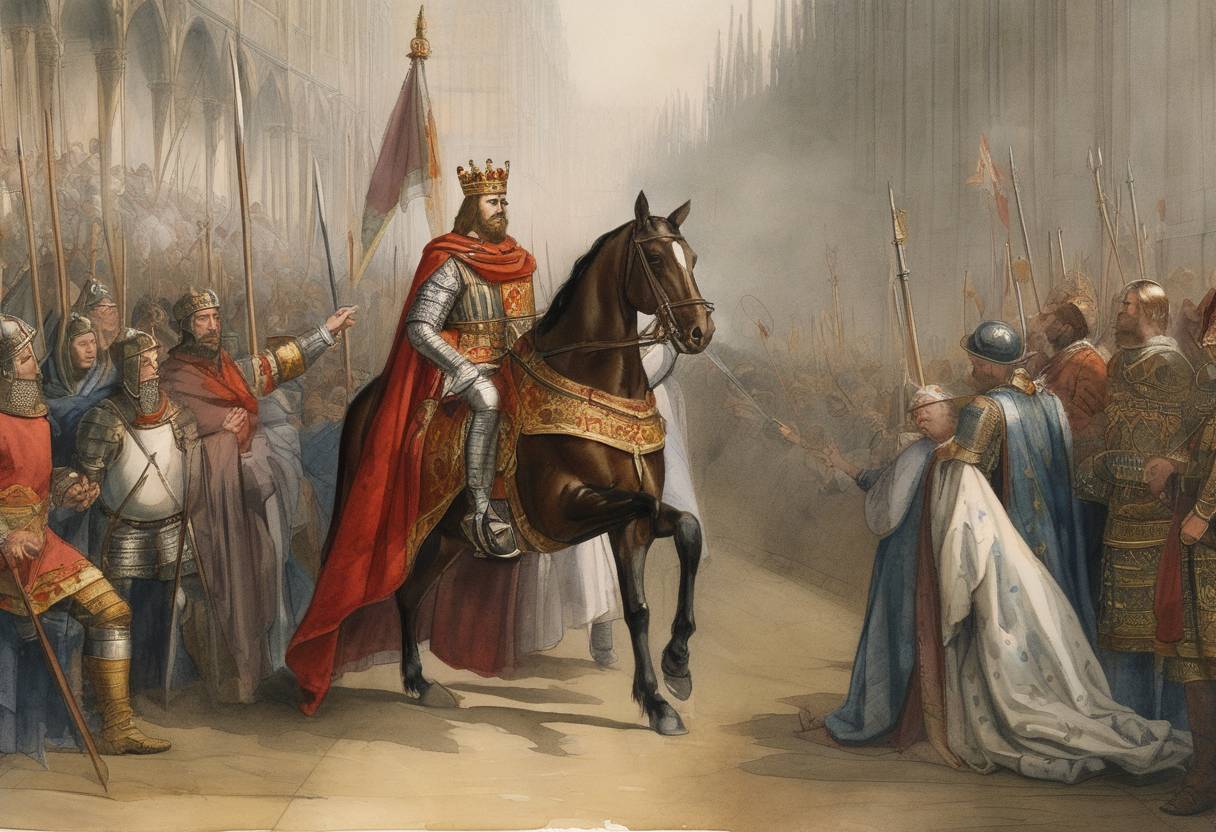
On November 21, 1272, Edward I ascended to the English throne following the death of his father, King Henry III. Edward, who would later become known as Edward Longshanks due to his tall stature, was the first son of Henry III and Eleanor of Provence.
Edward was abroad participating in the Ninth Crusade when Henry III passed away. His accession was smooth, as his father’s reign had established a period of relative stability following the Barons’ War. Edward was in Sicily when he learned of his father’s death and returned to England in 1274 to his formal coronation. The transition was seamless because of established governance and owing to, Edward’s reputation as a formidable leader.
Edward I’s reign was marked by significant military and administrative activities:
Conquests in Wales: Edward is well-remembered for his campaigns to conquer Wales. Determined to assert control, he conducted military campaigns between 1277 and 1283. The eventual defeat of Llywelyn ap Gruffudd resulted in the annexation of Wales into the English crown and the construction of impressive fortresses to maintain dominance.
Conflict with Scotland: Edward sought to extend his rule into Scotland, which led to numerous conflicts known as the Wars of Scottish Independence. His interventions in Scotland started in earnest in the late 1290s and continued until his death in 1307. While initially successful, notably winning the Battle of Falkirk in 1298, his efforts were eventually resisted, and he faced steadfast opposition from figures like William Wallace and Robert the Bruce.
Legal and Administrative Reforms: Edward was also known for his administrative efficiency. He reformed the legal system, with initiatives evident in the Statutes of Westminster, which addressed legal reforms and feudal rights. He sought to consolidate royal power and improve the administration of justice.
Edward I’s reign significantly impacted the structure and future of England’s territorial claims. His campaigns in Wales permanently altered its governance, leading to its integration into England. His involvement in Scotland set the stage for the tumultuous century-long struggle for Scottish independence. Edward’s legal reforms laid groundwork that influenced English common law developments.
Edward’s ability to consolidate the English crown’s power and expand its territories was crucial in setting the precedents for later medieval English kingships. His reign, lasting until 1307, left an enduring legacy on the British Isles and the historical narrative of the English monarchy.
Source: www.britannica.com