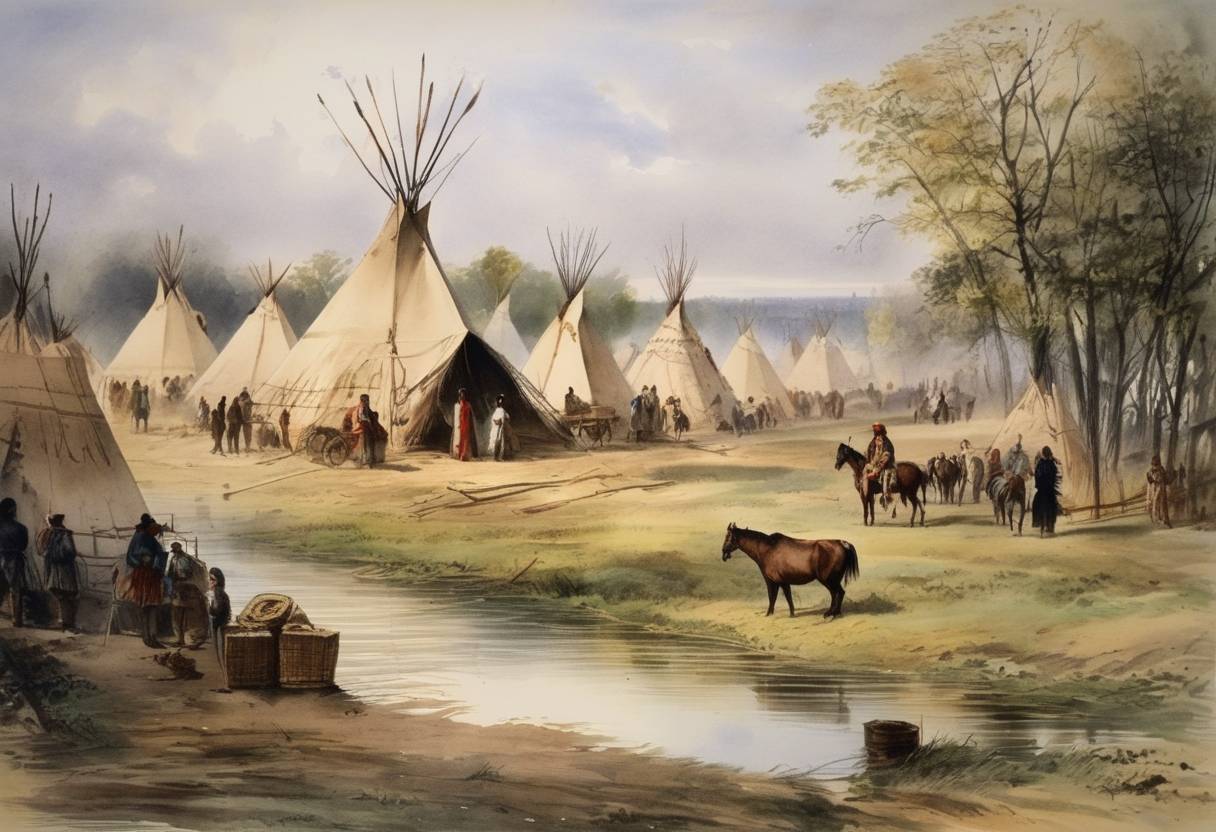
The United States Orders All Native Americans to Move into Reservations: January 31, 1876
On January 31, 1876, the United States federal government mandated that all Native American tribes must relocate to reservations. This directive was part of a broader effort by the U.S. government to exert control over vast western territories and to manage Indigenous populations through confined settlements.
Background
Following years of conflict between Native American tribes and expanding American settlers, the U.S. government sought to systematically limit Indigenous resistance and facilitate westward expansion. Several treaties had been established, promising Native American tribes specific lands; however, these were often unilaterally broken or ignored as settlers continued encroaching upon Indigenous territories.
The discovery of gold in the Black Hills region of the Dakota Territory—a land sacred to the Sioux—exacerbated tensions. Despite the 1868 Treaty of Fort Laramie, which recognized the area as Sioux land, prospectors invaded the region, prompting military intervention.
The Order
The order issued on January 31, 1876, required all Native Americans residing outside of designated reservations to report to them, or otherwise be considered “hostile” and face military action. This was notably aimed at bands not abiding by the treaty terms mandating residency within government-designated boundaries. The ultimatum applied heavily to Plains tribes such as the Sioux and Cheyenne, who continued to resist American incursions onto their lands.
Consequences
The stringent enforcement of this order led to significant military engagements. One of the most famous repercussions was the Great Sioux War of 1876-1877, which included the Battle of Little Bighorn—a significant conflict famously referred to as “Custer’s Last Stand.”
By confining Native Americans to reservations, the U.S. government further disrupted traditional ways of life, leading to significant socio-economic and cultural impacts on Indigenous communities. Reservation life was often characterized by inadequate resources, limited autonomy, and cultural suppression.
Historical Significance
The January 31, 1876 order was a pivotal moment in the ongoing policy of Indian removal that sought to facilitate U.S. expansion by confining Native Americans to reservations. This not only paved the way for increased settlement and economic development in the West but also marked a definitive period of hardship and transformation for Native American tribes. The policy set a precedent for future interactions between Indigenous populations and federal authorities, contributing to long-standing issues related to sovereignty, resource rights, and cultural preservation.