Alhambra Decree's Final Stages: The January 20, 1502 Edict
1502 · Granada, Spain
Isabella I of Castile issues the Alhambra Decree, ordering the expulsion of remaining Moores from Spain.
June 1, 1252
Alfonso X of Castile captured the city of Jerez, marking a significant event in the Reconquista.
Jerez, Spain | Crown of Castile
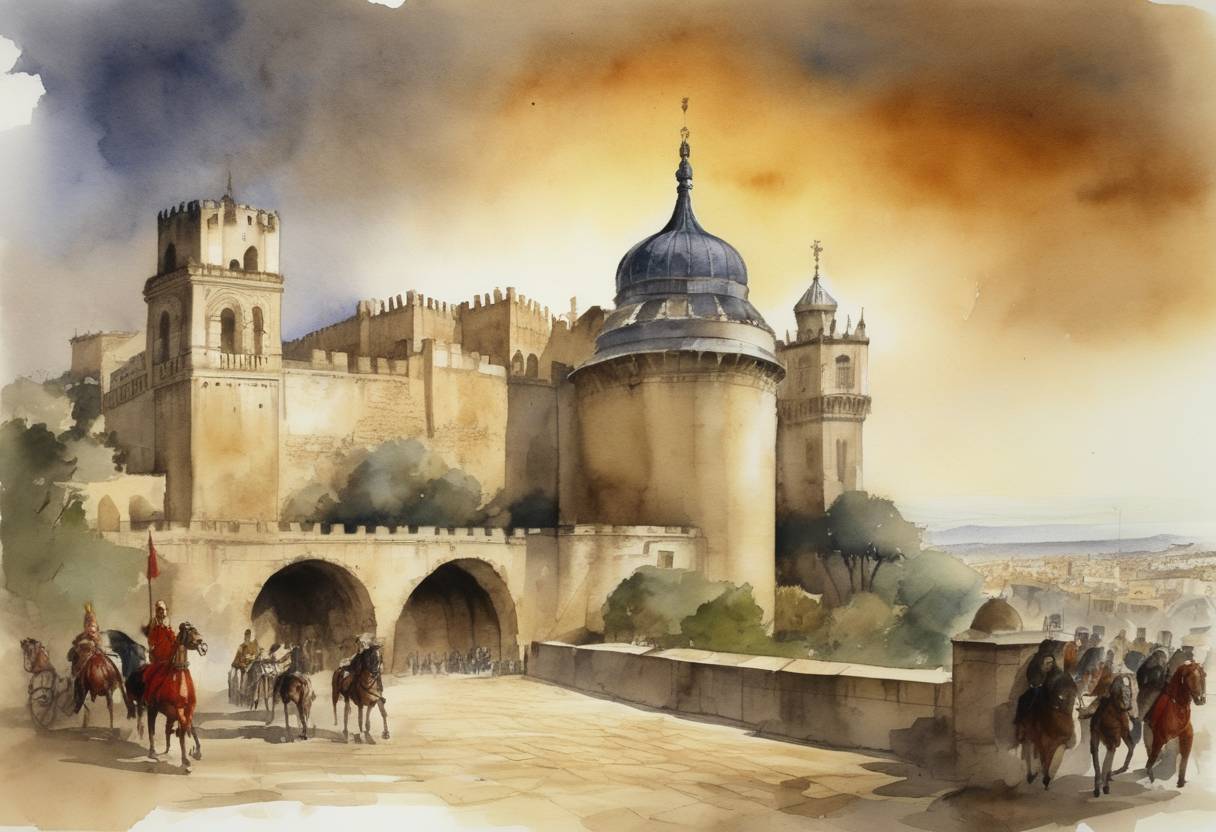
On June 1, 1252, Alfonso X of Castile achieved a significant military victory during the Reconquista by capturing the city of Jerez (also known as Jerez de la Frontera). This event marked a pivotal moment in Alfonso’s efforts to consolidate Christian control over the Iberian Peninsula, which had been contested for centuries between Christian and Muslim rulers.
The Reconquista was a protracted series of campaigns by Christian kingdoms to reclaim territory from Muslim rule in the Iberian Peninsula. Beginning in the early 8th century, the process intensified over the ensuing centuries as the Christian states of Portugal, Castile, León, Aragon, and Navarre gradually expanded their territories at the expense of the Muslim-ruled areas.
Alfonso X, known as “El Sabio” or “The Wise,” ascended to the throne of Castile and León in 1252, following the death of his father, Ferdinand III. Ferdinand III had notably advanced Christian control by capturing key cities such as Córdoba and Seville. Alfonso X continued his father’s legacy, pursuing territorial expansion and consolidation.
Jerez was strategically significant due to its location near the Guadalete River and its implication for controlling access between Seville and the southern coastal regions. The capture of Jerez by Alfonso X was part of a larger military campaign aimed at securing the western Andalusian territories.
After a period of military pressure and negotiations, the city’s rulers capitulated to Alfonso’s forces. The takeover of Jerez facilitated further Christian advances into the surrounding regions and strengthened Alfonso X’s rule.
The fall of Jerez to Alfonso X represented not only a military triumph but also an important step in the Christian reclamation of Iberian territories. The successful capture contributed to the diminishing Muslim influence in Andalusia and furthered the Reconquista efforts.
Furthermore, Alfonso X’s reign is noted for his contributions to culture, law, and science. He fostered the development of the “Siete Partidas” legal code and supported the translation of significant works from Arabic and Hebrew, enriching the cultural and intellectual traditions of Christian Spain.
The consolidation of territories like Jerez under Christian rule facilitated the eventual unification of Spain in the later centuries. The Reconquista culminated with the fall of Granada in 1492, ending centuries of Muslim presence in the region.
Alfonso X’s rule, characterized by both military conquests and cultural achievements, established a foundation for further advancements by subsequent rulers and left a lasting legacy on Spanish history.
Source: www.britannica.com