The Glorious Revolution: King James II Flees to France
1688 · London, England
The Glorious Revolution: King James II of England flees to France, effectively abdicating the throne and paving the way for William of Orange to become king.
November 4, 1677
The future Mary II of England married William of Orange, a union that would later lead to their joint rule as William III and Mary II during the Glorious Revolution.
London, England | British Monarchy
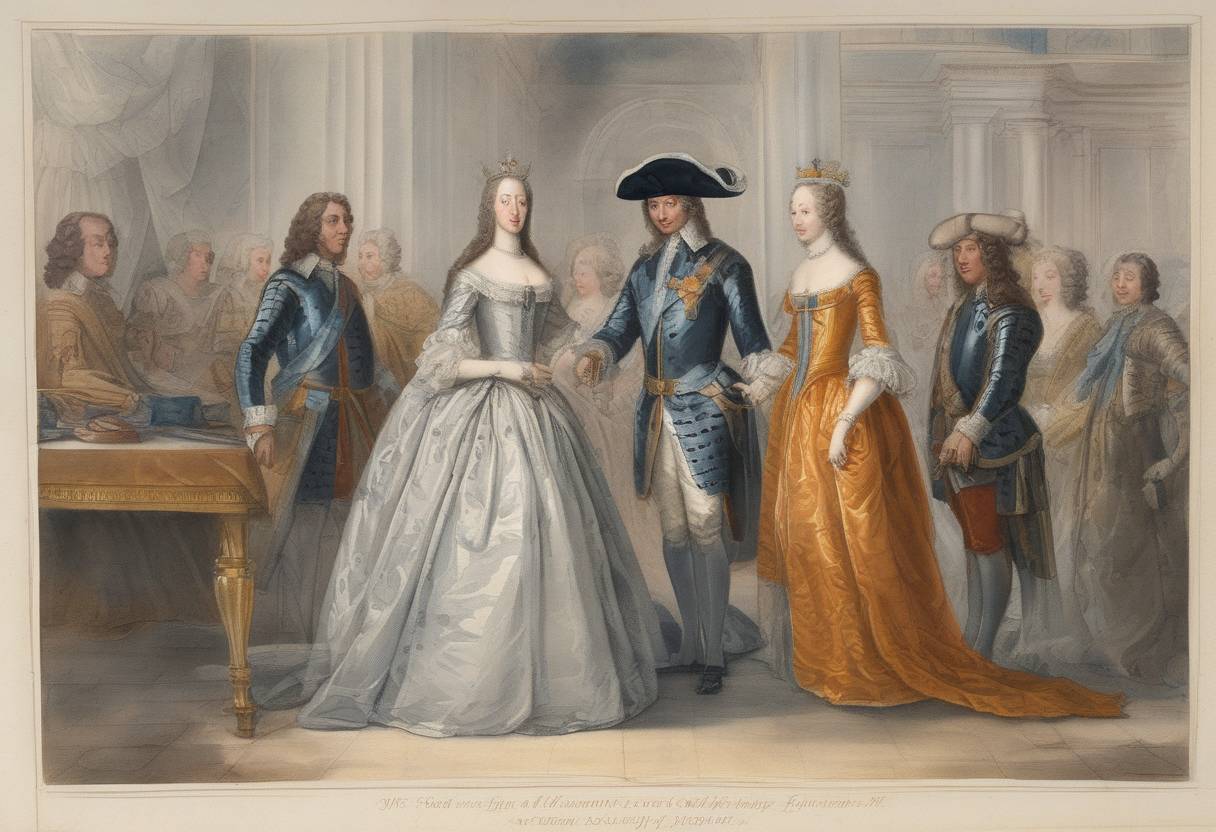
On November 4, 1677, a significant matrimonial alliance took place between Mary, the future Mary II of England, and William of Orange. This union would later play a pivotal role in the political landscape of England, culminating in their joint rule during the Glorious Revolution.
Mary was the daughter of James, Duke of York, who later became King James II of England. Born on April 30, 1662, she was a Protestant, which was a crucial factor in the political and religious dynamics of the time, as England was deeply divided between Protestant and Catholic factions.
William, born on November 4, 1650, was the Prince of Orange and a staunch Protestant leader in the Dutch Republic. He was a key figure in the European opposition against the expansionist policies of Catholic France under Louis XIV.
The marriage between Mary and William was not merely a personal union but a strategic alliance orchestrated to strengthen Protestant ties across Europe. The wedding took place at St. James’s Palace in London, and it was attended by numerous dignitaries and members of the English court.
The marriage set the stage for the Glorious Revolution of 1688. When James II’s policies and Catholic sympathies alienated many of his subjects, William and Mary were invited by English nobles to take the throne. William’s landing in England with a Dutch fleet and army led to James II fleeing to France, effectively abdicating the throne.
The marriage of Mary and William and their subsequent rule had lasting impacts on the British Isles and beyond:
In summary, the marriage of Mary II and William of Orange was a cornerstone event that not only shaped the future of the British monarchy but also had profound implications for the political and religious landscape of Europe.
Source: en.wikipedia.org