Creation of the Department of Homeland Security
2002 · Washington, D.C., United States
U.S. President George W. Bush signs the Homeland Security Act into law, creating the Department of Homeland Security in response to the September 11 attacks.
October 26, 2001
The USA PATRIOT Act was signed into law by President George W. Bush, significantly expanding the authority of U.S. law enforcement agencies for the stated purpose of fighting terrorism in the wake of the September 11 attacks.
Washington, D.C., United States | U.S. Government
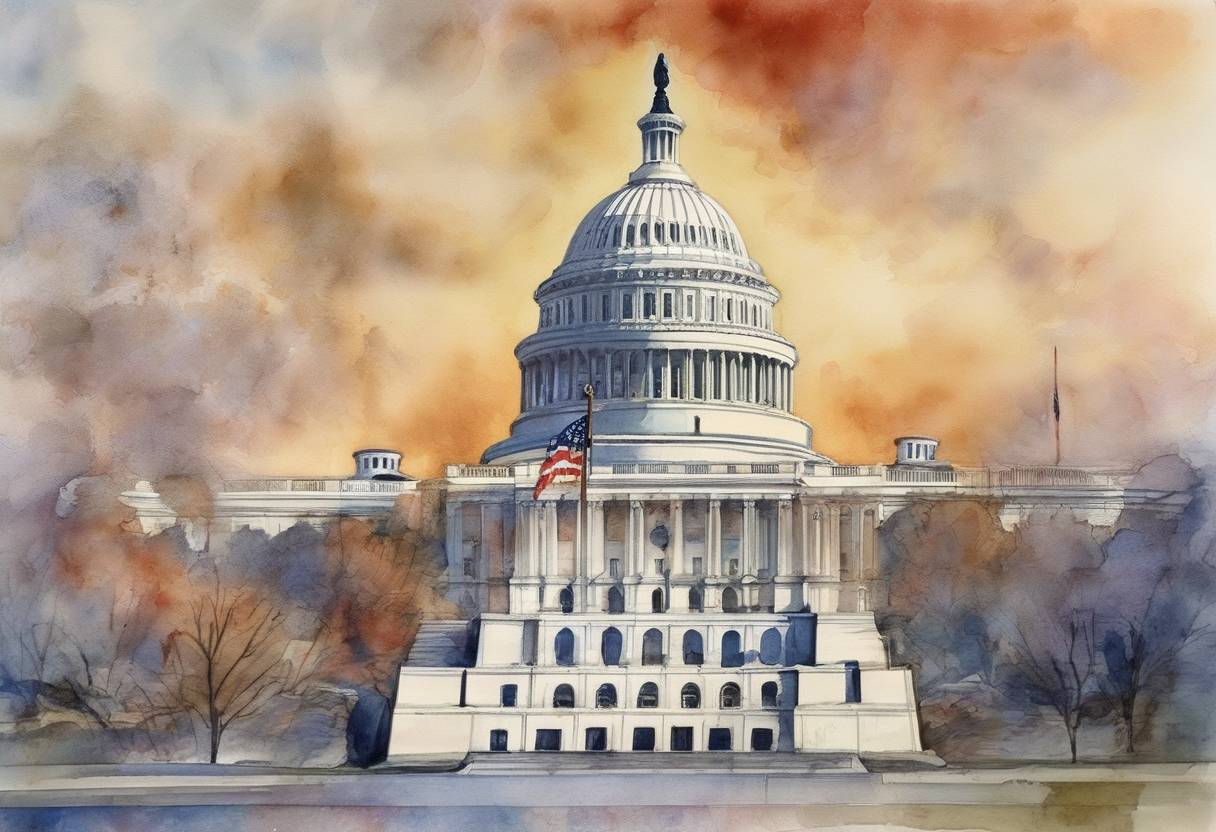
On October 26, 2001, President George W. Bush signed into law the USA PATRIOT Act, a legislative response to the terrorist attacks on September 11, 2001. The full title of the act is the “Uniting and Strengthening America by Providing Appropriate Tools Required to Intercept and Obstruct Terrorism Act of 2001.” This comprehensive statute significantly expanded the powers of U.S. law enforcement and intelligence agencies with the stated goal of enhancing national security and preventing future terrorist activities.
The September 11 attacks, orchestrated by the terrorist group al-Qaeda, resulted in the deaths of nearly 3,000 people and caused widespread devastation. In the immediate aftermath, there was a strong national consensus on the need to bolster the country’s defenses against terrorism. The USA PATRIOT Act was introduced as a means to address perceived gaps in the nation’s security apparatus.
The USA PATRIOT Act introduced several key measures:
Enhanced Surveillance Powers: The act expanded the ability of law enforcement agencies to conduct surveillance, including wiretapping and monitoring of electronic communications. It allowed for roving wiretaps, which enable surveillance on multiple communication devices used by a suspect.
Information Sharing: The act facilitated greater information sharing between government agencies, such as the FBI and CIA, to improve coordination in counter-terrorism efforts.
Financial Regulations: It imposed stricter regulations on financial transactions to prevent money laundering and the funding of terrorist activities.
Detention and Deportation: The act broadened the criteria for detaining and deporting immigrants suspected of terrorism-related activities.
Search and Seizure: It allowed for delayed notification of search warrants, known as “sneak and peek” warrants, enabling law enforcement to search a suspect’s property without immediate notification.
While the USA PATRIOT Act was passed with overwhelming bipartisan support, it has been the subject of significant controversy and debate:
Civil Liberties Concerns: Critics argue that the act infringes on civil liberties and privacy rights, granting the government excessive surveillance powers without adequate oversight.
Judicial Oversight: Concerns have been raised about the lack of judicial oversight and the potential for abuse of power.
Impact on Immigrant Communities: The act’s provisions on detention and deportation have been criticized for disproportionately affecting immigrant communities.
The USA PATRIOT Act has undergone several reauthorizations and amendments since its enactment. Some provisions have been modified or allowed to expire, while others have been retained or expanded. The act has had a lasting impact on U.S. national security policy and continues to influence debates on the balance between security and civil liberties.
In summary, the USA PATRIOT Act represents a pivotal moment in U.S. legislative history, reflecting the nation’s response to the threat of terrorism and the ongoing challenge of safeguarding both security and individual freedoms.
Source: www.congress.gov