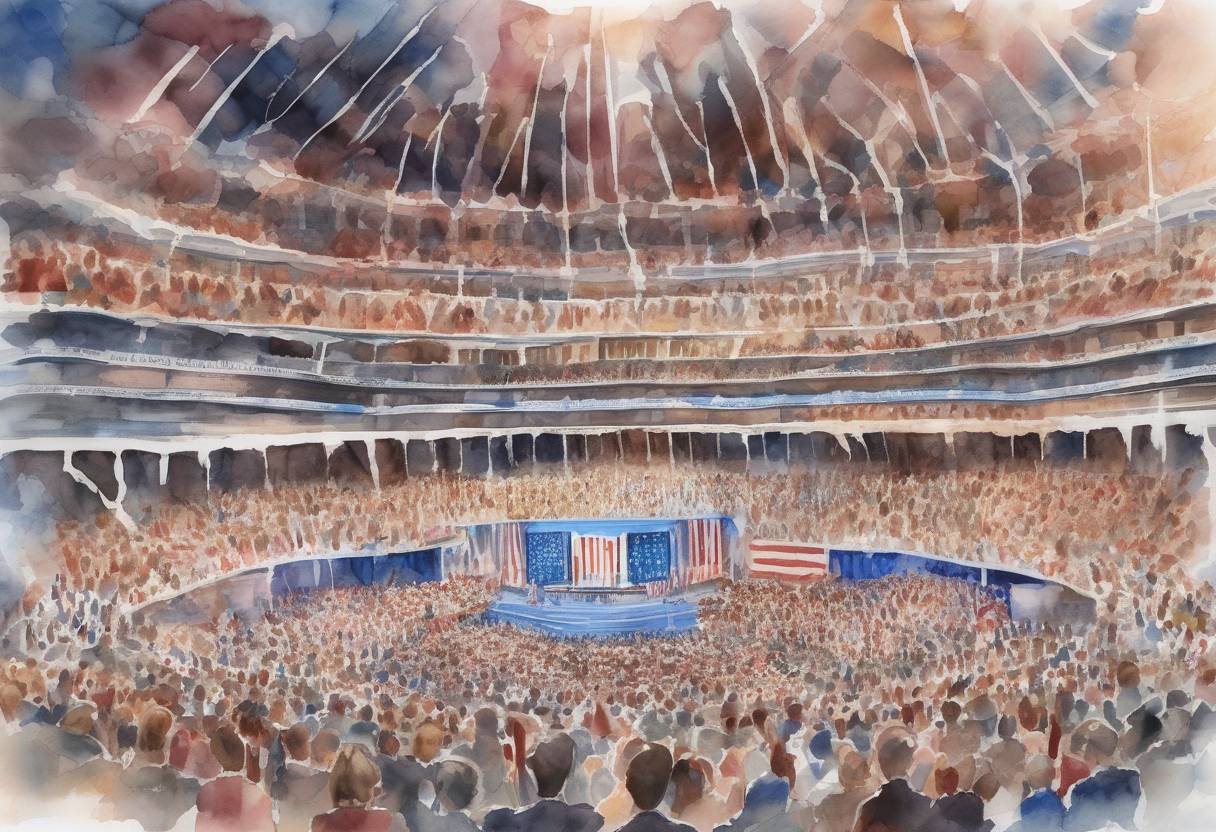
The 2016 Democratic National Convention: Hillary Clinton’s Historic Nomination
On July 25, 2016, the Democratic National Convention (DNC) commenced in Philadelphia, Pennsylvania, marking a significant moment in U.S. political history. This event was notable for the nomination of Hillary Clinton as the Democratic candidate for the U.S. presidential election, making her the first woman to be nominated for president by a major U.S. political party.
Context and Background
The 2016 Democratic primary season was a competitive race primarily between Hillary Clinton, a former Secretary of State, U.S. Senator, and First Lady, and Bernie Sanders, a U.S. Senator from Vermont. Clinton’s campaign focused on continuing the policies of the Obama administration, advocating for women’s rights, healthcare reform, and economic equality. Sanders, on the other hand, energized a significant portion of the electorate with his calls for a political revolution, emphasizing income inequality and campaign finance reform.
Key Events Leading to the Convention
Primaries and Caucuses: Throughout the primary season, Clinton secured a majority of the pledged delegates and superdelegates, despite a strong challenge from Sanders. Her victories in key states and her substantial support among superdelegates solidified her path to the nomination.
Platform Development: The Democratic Party’s platform for the 2016 election was crafted to reflect a broad range of progressive policies, incorporating some of Sanders’ key issues, such as a $15 minimum wage and expanded healthcare access.
The Convention
The DNC took place from July 25 to July 28, 2016, at the Wells Fargo Center in Philadelphia. The convention was attended by thousands of delegates, party officials, and supporters.
Highlights of the Convention
Opening Day: The convention opened with speeches from prominent Democratic figures, including First Lady Michelle Obama, who delivered a widely acclaimed address emphasizing unity and the importance of the election.
Nomination: On July 26, Hillary Clinton was officially nominated as the Democratic candidate for president. The roll call vote confirmed her nomination, with Sanders moving to make the nomination unanimous in a gesture of party unity.
Keynote Speeches: The convention featured speeches from President Barack Obama, Vice President Joe Biden, and former President Bill Clinton, all of whom endorsed Clinton and highlighted her qualifications and vision for the country.
Acceptance Speech: On July 28, Hillary Clinton accepted the nomination, delivering a speech that outlined her vision for America, focusing on themes of unity, opportunity, and shared prosperity. She emphasized her commitment to building an inclusive economy and ensuring equal rights for all Americans.
Aftermath and Significance
Hillary Clinton’s nomination was a historic milestone in American politics, representing a breakthrough for gender equality in the political arena. Her candidacy galvanized many voters, particularly women and young people, although it also faced significant opposition and controversy.
The 2016 presidential election was one of the most contentious in U.S. history, ultimately resulting in the election of Republican candidate Donald Trump. Clinton won the popular vote but lost the Electoral College, leading to widespread debate about the electoral process and its implications.
The 2016 DNC and Clinton’s nomination remain significant for their impact on the Democratic Party and the broader conversation about gender and leadership in the United States.