William Shakespeare: Life and Legacy
1616 · Stratford-upon-Avon, England
William Shakespeare, the famous English playwright, died on this date, which is also believed to be his birthday.
April 26, 1564
William Shakespeare is baptized in Stratford-upon-Avon, England. He would become one of the most influential playwrights and poets in the English language.
Stratford-upon-Avon, England
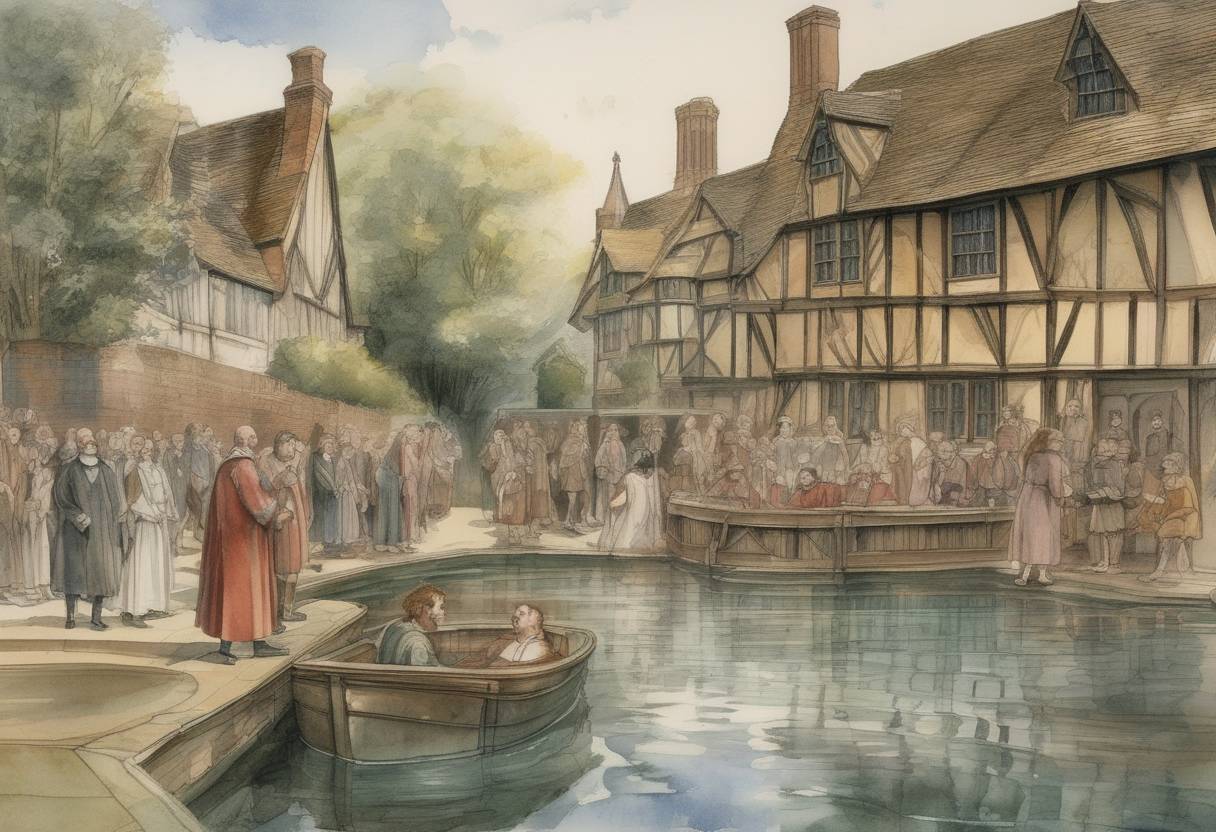
On April 26, 1564, William Shakespeare was baptized in the Holy Trinity Church in Stratford-upon-Avon, England. This event is one of the earliest recorded milestones in the life of a man who would become one of the most influential playwrights and poets in the English language.
Birth and Family: Although the exact date of Shakespeare’s birth is not documented, it is traditionally celebrated on April 23, 1564, three days before his baptism. He was born to John Shakespeare, a successful glover and alderman, and Mary Arden, a member of the local gentry.
Stratford-upon-Avon: At the time of Shakespeare’s birth, Stratford-upon-Avon was a bustling market town. The town’s vibrant community and its proximity to the cultural hub of London would later influence Shakespeare’s works.
Religious and Social Importance: Baptism was a significant religious rite in Elizabethan England, marking an individual’s formal entry into the Christian community. It was also a social event, reflecting the family’s status and connections within the community.
Historical Record: The baptismal record is one of the few concrete pieces of evidence about Shakespeare’s early life, as many personal records from this period are sparse or lost.
Literary Contributions: William Shakespeare went on to write approximately 39 plays, 154 sonnets, and two long narrative poems. His works, including classics like “Hamlet,” “Romeo and Juliet,” and “Macbeth,” have had a profound impact on English literature and drama.
Cultural Influence: Shakespeare’s influence extends beyond literature. His plays have been translated into every major language and are performed more often than those of any other playwright. His exploration of human nature and mastery of the English language have left an indelible mark on culture and society.
Enduring Relevance: Shakespeare’s works continue to be studied and celebrated for their complex characters, innovative use of language, and exploration of universal themes such as love, power, jealousy, betrayal, and the supernatural.
The baptism of William Shakespeare on April 26, 1564, marks the beginning of the life of a literary giant whose works have transcended time and geography. His contributions to literature and culture remain unparalleled, and his legacy continues to inspire and influence generations around the world.
Source: en.wikipedia.org