Battle of Ascalon - August 12, 1099
1099 · Ascalon, Fatimid Caliphate (modern-day Israel)
Battle of Ascalon marks a decisive engagement in the First Crusade, concluding with the Crusaders' victory over Fatimid forces.
December 11, 1110
The Crusaders captured Sidon during the First Crusade, expanding the Kingdom of Jerusalem's territory.
Sidon, Lebanon | Crusader forces
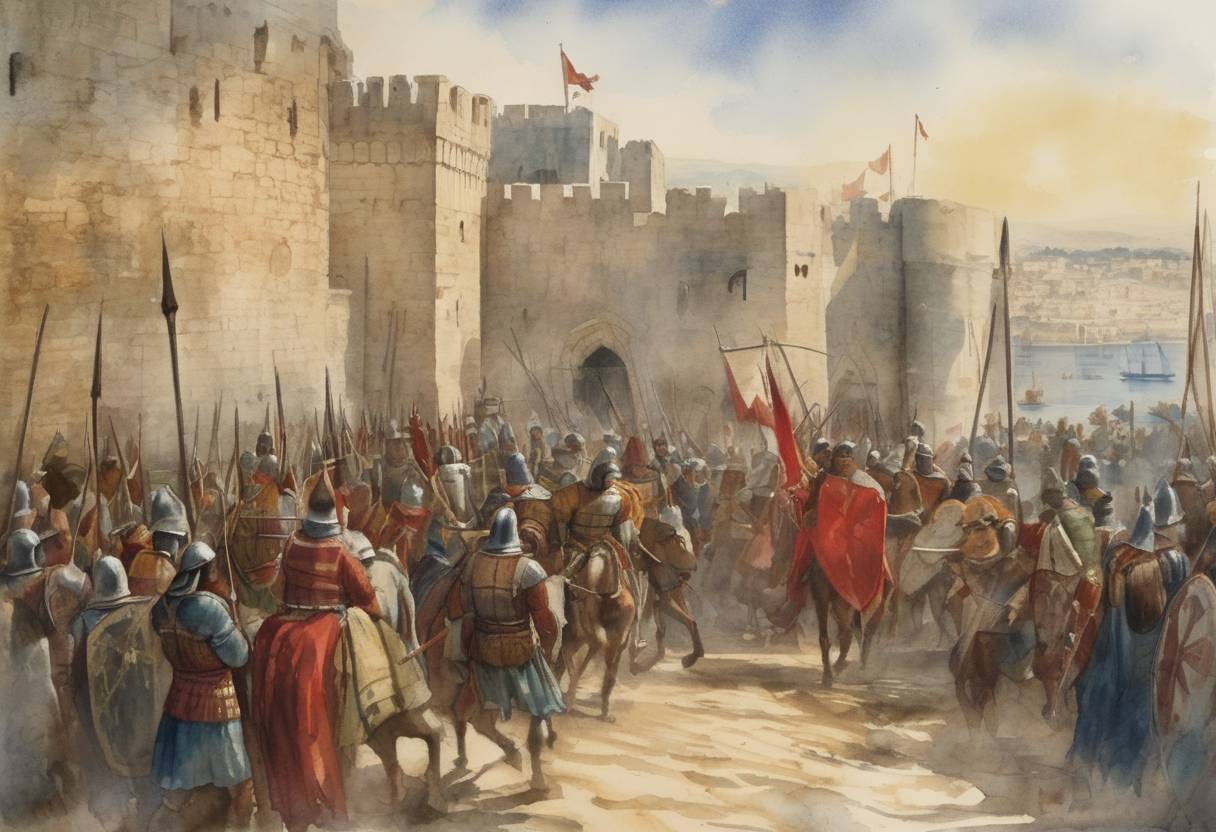
On December 4, 1110, The Crusaders, with the support of the Kingdom of Norway, successfully captured the city of Sidon during the First Crusade. This military effort was part of the broader campaign to expand the territory of the Crusader States in the Levant, specifically the Kingdom of Jerusalem.
The First Crusade: Initiated at the end of the 11th century in response to Pope Urban II’s call, the First Crusade aimed to reclaim Jerusalem and other holy lands from Muslim control. It culminated in the establishment of several Crusader States, including the Kingdom of Jerusalem.
Strategic Importance of Sidon: Sidon, a coastal city in what is now modern-day Lebanon, was a crucial maritime port. Its capture was strategic for controlling trade routes and establishing a firmer foothold along the eastern Mediterranean coast. Control over Sidon also helped secure the northern border of the Kingdom of Jerusalem against potential Muslim or naval threats.
Preparation and Support: King Baldwin I of Jerusalem led the campaign against Sidon. The Crusaders received crucial naval assistance from King Sigurd I of Norway, whose fleet provided support to the land forces and facilitated a blockade of the city from the sea.
Execution of the Siege: The combined forces of the Crusaders launched assaults both by land and sea. Facing a well-coordinated attack, the defenders of Sidon were unable to sustain a prolonged resistance against the superior tactics and resources of the Crusaders.
Outcome: The fall of Sidon was achieved by December 4, marking another significant expansion of the Kingdom of Jerusalem. The city’s capture not only boosted morale among the Crusaders but also solidified their presence in the region.
Integration into the Kingdom of Jerusalem: Following its capture, Sidon was integrated into the Kingdom of Jerusalem, becoming one of its key coastal cities.
Impact on Crusader Expansion: The successful capture of Sidon demonstrated the effectiveness of Crusader military strategies and alliances, as the cooperation with Norwegian forces exemplified.
Continued Expansion Efforts: The Siege of Sidon encouraged subsequent efforts to consolidate and expand Crusader-controlled territories, enhancing their influence and control over the Levantine coast.
The capture of Sidon was a testament to the Crusaders’ strategic capabilities and their determination to maintain and expand their territories during the medieval Crusades.
Source: en.wikipedia.org