Publication of Robert Browning’s “Love Among the Ruins”
1900 · London, United Kingdom
Robert Browning's poem 'Love Among the Ruins' is published posthumously.
December 27, 1904
The first performance of J.M. Barrie's play 'Peter Pan, or The Boy Who Wouldn't Grow Up' premiered at the Duke of York's Theatre in London.
London, United Kingdom | Duke of York's Theatre
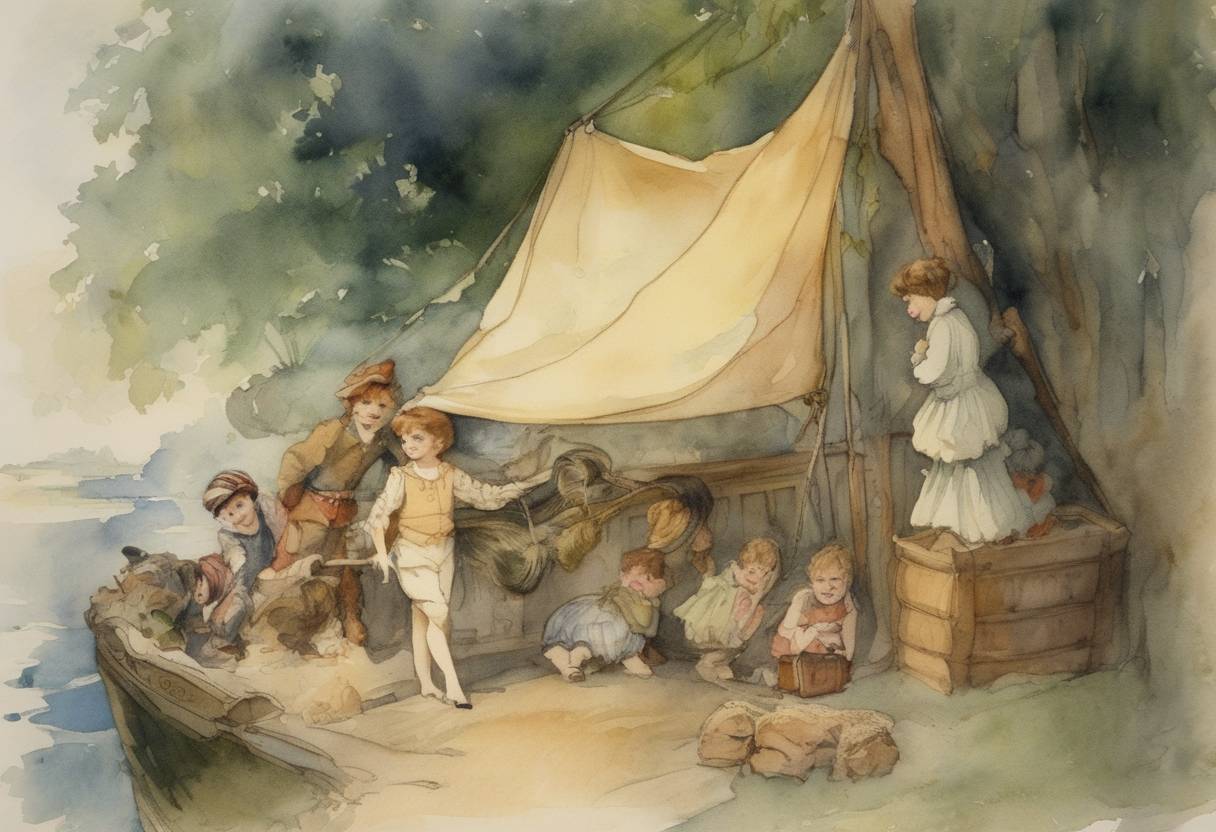
On December 27, 1904, the first performance of J.M. Barrie’s play Peter Pan, or The Boy Who Wouldn’t Grow Up took place at the Duke of York’s Theatre in London. This event marked the debut of a story that would become one of the most beloved and enduring in children’s literature and theater.
J.M. Barrie, a Scottish novelist and playwright, was inspired to create the character of Peter Pan from his interactions with the Llewelyn Davies boys, whom he befriended in Kensington Gardens, London. Barrie’s relationship with the family played a significant role in shaping the themes and characters of Peter Pan.
The play featured innovative stage effects and flying scenes, which captivated audiences and contributed significantly to its success. The character of Peter Pan, a boy who never grows up and can fly, along with his adventures in the mythical Neverland, enchanted both children and adults.
The premiere of Peter Pan established J.M. Barrie as a leading playwright and introduced motifs of eternal childhood and escapism that resonated deeply with contemporary audiences. The success of the play led to numerous adaptations, including films, television series, and stage musicals, ensuring Peter Pan’s place in popular culture.
Following its initial run, Peter Pan became a recurring production during the Christmas season in London and eventually expanded internationally. Barrie later adapted the play into a novel, Peter and Wendy, published in 1911, which further cemented the story’s legacy.
J.M. Barrie’s creation has had a lasting impact on literature, theater, and popular culture, exploring themes of childhood innocence and the complexities of growing up. The play remains a staple of theaters worldwide and continues to inspire various interpretations and artistic expressions.
Source: www.nytimes.com