October 10, 1781

The Battle of Cape Breton begins during the American Revolutionary War. British forces aim to capture supplies from French and American forces at Cape Breton Island.


Cape Breton, Canada | British Royal Navy
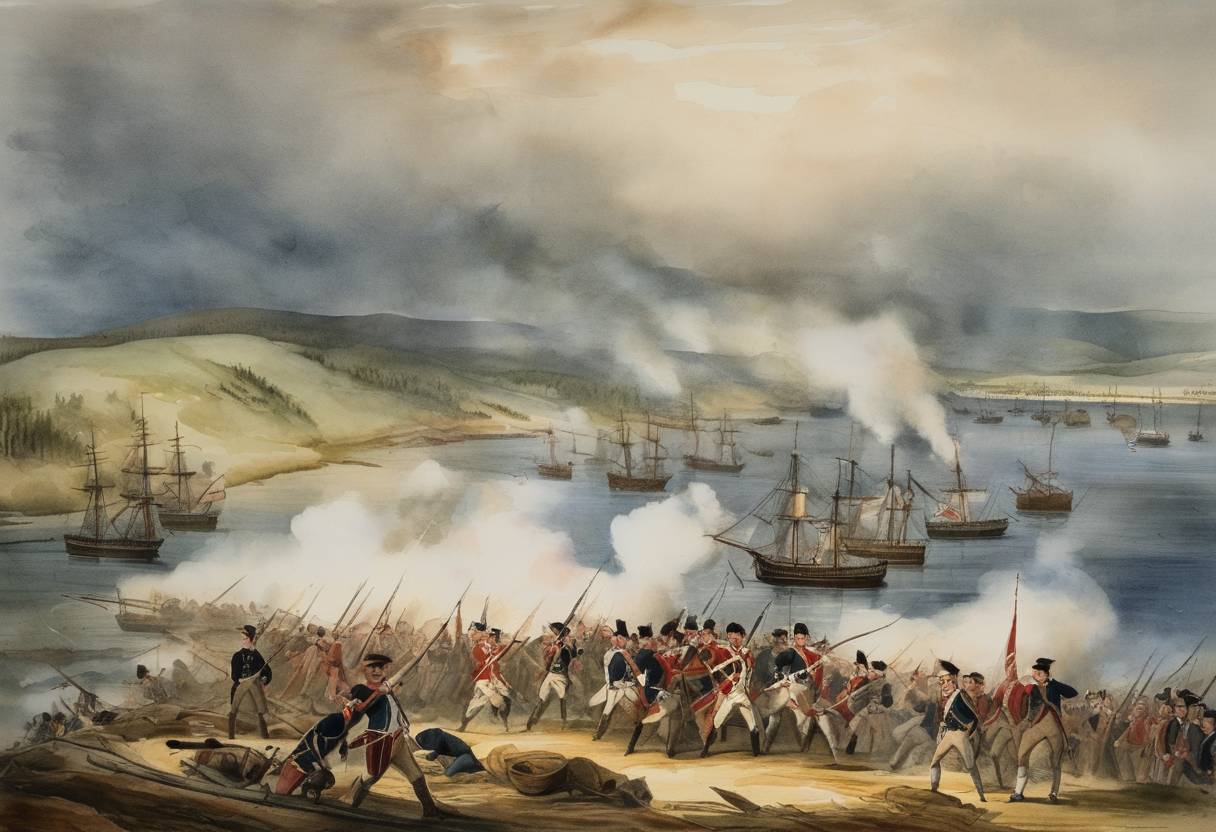
Watercolor painting based depiction of The Battle of Cape Breton begins during the American Revolutionary War. British forces aim to capture supplies from French and American forces at Cape Breton Island. (1781)

Battle of Cape Breton - October 10, 1781

The entry in historical records for a specific “Battle of Cape Breton” on October 10, 1781, associated with the American Revolutionary War is elusive, suggesting it may not be a renowned engagement within the larger war narrative. However, during this period, the American Revolutionary War was in its final stages, with significant military actions predominantly concentrated on the Siege of Yorktown.

Context of the Period

  • American Revolutionary War (1775-1783): A conflict between the Thirteen American colonies and the British Empire, with the colonies seeking independence. The latter years of the war saw increased French support for the American cause following France’s formal entry into the conflict in 1778.
  • Role of Cape Breton: Positioned off the coast of Nova Scotia, Cape Breton Island was strategically significant due to its location near major shipping lanes and rich resources, making it a potential target for military expeditions seeking supplies or control of maritime routes.

The Situation in Late 1781

  • Naval Campaigns: In 1781, naval operations were critical as both the British and Franco-American forces aimed to control essential trade and supply routes across the Atlantic and into North American territories.
  • Siege of Yorktown: On October 10, 1781, the Siege of Yorktown was ongoing. As the conclusive major land battle of the revolution, it saw French and American troops besiege a British army under General Cornwallis. Success at Yorktown would ultimately lead to the end of major hostilities and the start of peace negotiations.

Possible Interpretations

The specific mention of a mission to capture supplies from French and American forces at Cape Breton Island would hypothetically align with British efforts to disrupt Franco-American logistics and potentially acquire supplies. However, without detailed historical documentation or notable accounts, this engagement remains speculative against the backdrop of more prominent battles of the time.

Broader Historical Significance

  • The year 1781 was a turning point in the American Revolutionary War, predominantly due to the success at Yorktown rather than isolated conflicts elsewhere.
  • Maritime actions and supply chain disruptions were a critical aspect of war strategy, underscoring the importance of naval power and resource management in the overall conflict.

Conclusion

While major historical records do not prominently feature a “Battle of Cape Breton” taking place specifically on October 10, 1781, understanding the period’s context highlights the strategic importance of coastal and maritime engagements, even if lesser-known, during the war’s final phase.