The Beginning of the "Son of Sam" Murders: July 29, 1976
1976 · New York City, United States
In New York City, David Berkowitz, known as the 'Son of Sam,' committed his first murder, beginning a series of attacks that terrorized the city.
July 6, 1971
Jazz musician Louis Armstrong, one of the most influential figures in jazz history, passed away in New York City.
New York City, United States | none
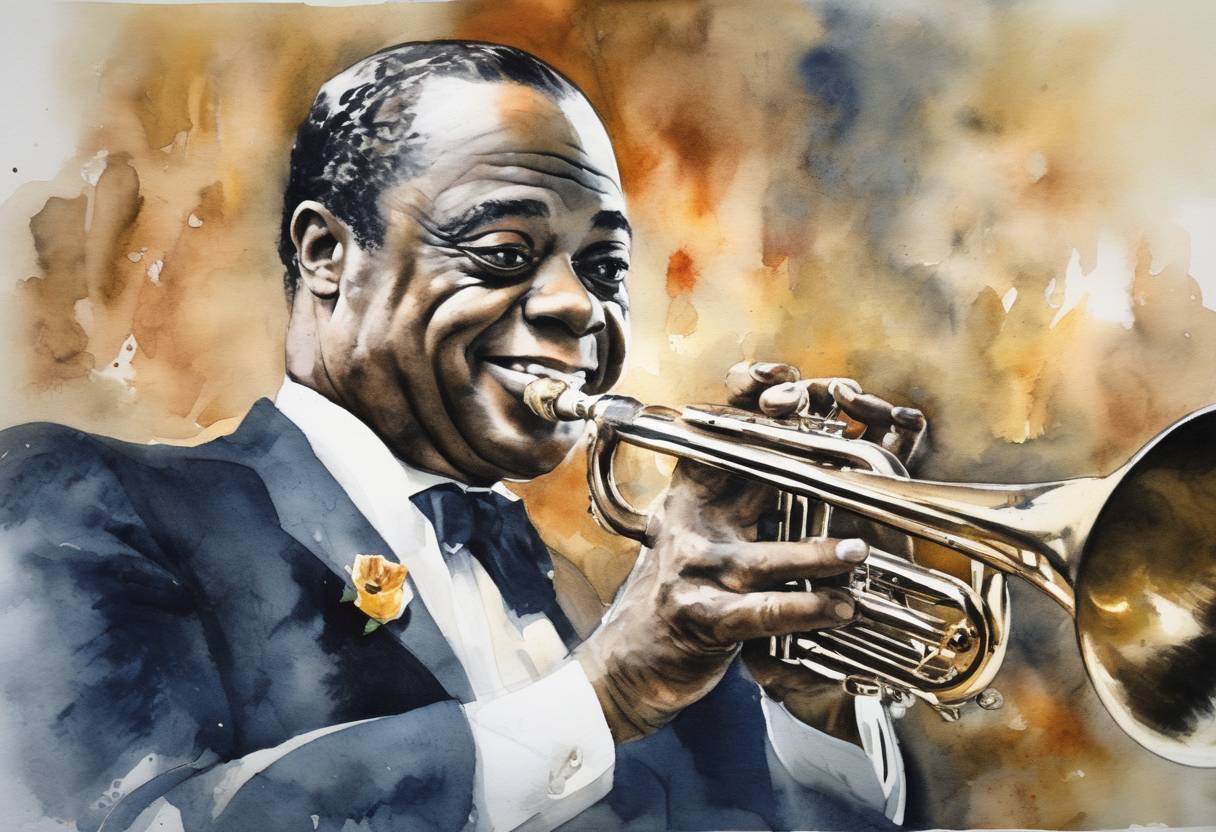
On July 6, 1971, the world bid farewell to one of the most influential figures in jazz history, Louis Armstrong, who passed away in New York City. Known for his virtuosic trumpet playing, distinctive gravelly voice, and charismatic stage presence, Armstrong left an indelible mark on the world of music.
Louis Daniel Armstrong was born on August 4, 1901, in New Orleans, Louisiana, a city renowned for its rich musical heritage. Growing up in a poor neighborhood, Armstrong’s early life was challenging, but his passion for music was evident from a young age. He began playing the cornet in a band at the New Orleans Home for Colored Waifs, where he was sent as a child.
Armstrong’s talent quickly became apparent, and he soon joined local bands, gaining experience and honing his skills. His big break came when he joined Joe “King” Oliver’s Creole Jazz Band in Chicago in 1922. This move marked the beginning of his ascent to fame.
In the mid-1920s, Armstrong moved to New York City, where he joined Fletcher Henderson’s Orchestra. His innovative approach to playing and improvisation revolutionized jazz, transforming it from ensemble-based music to a soloist’s art form. Armstrong’s recordings with his own groups, the Hot Five and Hot Seven, are considered some of the most influential in jazz history.
His charismatic personality and groundbreaking musical style helped popularize jazz across the United States and internationally. Armstrong’s hits, such as “What a Wonderful World,” “Hello, Dolly!,” and “When the Saints Go Marching In,” became timeless classics.
Armstrong’s contributions to music extended beyond his technical prowess. He was a pioneer in scat singing and played a crucial role in breaking down racial barriers in the entertainment industry. His collaborations with other jazz legends, such as Ella Fitzgerald and Duke Ellington, further cemented his status as a musical icon.
Armstrong’s influence can be seen in countless musicians who followed in his footsteps, and his impact on jazz and popular music remains profound. His ability to convey deep emotion through his music and his infectious joy for performance endeared him to audiences worldwide.
In his later years, Armstrong continued to perform and record, despite health challenges. He remained a beloved figure in the music world until his death on July 6, 1971, at the age of 69. Armstrong’s passing marked the end of an era, but his legacy lives on through his recordings and the countless artists he inspired.
Louis Armstrong’s life and career exemplify the transformative power of music and the enduring spirit of jazz. His contributions to the art form continue to resonate, making him a timeless figure in the annals of music history.
Source: en.wikipedia.org