Coronation of Elizabeth I: Beginning of the Elizabethan Era
1559 · London, England
Elizabeth I was crowned Queen of England at Westminster Abbey, marking the beginning of her influential reign, often referred to as the Elizabethan Era.
February 20, 1547
Edward VI of England was crowned King of England at Westminster Abbey.
London, England | Church of England
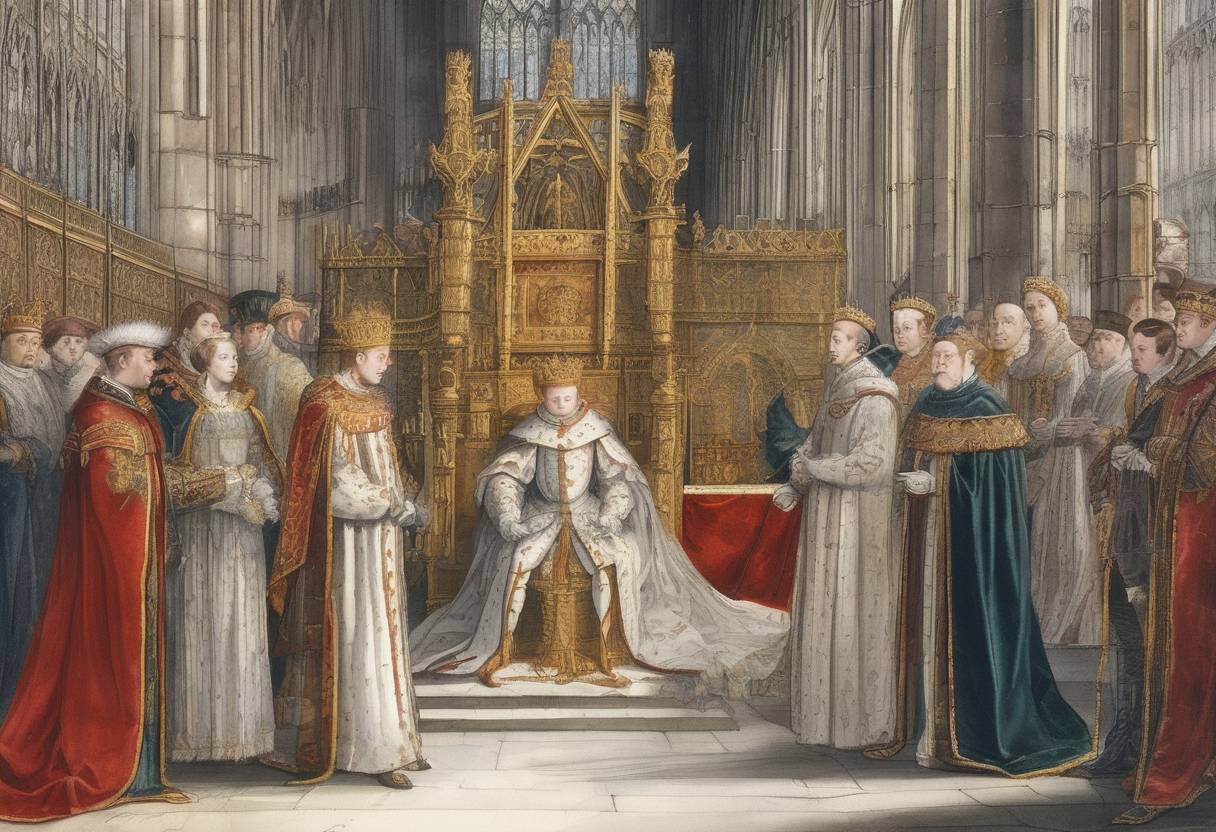
On February 20, 1547, Edward VI was crowned King of England at Westminster Abbey. This event marked the beginning of his reign following the death of his father, King Henry VIII, on January 28, 1547. Edward VI’s coronation was a significant moment in English history, as he was the first monarch to be raised as a Protestant, reflecting the religious transformations that were occurring in England during this period.
Edward VI was born on October 12, 1537, to Henry VIII and his third wife, Jane Seymour. His birth was highly anticipated as he was the long-awaited male heir to the Tudor dynasty. Unfortunately, Jane Seymour died shortly after his birth, leaving Edward to be raised by a series of tutors and guardians.
Henry VIII’s reign was marked by significant religious upheaval, including the English Reformation, which saw the Church of England break away from the authority of the Pope and the Roman Catholic Church. By the time of Edward’s accession, England was in the midst of these religious changes.
Edward VI was only nine years old at the time of his coronation, making him one of the youngest kings in English history. The ceremony took place at Westminster Abbey, a traditional site for English coronations. Due to his young age, a regency council was established to govern on his behalf, with his uncle, Edward Seymour, Duke of Somerset, serving as Lord Protector.
The coronation ceremony itself was infused with Protestant symbolism, reflecting the religious direction that the regency council intended to pursue. The service was conducted in English rather than Latin, and the traditional Catholic mass was replaced with a Protestant communion service.
Edward VI’s reign, although short, was pivotal in the further establishment of Protestantism in England. Under the guidance of his regents, significant religious reforms were enacted, including the introduction of the Book of Common Prayer and the Forty-Two Articles, which laid the foundation for the Church of England’s doctrine.
Edward’s reign was marked by economic challenges and social unrest, including the Prayer Book Rebellion and Kett’s Rebellion, both of which were partly fueled by opposition to the religious changes.
Edward VI’s health was frail, and he died on July 6, 1553, at the age of 15. His death led to a succession crisis, as he had attempted to alter the line of succession to prevent his Catholic half-sister, Mary, from ascending to the throne. Despite these efforts, Mary I eventually became queen, leading to a temporary restoration of Catholicism in England.
Edward VI’s coronation and reign were crucial in the religious and political transformations of 16th-century England, setting the stage for the future of the English Reformation.
Source: en.wikipedia.org