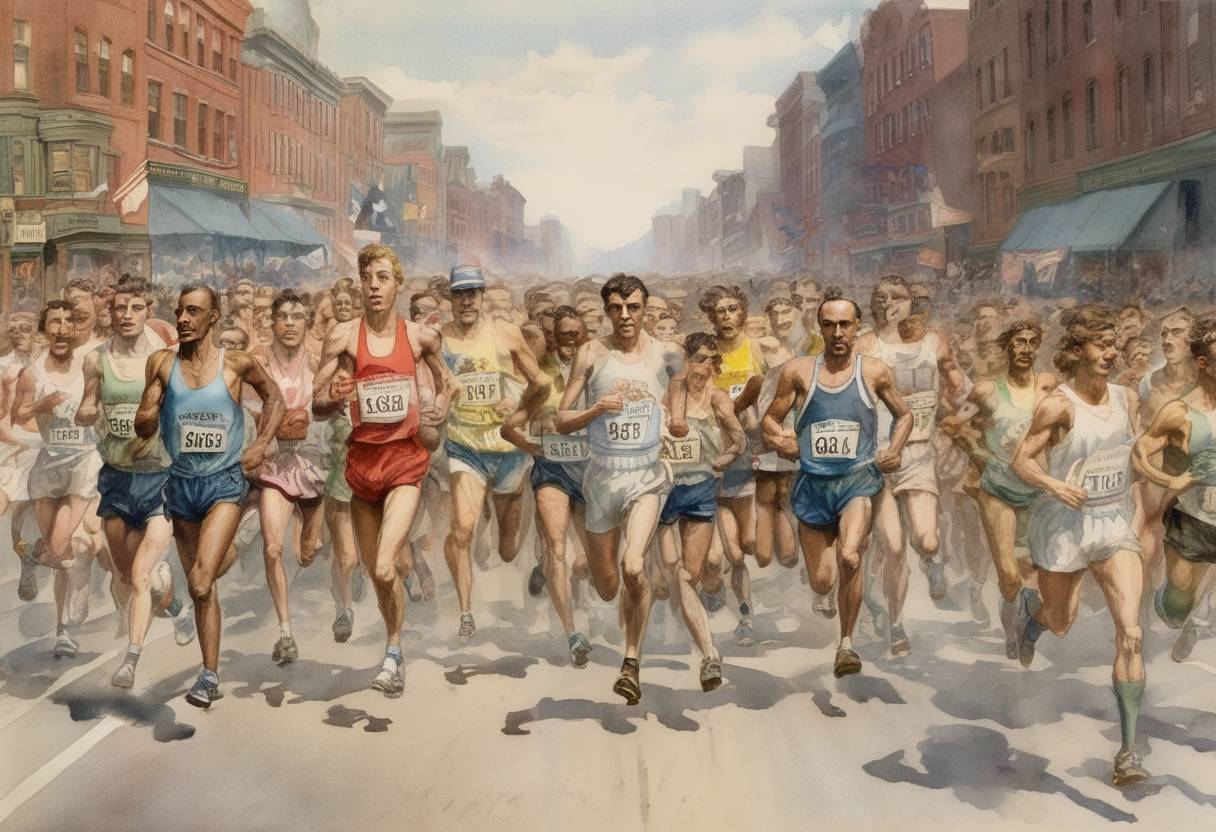
The First Boston Marathon: April 19, 1897
The Boston Marathon, now one of the world’s most prestigious long-distance running events, had its inaugural race on April 19, 1897. This historic event marked the beginning of what would become an enduring tradition in the world of athletics.
Background
The Boston Marathon was inspired by the success of the marathon event in the first modern Olympic Games held in Athens in 1896. The Boston Athletic Association (BAA), motivated by the Olympic marathon’s popularity, decided to organize a similar race in the United States. The event was scheduled to coincide with Patriots’ Day, a holiday commemorating the Battles of Lexington and Concord, which marked the beginning of the American Revolutionary War.
The Race
- Date: April 19, 1897
- Distance: The original course was approximately 24.5 miles, starting in Ashland, Massachusetts, and ending in Boston. It wasn’t until 1924 that the course was lengthened to the official marathon distance of 26.2 miles.
- Participants: The inaugural race featured 15 runners, a modest number compared to the thousands who participate today.
John J. McDermott’s Victory
John J. McDermott, a runner from New York, emerged as the victor of the first Boston Marathon. He completed the race in 2 hours, 55 minutes, and 10 seconds, setting a benchmark for future competitors. McDermott’s win was significant not only for his personal achievement but also for setting the stage for the marathon’s growth in popularity and prestige.
Significance and Legacy
The Boston Marathon has grown exponentially since its humble beginnings. It is now a major international event, attracting elite runners from around the world and thousands of participants of all skill levels. The race is renowned for its challenging course, which includes the infamous Heartbreak Hill, and its enthusiastic spectators who line the route.
The marathon’s establishment in 1897 laid the groundwork for the development of long-distance running as a popular sport in the United States and globally. It has become a symbol of endurance, resilience, and community spirit.
Conclusion
The first Boston Marathon on April 19, 1897, was a pivotal moment in sports history. John J. McDermott’s victory not only marked the beginning of a storied tradition but also highlighted the growing interest in marathon running. Today, the Boston Marathon stands as a testament to the enduring appeal and challenge of long-distance running.