Launch of the Ford Model A - December 2, 1927
1927 · Dearborn, United States
The Ford Model A was launched, marking a significant advancement in automobile design and manufacturing after the success of the Model T.
January 13, 1942
Henry Ford patents a plastic automobile, which is 30% lighter than a regular car.
Dearborn, United States | Ford Motor Company
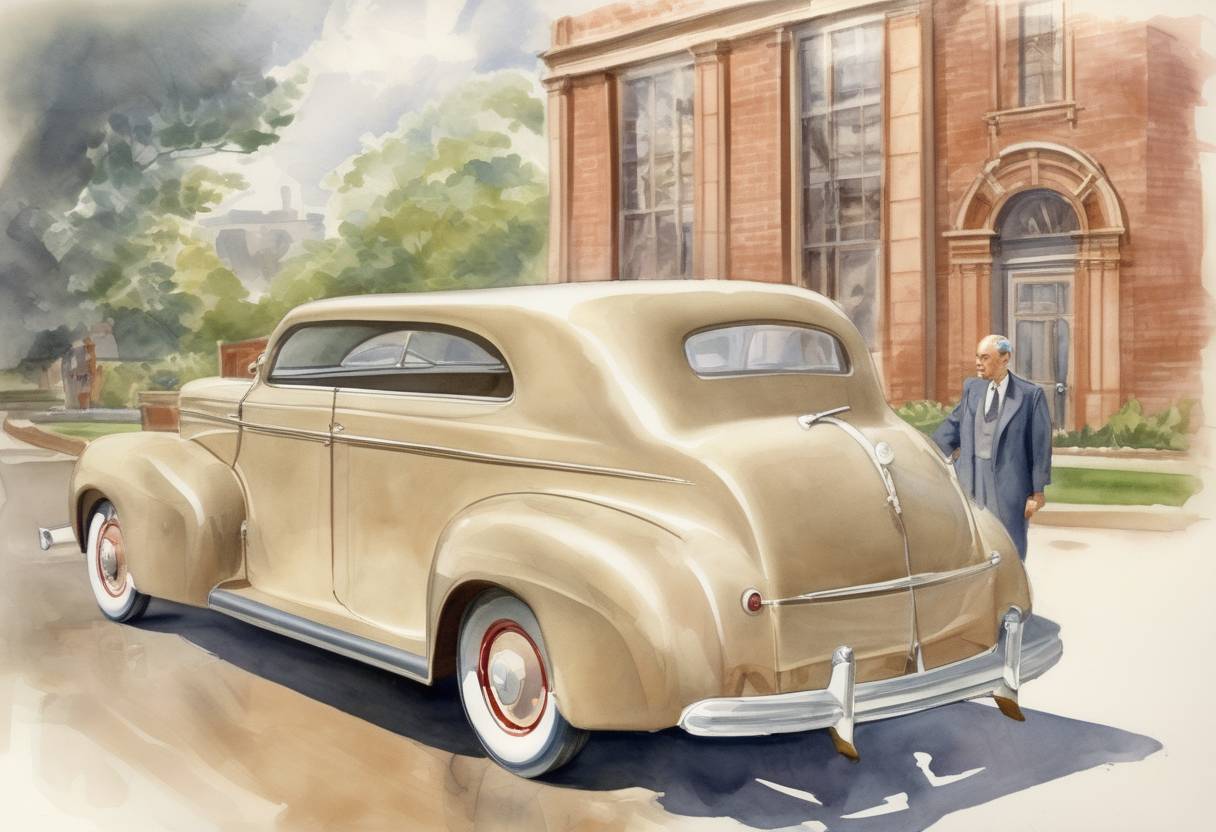
On January 13, 1942, Henry Ford, the pioneering American industrialist and founder of the Ford Motor Company, patented an innovative design for a plastic automobile. This vehicle was notably 30% lighter than conventional cars of the time, marking a significant advancement in automotive engineering and materials science.
During the early 1940s, the world was engulfed in World War II, which led to material shortages and prompted industries to explore alternative resources. The automotive industry, in particular, faced challenges due to the scarcity of metals, as these were prioritized for military use. In response, Henry Ford sought to innovate by using alternative materials to reduce dependency on metal and improve vehicle efficiency.
Ford’s plastic automobile was constructed using a combination of soybeans, wheat, hemp, flax, and ramie fibers, embedded in a phenolic resin. This composite material was not only lighter but also demonstrated considerable strength and durability. The reduction in weight by 30% compared to traditional steel-bodied cars promised improved fuel efficiency, which was particularly appealing during a time when resource conservation was crucial.
Henry Ford’s plastic car was a testament to innovation under constraint, showcasing the potential of sustainable materials in manufacturing. Although the vehicle did not enter mass production, largely due to the end of World War II and the return of metal supplies, it laid the groundwork for future exploration into lightweight and sustainable materials in the automotive industry.
Ford’s endeavor also highlighted the potential of agricultural products in industrial applications, foreshadowing modern trends in bioplastics and sustainable manufacturing practices. The concept of a plastic car remains a fascinating chapter in the history of automotive innovation, reflecting a blend of necessity and ingenuity during a pivotal era.
While the plastic car itself did not revolutionize the automotive industry at the time, it contributed to ongoing research and development in materials science. The lessons learned from Ford’s experiment influenced later advancements in automotive design, particularly in the pursuit of lightweight materials to improve fuel efficiency and reduce environmental impact.
In summary, Henry Ford’s patent for a plastic automobile on January 13, 1942, represents a significant moment in the history of automotive innovation, driven by the challenges of wartime resource scarcity and the visionary pursuit of alternative materials.
Source: en.wikipedia.org