Edward VI's Coronation as King of England
1547 · London, England
Edward VI is crowned King of England at the age of nine following the death of his father, Henry VIII.
June 26, 1483
Richard III was declared King of England after the deposition of his nephew, Edward V.
London, England | English Monarchy
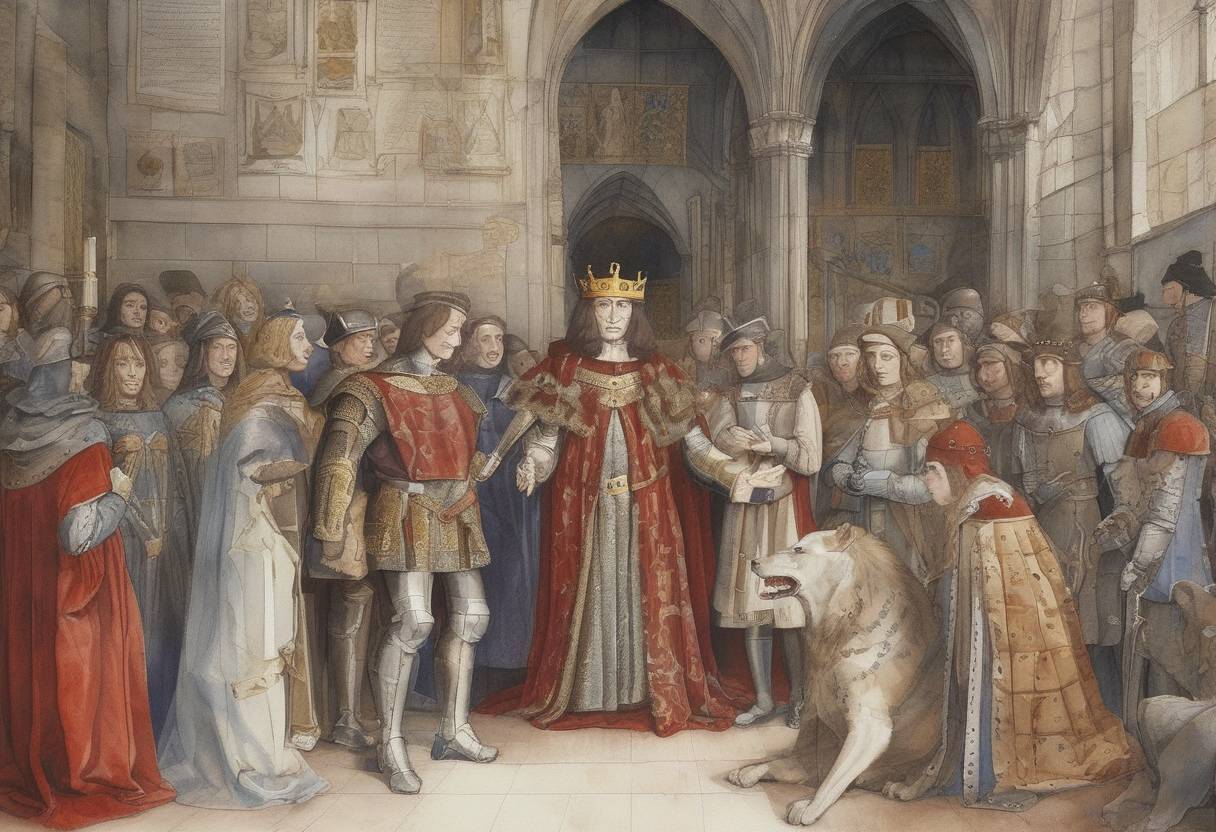
On June 26, 1483, Richard III was declared King of England following the deposition of his nephew, Edward V. This event marked a significant turning point in the tumultuous period of English history known as the Wars of the Roses, a series of civil wars fought between the rival houses of Lancaster and York for control of the English throne.
The Wars of the Roses: This conflict began in 1455 and was characterized by a power struggle between the House of Lancaster, represented by a red rose, and the House of York, symbolized by a white rose. The conflict was rooted in complex dynastic claims and political rivalries.
Edward IV’s Reign: Richard III’s elder brother, Edward IV, had successfully claimed the throne for the House of York in 1461. His reign was marked by intermittent conflict with Lancastrian forces but ultimately established a period of relative stability.
Edward V’s Ascension: Upon Edward IV’s death in April 1483, his 12-year-old son, Edward V, was next in line for the throne. However, his youth and the political machinations of the time made his position precarious.
Richard, Duke of Gloucester: Richard III, then known as Richard, Duke of Gloucester, was appointed as Lord Protector for his young nephew, Edward V. As the brother of the late king, Richard was a powerful and influential figure.
The Princes in the Tower: Edward V and his younger brother, Richard of Shrewsbury, Duke of York, were lodged in the Tower of London, ostensibly for their protection. Their subsequent disappearance remains one of history’s enduring mysteries and has cast a long shadow over Richard III’s legacy.
Titulus Regius: Richard III’s claim to the throne was bolstered by the declaration of the Titulus Regius, an act of Parliament that declared Edward IV’s marriage to Elizabeth Woodville invalid, thus rendering their children illegitimate and ineligible for the throne.
Coronation: Richard III was crowned on July 6, 1483, at Westminster Abbey. His reign, however, was short-lived and fraught with challenges.
Rebellion and Downfall: Richard faced immediate opposition, most notably from the Lancastrian faction and disaffected Yorkists. His reign ended with his defeat and death at the Battle of Bosworth Field on August 22, 1485, at the hands of Henry Tudor, who became Henry VII, marking the end of the Wars of the Roses and the beginning of the Tudor dynasty.
Legacy: Richard III’s brief reign is often overshadowed by the mystery of the Princes in the Tower and his portrayal in Shakespeare’s play “Richard III” as a villainous usurper. However, modern historians continue to debate his true character and the nature of his rule.
Impact on the Monarchy: The events of 1483 and Richard III’s subsequent downfall significantly influenced the English monarchy’s evolution, leading to the establishment of the Tudor dynasty, which brought about significant political and social changes in England.
Richard III’s ascension to the throne remains a pivotal moment in English history, reflecting the complex interplay of power, legitimacy, and ambition that characterized the late medieval period.
Source: en.wikipedia.org