Discovery of Pluto by Clyde Tombaugh
1930 · Flagstaff, United States
Clyde Tombaugh discovers Pluto at the Lowell Observatory in Flagstaff, Arizona.
March 13, 1930
Clyde Tombaugh announced the discovery of Pluto, which was considered the ninth planet in the solar system until its reclassification as a dwarf planet in 2006.
Flagstaff, United States | Lowell Observatory
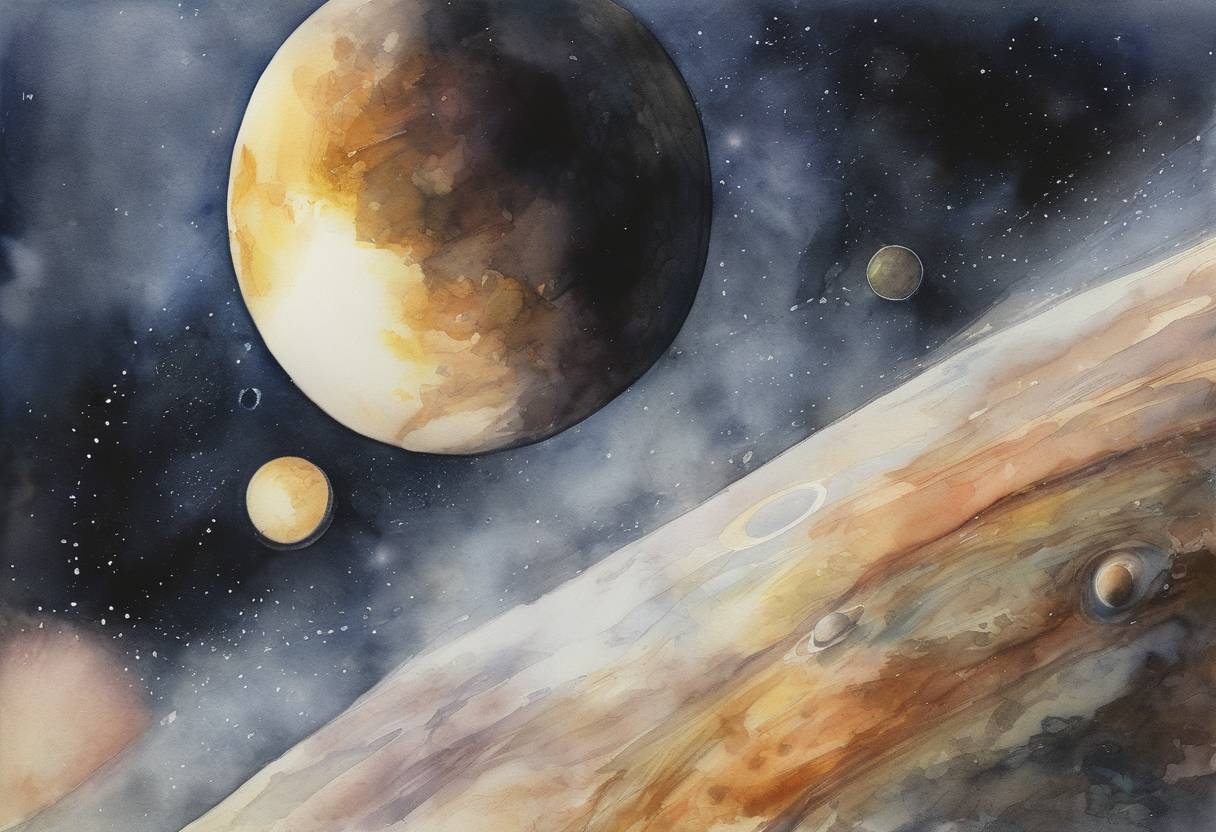
On March 13, 1930, the discovery of Pluto was announced to the world, marking a significant milestone in the field of astronomy. This celestial body was initially classified as the ninth planet in our solar system, a status it held until its reclassification as a dwarf planet in 2006.
The quest for a ninth planet began in the early 20th century, driven by the search for “Planet X,” a hypothetical planet believed to exist beyond Neptune. Astronomers Percival Lowell and William H. Pickering were among the first to suggest its existence due to irregularities observed in the orbits of Uranus and Neptune. Lowell’s observatory in Flagstaff, Arizona, became the focal point for this search.
Clyde Tombaugh, a young astronomer from Kansas, joined the Lowell Observatory in 1929. He was tasked with the meticulous job of examining photographic plates of the night sky to identify any moving objects. Using a device called a blink comparator, Tombaugh compared images taken weeks apart to spot any changes.
On February 18, 1930, Tombaugh identified a moving object on photographic plates taken in January of that year. After further observations and calculations, the discovery was confirmed, and the announcement was made on March 13, 1930, coinciding with the anniversary of both Percival Lowell’s birth and William Herschel’s discovery of Uranus.
The newly discovered celestial body was named “Pluto,” after the Roman god of the underworld, a suggestion made by an 11-year-old English schoolgirl, Venetia Burney. The name was fitting, as it also honored Percival Lowell, with the first two letters “PL” serving as his initials.
Pluto was initially classified as the ninth planet in the solar system. Its discovery was celebrated as a triumph of astronomical prediction and observation.
In the decades following its discovery, Pluto’s planetary status was debated due to its small size and the discovery of similar objects in the Kuiper Belt. In 2006, the International Astronomical Union (IAU) redefined the criteria for planet classification. According to the new definition, a planet must:
Pluto did not meet the third criterion, leading to its reclassification as a “dwarf planet.”
The discovery of Pluto expanded our understanding of the solar system and sparked interest in the study of trans-Neptunian objects. It highlighted the importance of technological advancements in astronomy and the role of persistent observation in scientific discovery.
Clyde Tombaugh’s work remains a testament to human curiosity and the drive to explore the unknown, inspiring future generations of astronomers and scientists.
Source: en.wikipedia.org