Election of Pope Nicholas I on April 24, 858
858 · Rome, Italy
Pope Nicholas I is elected as the 105th pope of the Catholic Church.
January 20, 0649
Theodore I is elected as the Pope of the Catholic Church.
Rome, Italy | Catholic Church
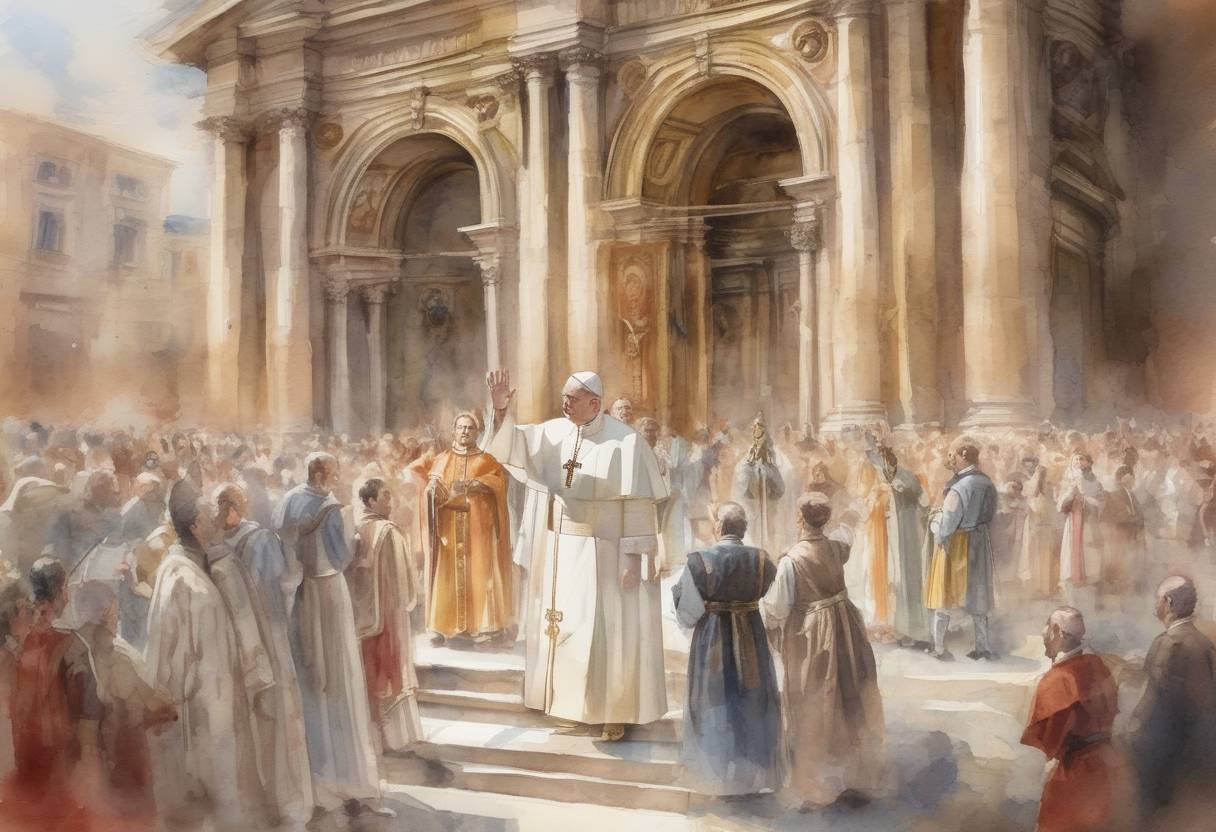
On January 20, 649, Theodore I was elected as the Pope of the Catholic Church, marking the beginning of his papacy, which would last until his death in 649. His election came during a period of significant theological and political challenges within the Church and the broader Byzantine Empire.
Theodore I was born in Jerusalem, making him one of the few popes of Eastern origin. His election as pope was influenced by the ongoing theological disputes of the time, particularly the controversy over Monothelitism, a doctrine that proposed Christ had only one will. This doctrine was seen as a compromise to reconcile the Monophysite Christians with the Chalcedonian Christians but was rejected by many in the Western Church.
Monothelitism Controversy: The theological debate over Monothelitism was a significant issue during this period. The doctrine had been promoted by the Byzantine Emperor Heraclius and Patriarch Sergius I of Constantinople as a means to unify the empire’s religious factions.
Papal Predecessors: Theodore’s predecessor, Pope Martin I, was a staunch opponent of Monothelitism. His firm stance against the doctrine and his subsequent arrest and exile by Byzantine authorities highlighted the tensions between the papacy and the Byzantine Empire.
Opposition to Monothelitism: Continuing the policies of his predecessor, Theodore I was a vigorous opponent of Monothelitism. He worked to maintain the orthodoxy of the Chalcedonian definition of Christ’s dual nature and will.
Diplomatic Efforts: Theodore I sought to strengthen the Church’s position through diplomatic channels, engaging with various bishops and leaders to consolidate opposition against Monothelitism.
Relations with the Byzantine Empire: His papacy was marked by strained relations with the Byzantine Empire due to his theological positions. Despite these tensions, Theodore I managed to maintain the Church’s independence and authority.
Theodore I’s papacy, though relatively short, was significant in the ongoing struggle against Monothelitism. His firm stance helped set the stage for the eventual condemnation of the doctrine at the Third Council of Constantinople in 680-681. His leadership during this turbulent period reinforced the papacy’s role as a defender of orthodox Christian doctrine.
The election and actions of Pope Theodore I illustrate the complex interplay between theology and politics in the early medieval Church and highlight the papacy’s influence in shaping Christian doctrine during a time of significant doctrinal conflict.
Source: en.wikipedia.org