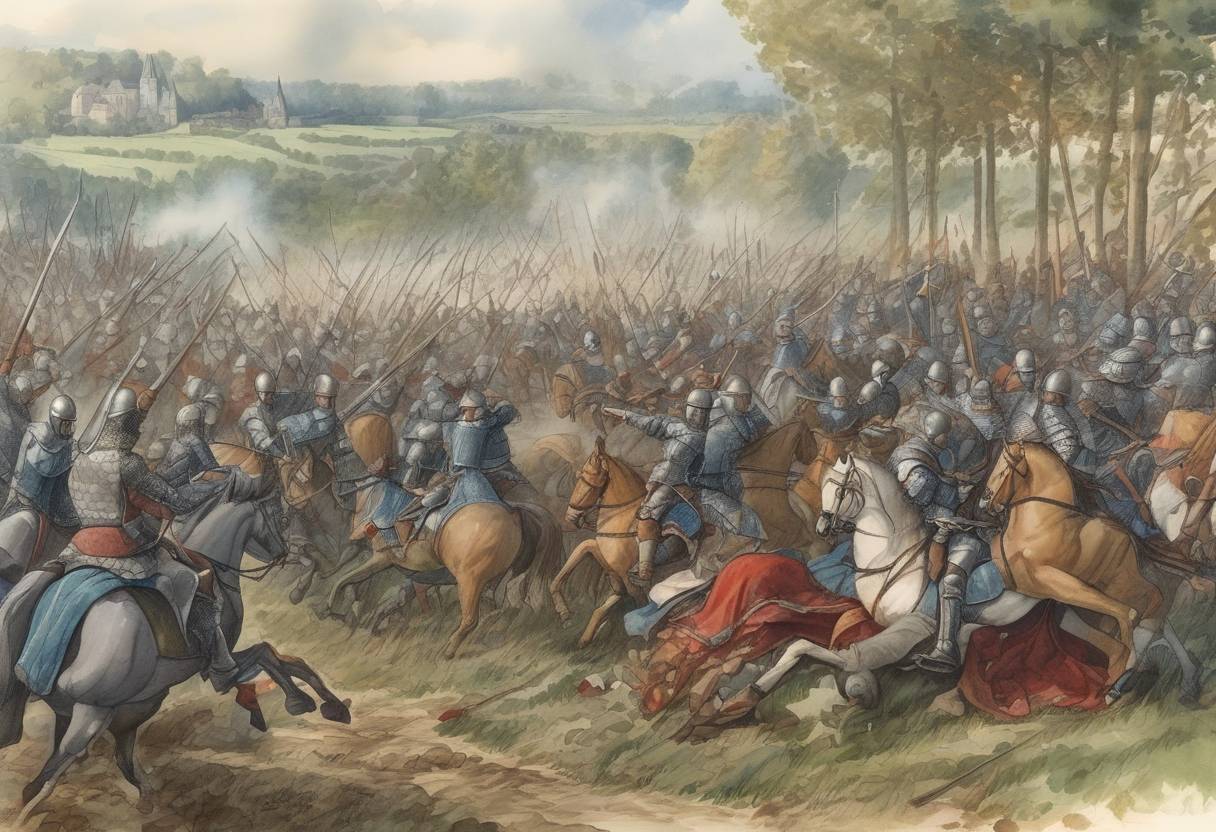
The Battle of Bouvines: July 27, 1214
The Battle of Bouvines, fought on July 27, 1214, was a pivotal conflict in medieval European history. It marked a decisive victory for King Philip II of France against a formidable coalition of forces from England, Flanders, and the Holy Roman Empire. This battle not only solidified Philip’s power in France but also had far-reaching consequences for the political landscape of Europe.
Context and Prelude
Philip II of France: Known as Philip Augustus, he was a shrewd and ambitious monarch who sought to expand and consolidate his territories in France. By the early 13th century, he had already made significant gains against the English-held territories in France.
The Coalition: The alliance against Philip was spearheaded by King John of England, who sought to reclaim lost territories in Normandy. He was joined by Emperor Otto IV of the Holy Roman Empire and Count Ferrand of Flanders, among others. This coalition aimed to curb Philip’s growing influence and restore the balance of power.
Strategic Importance: The battle was crucial for both sides. For Philip, a victory would secure his territorial gains and enhance his prestige. For the coalition, defeating Philip was essential to reclaim lost lands and assert dominance.
The Battle
Location: The battle took place near the village of Bouvines, in what is now northern France.
Forces: Philip’s army was composed of French knights and infantry, while the coalition forces included English, Flemish, and German troops, each bringing their own strengths to the battlefield.
Tactics and Outcome: The battle was fiercely contested, with both sides demonstrating tactical prowess. However, Philip’s forces managed to outmaneuver the coalition, leading to a decisive victory. Key figures from the coalition, including Count Ferrand, were captured, and Emperor Otto IV was forced to flee.
Aftermath and Significance
For France: The victory at Bouvines greatly enhanced Philip II’s reputation and solidified his control over the contested territories. It marked the decline of English influence in France and strengthened the French monarchy.
For England: The defeat was a significant blow to King John, exacerbating his domestic troubles. It contributed to the baronial unrest that eventually led to the signing of the Magna Carta in 1215.
For the Holy Roman Empire: Otto IV’s defeat weakened his position, leading to his eventual deposition and the rise of Frederick II as the new emperor.
Broader Impact: The Battle of Bouvines is often seen as a turning point in medieval European history. It shifted the balance of power in favor of France and set the stage for future conflicts and alliances in the region.
In summary, the Battle of Bouvines was not just a military victory for Philip II but a transformative event that reshaped the political dynamics of Europe in the 13th century.