Sentencing of Robert Hanssen: May 10, 2002
2002 · Alexandria, United States
FBI agent Robert Hanssen was sentenced to life in prison without the possibility of parole for selling secrets to the Soviet Union and Russia over a 22-year period.
April 5, 1951
Julius and Ethel Rosenberg were sentenced to death for conspiracy to commit espionage for the Soviet Union, in one of the most controversial espionage cases of the Cold War.
New York City, United States | U.S. Federal Court
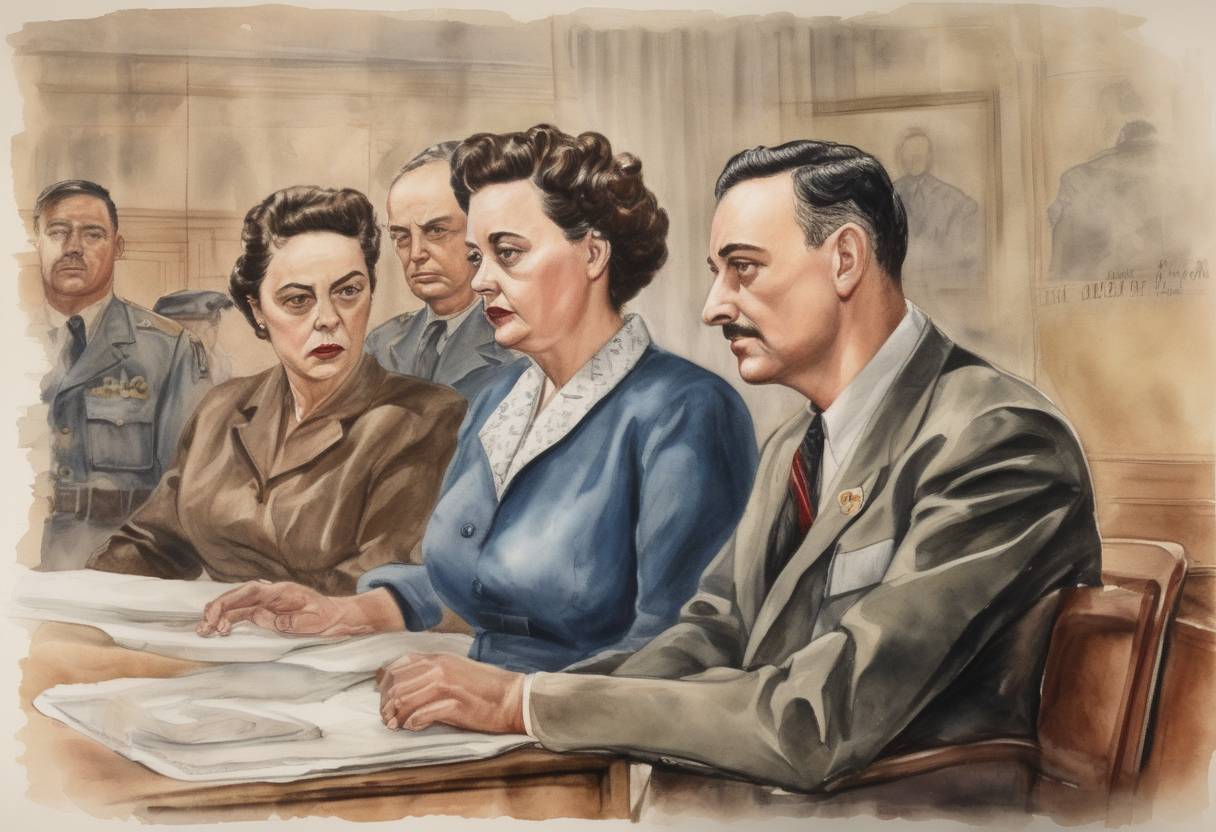
On April 5, 1951, Julius and Ethel Rosenberg were sentenced to death for conspiracy to commit espionage on behalf of the Soviet Union. This event marked a significant moment in Cold War history, reflecting the intense atmosphere of suspicion and fear that characterized the era.
The Rosenbergs were American citizens accused of passing atomic secrets to the Soviet Union. Their trial took place during a period of heightened tension between the United States and the Soviet Union, known as the Cold War. This era was marked by a fierce rivalry between the two superpowers, with espionage and nuclear arms development at the forefront of their conflict.
Arrest and Charges: Julius Rosenberg was arrested on July 17, 1950, followed by Ethel’s arrest on August 11, 1950. They were charged with conspiracy to commit espionage, specifically for allegedly transmitting information about the atomic bomb to the Soviet Union.
Trial: The trial began on March 6, 1951, in the Southern District of New York. The prosecution’s case relied heavily on the testimony of Ethel’s brother, David Greenglass, who claimed that Julius had recruited him to provide information from the Manhattan Project, where Greenglass had worked.
Conviction: On March 29, 1951, the jury found both Julius and Ethel Rosenberg guilty of conspiracy to commit espionage. The trial was highly publicized and controversial, with debates over the fairness of the proceedings and the evidence presented.
Judge Irving Kaufman sentenced the Rosenbergs to death on April 5, 1951. In his sentencing, he cited the gravity of their crime, suggesting that their actions had potentially hastened Soviet development of nuclear weapons and contributed to the Korean War.
Appeals and Execution: The Rosenbergs’ legal team filed numerous appeals, but all were unsuccessful. Despite international protests and pleas for clemency, they were executed on June 19, 1953.
Controversy and Debate: The case remains one of the most controversial espionage trials in American history. Critics argue that the evidence against Ethel was particularly weak and that anti-Communist sentiment influenced the trial’s outcome. Subsequent revelations, including declassified Soviet cables, have confirmed Julius’s involvement in espionage, but Ethel’s role remains debated.
Impact on American Society: The Rosenberg case exemplified the era’s anti-Communist fervor and contributed to the atmosphere of fear and suspicion during the Red Scare. It also raised questions about civil liberties and the extent of government power in prosecuting espionage cases.
The Rosenberg trial and sentencing are emblematic of the Cold War’s complexities, highlighting the intersection of national security, justice, and human rights during a period of intense geopolitical rivalry.
Source: en.wikipedia.org