Dominica Gains Independence from the United Kingdom
1978 · Roseau, Dominica
Dominica gains its independence from the United Kingdom.
May 26, 1966
British Guiana gained independence from the United Kingdom, becoming the nation of Guyana.
Georgetown, Guyana | United Kingdom
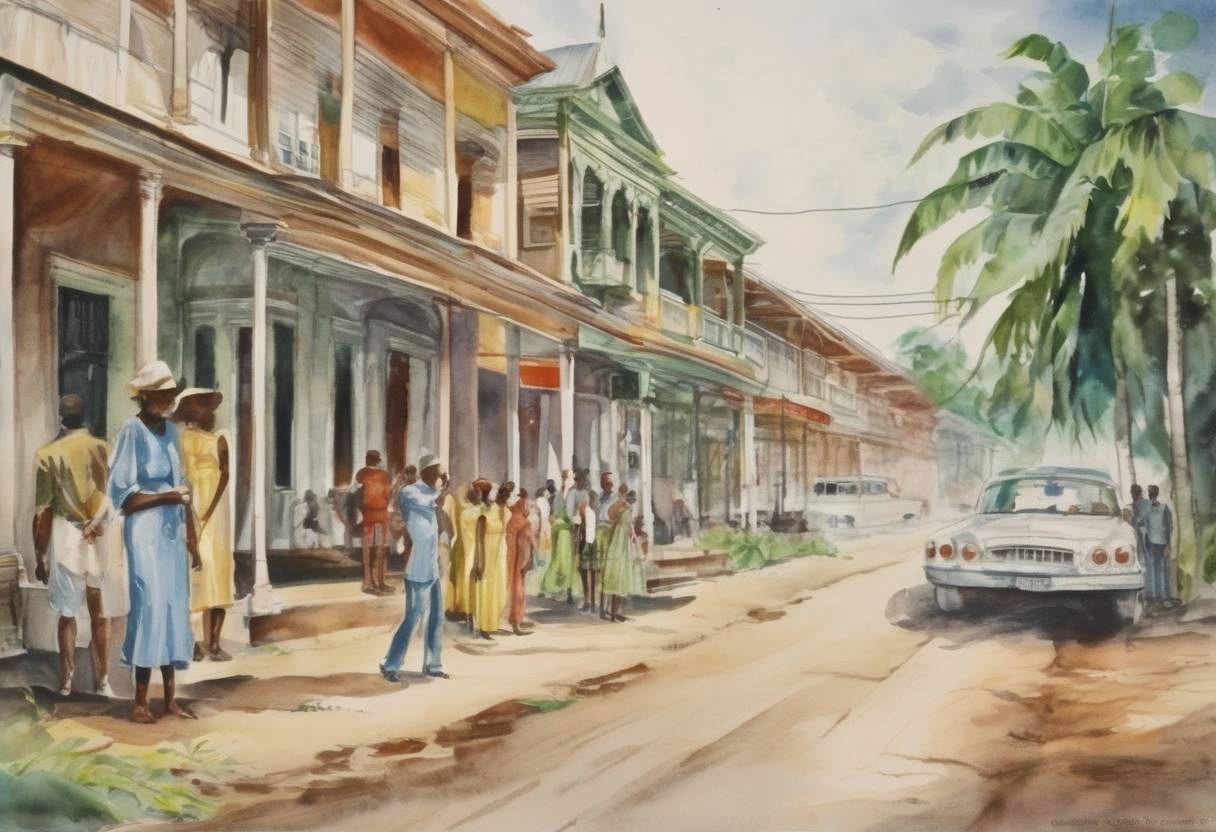
On May 26, 1966, British Guiana gained independence from the United Kingdom, becoming the sovereign nation of Guyana. This marked a significant milestone in the decolonization process of the Caribbean and was a pivotal moment in the history of the region.
Colonial Background: British Guiana was a British colony located on the northern coast of South America. It was initially a Dutch colony before coming under British control in 1814. The colony was known for its sugar plantations and a diverse population comprising Indigenous peoples, descendants of African slaves, and indentured laborers from India, China, and Portugal.
Path to Independence: The movement towards independence was part of a broader wave of decolonization following World War II. In the 1950s and 1960s, many British colonies sought self-governance. In British Guiana, political parties like the People’s Progressive Party (PPP) and the People’s National Congress (PNC) played crucial roles in advocating for independence.
Constitutional Reforms: In the early 1960s, constitutional reforms were introduced, gradually increasing local governance. The 1961 constitution granted British Guiana internal self-government, with Cheddi Jagan of the PPP becoming the first Premier.
Political Tensions: The period leading up to independence was marked by political and ethnic tensions, particularly between the Indo-Guyanese and Afro-Guyanese communities, represented by the PPP and PNC, respectively. These tensions sometimes erupted into violence, complicating the path to independence.
Independence Talks: Negotiations for independence involved both local political leaders and the British government. The Lancaster House Conference in London in 1965 was a critical meeting where the terms of independence were finalized.
Ceremony: On May 26, 1966, the Union Jack was lowered, and the new national flag of Guyana, known as “The Golden Arrowhead,” was raised in a ceremonial event in the capital, Georgetown. This symbolized the official transfer of power and the birth of the new nation.
First Prime Minister: Forbes Burnham, leader of the PNC, became the first Prime Minister of Guyana. He played a significant role in the independence movement and would go on to shape the country’s early post-independence years.
Post-Independence Challenges: Guyana faced numerous challenges post-independence, including economic development, political stability, and managing ethnic divisions. The country adopted a socialist-oriented policy under Burnham’s leadership, which influenced its economic and foreign policies.
Regional Impact: Guyana’s independence was part of a broader trend of decolonization in the Caribbean, inspiring other territories to seek self-determination. It also contributed to the formation of the Caribbean Community (CARICOM), promoting regional cooperation.
Legacy: Today, May 26 is celebrated as Independence Day in Guyana, a national holiday commemorating the country’s journey to sovereignty and its cultural diversity.
Guyana’s independence was a significant event in the 20th-century history of the Caribbean, representing both the end of colonial rule and the beginning of a new chapter in the nation’s development.
Source: en.wikipedia.org