Martin Luther's 95 Theses and the Beginning of the Protestant Reformation
1517 · Wittenberg, Holy Roman Empire
Martin Luther posts his 95 Theses on the door of the Wittenberg Castle Church, marking the beginning of the Protestant Reformation.
November 9, 1520
After receiving a summons from Pope Leo X, Martin Luther refuses to recant his writings and is excommunicated from the Roman Catholic Church, escalating the Protestant Reformation.
Wittenberg, Germany | Roman Catholic Church
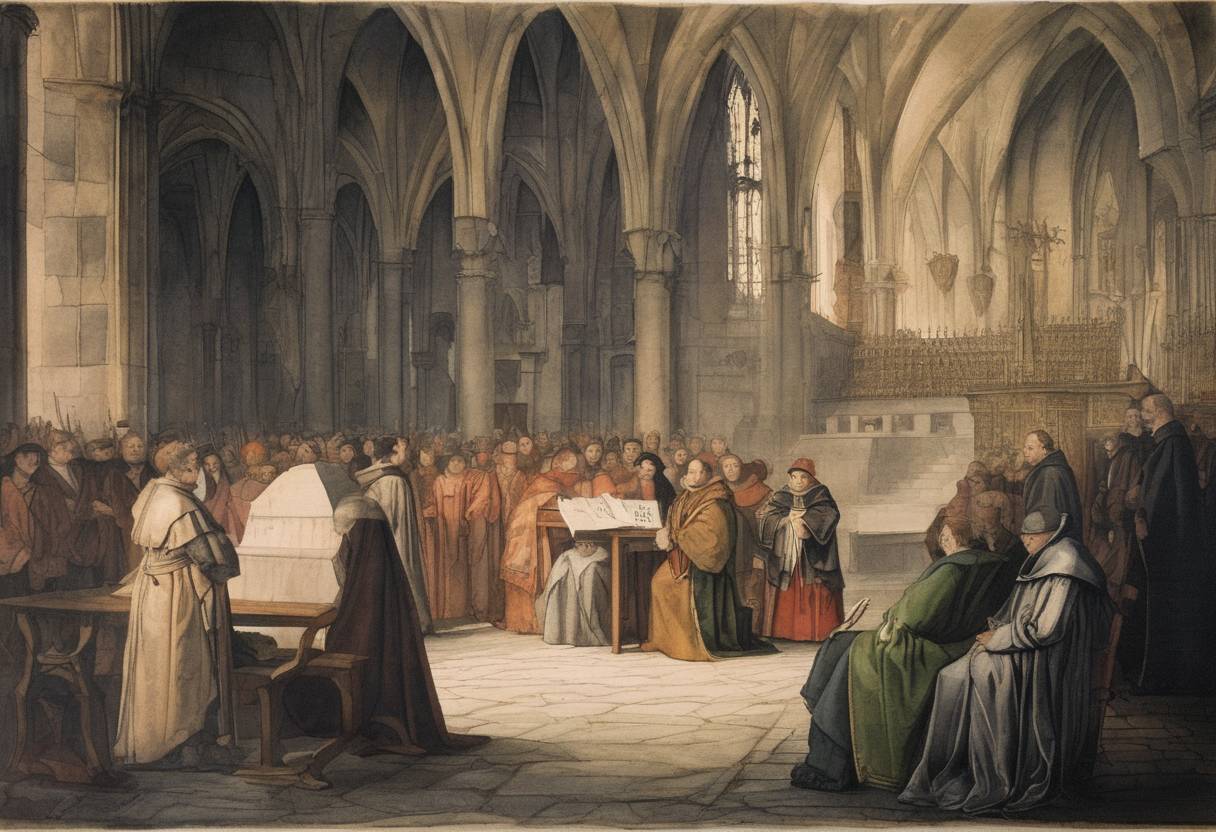
On November 9, 1520, the tensions between Martin Luther, a German theologian, and the Roman Catholic Church reached a pivotal moment when Luther refused to recant his writings as ordered by a papal summons from Pope Leo X. This defiance ultimately led to his excommunication, significantly impacting the series of events that fueled the Protestant Reformation.
95 Theses (1517): Martin Luther’s journey into conflict with the Catholic Church began on October 31, 1517, when he nailed his 95 Theses to the door of the Castle Church in Wittenberg. These theses criticized the Church’s sale of indulgences and questioned papal authority.
Papal Bull (1520): In response, Pope Leo X issued the papal bull Exsurge Domine on June 15, 1520, which condemned 41 of Luther’s propositions as heretical and demanded that he retract his statements within 60 days or face excommunication.
Luther’s Refusal: Despite the threat of excommunication, Luther remained steadfast, publicly burning the papal bull in December 1520. This act of defiance emphasized his rejection of papal authority and underscored the growing divide between reformers and the Church establishment.
Excommunication (1521): Luther was officially excommunicated by Pope Leo X on January 3, 1521, through the papal bull Decet Romanum Pontificem. This severed his ties with the Catholic Church, marking a formal and irreversible break.
The Diet of Worms (April 1521): His excommunication set the stage for the Diet of Worms, where Luther was asked to revoke his views publicly. His iconic “Here I stand” speech epitomized his determination and solidified his role as a central figure in the Protestant Reformation.
This event is significant because it marked the transformation of Martin Luther’s movement from a critique of Church practices to a full-fledged Reformation. It underscored the growing demand for religious freedom and reassessment of doctrine, leading to the establishment of various Protestant denominations and reshaping the religious, political, and cultural landscape of Europe. Luther’s excommunication thus symbolized not just his personal break from the Church but the dawn of a transformative era in Christian history.
Source: en.wikipedia.org