1832 · Paris, France
The June Rebellion, an anti-monarchist insurrection of Parisian republicans, began in Paris, France.
June 5, 1829
A revolutionary barricade was raised on the Rue Saint-Denis in Paris, France, marking the beginning of the June Rebellion, a Parisian uprising against the rule of King Louis-Philippe I.
Paris, France | Revolutionary groups
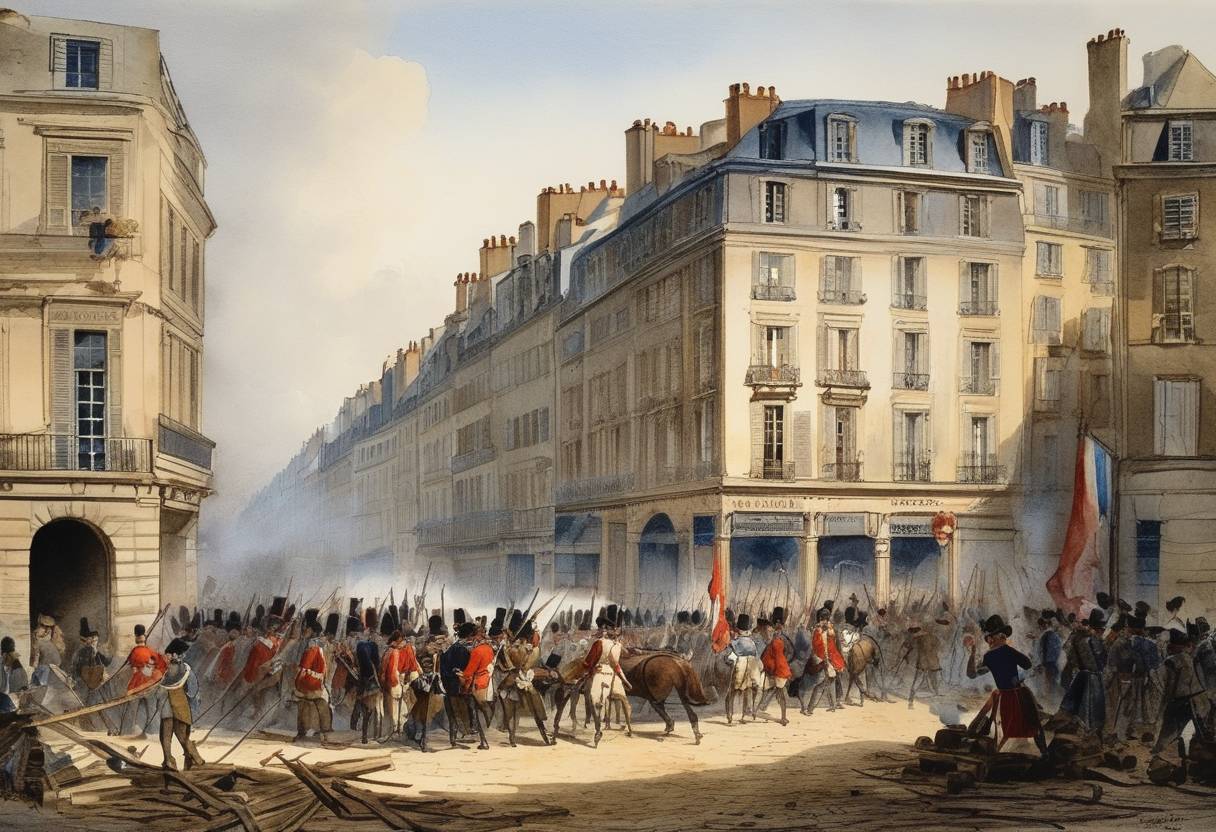
The event you are referring to is likely the June Rebellion, which actually commenced on June 5, 1832, not 1829. On this date, an uprising against the rule of King Louis-Philippe I began in Paris, France. It was a short-lived rebellion by Parisian republicans who were discontented with the July Monarchy established following the 1830 July Revolution.
The July Revolution of 1830: This revolution resulted in the overthrow of Charles X, the last Bourbon king of France, and placed Louis-Philippe I on the throne, initiating the July Monarchy. However, the liberal and working-class population felt betrayed by the lack of significant reform and the perceived failure to address socio-economic inequalities.
Social Unrest: The early 1830s in France were marked by economic hardship, with high unemployment and discontent among the working class. The legitimacy of Louis-Philippe’s rule was questioned due to perceived favoritism towards the bourgeoisie and neglect of workers’ rights.
Funeral of General Lamarque: General Jean Maximilien Lamarque, a popular figure sympathetic to republican and Bonapartist ideals, passed away. His funeral procession on June 5, 1832, provided a catalyst for gathering discontented Parisians who saw it as an opportunity to rise against the monarchy.
Initial Outbreak: Protestors took to the streets as Lamarque’s casket was paraded through Paris. Students, workers, and artisans joined forces to express their disillusionment.
Barricades: The insurgents erected barricades, with notable efforts on the Rue Saint-Denis among other locations across Paris. The rebels aimed to reclaim republican ideals and express opposition to perceived governmental corruption and ineffectiveness.
Military Response: King Louis-Philippe’s government responded with military force. National Guards and cavalry were deployed to suppress the insurgents. Despite initial enthusiasm, the rebellion lacked widespread support and coherence, complicating the defense of their positions.
Outcome: The rebellion was quickly subdued by June 7, 1832. Dozens were killed during the confrontations, and the government imposed further restrictions to maintain order and prevent future insurrections.
Historical Significance: The June Rebellion notably inspired parts of Victor Hugo’s famous novel, Les Misérables, which dramatizes the plight of the poor and the spirit of resistance.
Reflection on Monarchy: Though unsuccessful, the rebellion highlighted significant public dissatisfaction with the July Monarchy, foreshadowing the eventual revolutions of 1848 that swept across Europe, contributing to the end of Louis-Philippe’s rule.
The June Rebellion remains a poignant example of 19th-century struggles between republican ideas and monarchical power in France, representing broader themes of class struggle and the longing for systemic change.
Source: en.wikipedia.org