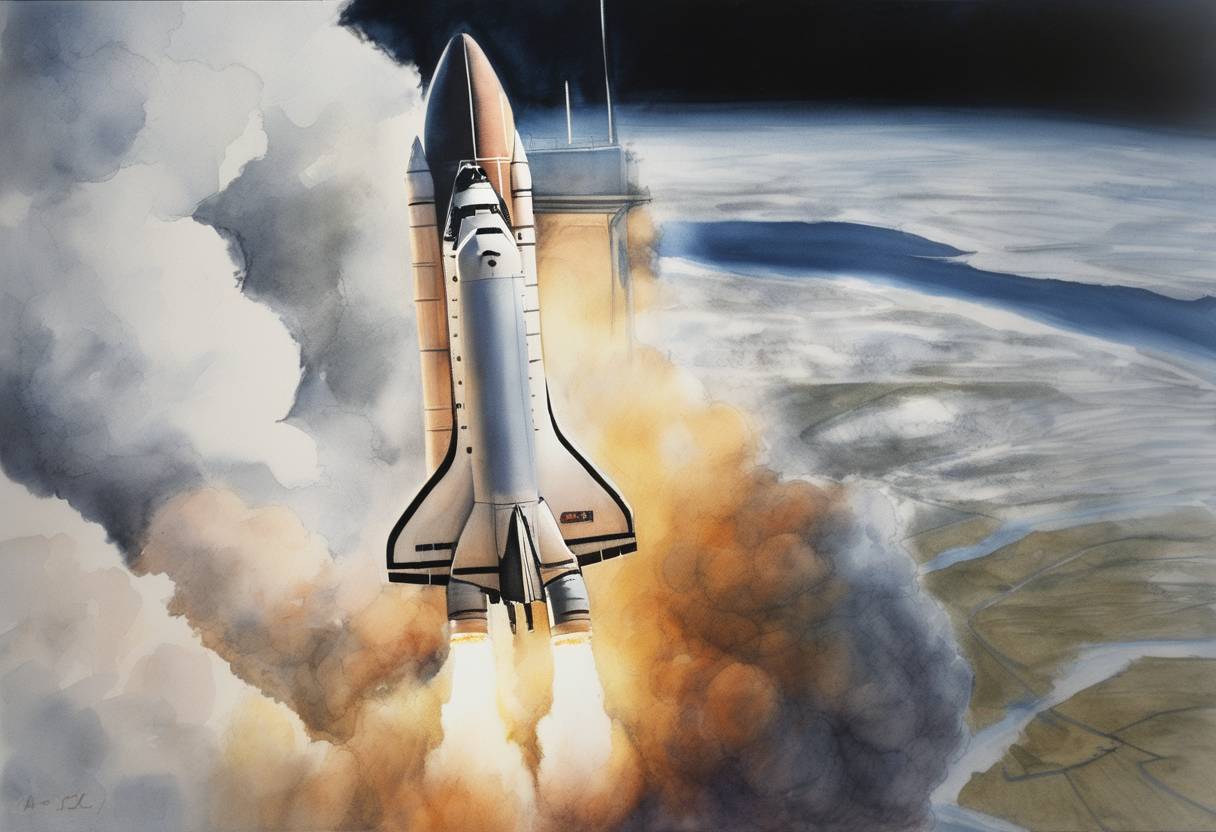
Space Shuttle Challenger’s Maiden Voyage: STS-6 Mission
On April 8, 1983, the Space Shuttle Challenger launched on its maiden voyage known as STS-6. This mission marked a critical achievement in NASA’s space program and included significant milestones for space exploration and equality.
Key Events of STS-6
- Launch Details: Challenger was launched from Kennedy Space Center in Florida. The liftoff occurred at 1:30 PM EST.
- Mission Objectives: The primary goal of STS-6 was to deploy the first Tracking and Data Relay Satellite (TDRS-A), which was designed to improve communication capabilities for NASA’s shuttle program and future missions.
- Spacewalk Milestone: While Sally Ride became the first American woman in space on a later mission, the STS-6 mission included the first spacewalk by an American woman. However, it was actually conducted by mission specialists Story Musgrave and Donald Peterson, who performed the first extravehicular activity (EVA) of the shuttle program.
Crew Members
- Paul J. Weitz: Mission Commander
- Karol J. Bobko: Pilot
- Story Musgrave: Mission Specialist
- Donald H. Peterson: Mission Specialist
Technological and Gender Milestones
- Tracking and Data Relay Satellite (TDRS-A): The successful deployment of TDRS-A was crucial for enhancing continuous communication between Earth and the spacecraft.
- Advancements in Spacewalk Techniques: The EVA undertaken by Musgrave and Peterson provided critical data that informed subsequent spacewalk strategies and technologies, paving the way for future complex space operations.
- Gender Equality in Space Exploration: Although not the maiden female spacewalk, the participation of mixed-gender teams in missions like STS-6 demonstrated NASA’s ongoing commitment to diversifying its astronaut corps and embracing gender equality in space.
Aftermath and Impact
The STS-6 mission elevated the capabilities of NASA’s Space Shuttle program and facilitated better communication systems, which were pivotal for later missions, including servicing the Hubble Space Telescope. The mission also laid foundational work that encouraged the inclusion of more women and minorities in NASA’s astronaut and mission control ranks, inching forward towards greater equality in space exploration.
Challenger would go on to complete several missions, each contributing to space knowledge, before the tragic accident during STS-51-L in 1986, which profoundly impacted space policy and shuttle design in the years following.