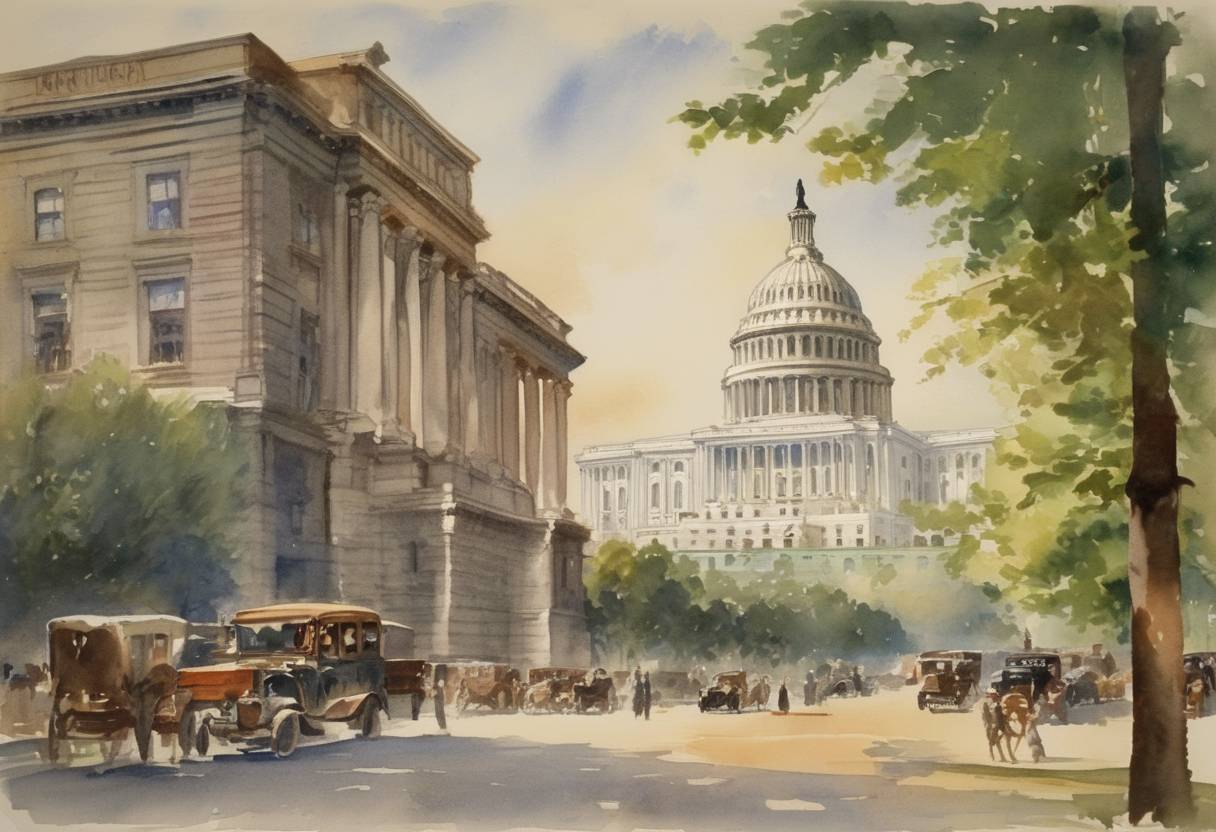
On November 17, 1933, the United States formally recognized the Soviet Union, marking a significant moment in international relations during the interwar period. Prior to this, the United States had withheld recognition of the communist government, established after the Russian Revolution of 1917. This decision was rooted in ideological differences, geopolitical concerns, and domestic opinions.
Context and Background
Russian Revolution and its Aftermath: Post-1917, the Bolshevik regime led by Vladimir Lenin had established control, but faced opposition both internally and from foreign powers. The U.S., which had sent troops to combat Bolshevik forces during the Russian Civil War, maintained a non-recognition policy.
Geopolitical Dynamics: Throughout the 1920s and early 1930s, the failure to formally recognize the Soviet Union was influenced by mistrust of communist ideologies and concerns over Soviet expansionism.
Economic Considerations: The Great Depression in the United States created incentives to open new markets for American goods and stimulate economic recovery, pushing the U.S. to reconsider its stance towards the Soviet Union.
Key Developments
Negotiations: Negotiations began in the summer of 1933 between Soviet Foreign Minister Maxim Litvinov and President Franklin D. Roosevelt’s administration. These talks culminated in an accord that addressed issues such as the repayment of debts, the cessation of Soviet support for subversive activities in the United States, and assurances of religious freedom for Americans in the USSR.
Diplomatic Recognition: On November 16, 1933, after successful negotiations, President Roosevelt and Foreign Minister Litvinov issued a joint statement establishing diplomatic relations. The official recognition took place the next day, November 17, 1933, marking the first time the U.S. acknowledged the Soviet government.
Aftermath and Significance
Improved Relations: The establishment of diplomatic ties led to the opening of embassies and a formal channel of communication. It allowed the U.S. and the Soviet Union to negotiate and collaborate on several issues, including trade and political matters.
Economic Impact: Recognition paved the way for potential economic exchanges, although trade between the two nations remained limited due to broader policy differences and economic realities.
Strategic Alignment: Diplomatic recognition did not immediately resolve all bilateral issues, but it laid the groundwork for future cooperation during World War II when both countries became allies against the Axis Powers.
This diplomatic recognition was a calculated move by the Roosevelt administration, reflecting both economic pragmatism and a strategic shift in international politics as tensions in Europe and Asia mounted during the 1930s. The decision underscored the complex interplay between ideology, diplomacy, and economic interests in U.S. foreign policy.