Death of Pope Gelasius II on February 5, 1119
1119 · Rome, Papal States
Pope Gelasius II dies. His papacy was marked by conflicts with the emperor, Henry V, concerning the investiture controversy.
January 24, 1118
Pope Gelasius II is elected as the 161st pope of the Roman Catholic Church.
Rome, Papal States | Roman Catholic Church
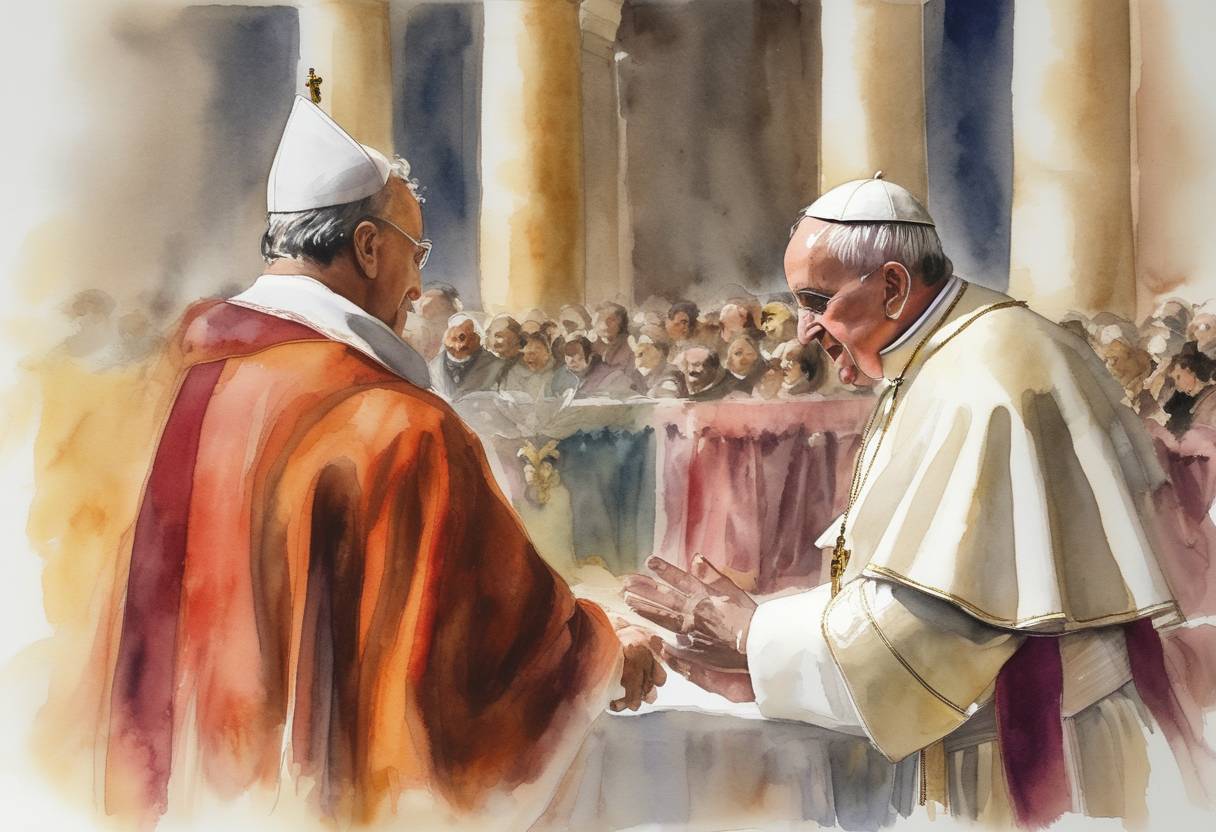
On January 24, 1118, Giovanni Caetani was elected as the 161st pope of the Roman Catholic Church, assuming the papal name Gelasius II. His election marked a turbulent period in the Church’s history, characterized by conflict between the papacy and secular authorities.
Leading up to his election, the papacy was embroiled in the Investiture Controversy, a power struggle between the papacy and European monarchs over the appointment of church officials. The controversy primarily involved the Holy Roman Emperor, who sought to maintain influence over the Church by appointing bishops and abbots.
Pope Gelasius II’s election took place shortly after the sudden death of his predecessor, Pope Paschal II, on January 21, 1118. The conclave was quickly convened amidst political tension and resulted in the unanimous election of Caetani, who was a cardinal-deacon at the time.
Immediately following his election, Gelasius II faced significant challenges. Cencius Frangipane, a Roman noble loyal to the Holy Roman Emperor Henry V, captured him in an attempt to exert imperial control over the papacy. However, he was rescued by a popular uprising led by the citizens of Rome.
Following his escape, Gelasius II was consecrated as pope on March 10, 1118. His papacy was short-lived and fraught with conflict. The emperor Henry V reacted quickly by appointing an antipope, Gregory VIII, creating further divisions within the Church.
Pope Gelasius II spent much of his papacy fleeing imperial forces, eventually seeking refuge in France. His brief tenure came to an end when he died on January 29, 1119, in the abbey of Cluny in Burgundy.
Gelasius II’s papacy underscored the ongoing tensions between ecclesiastical and secular powers during the Middle Ages. His election and subsequent struggles highlighted the challenges faced by the Church in maintaining its independence and authority against imperial forces. The conflicts during his papacy contributed to the broader discourse on church autonomy that would continue to shape European politics and the future of the papacy.
Source: www.britannica.com