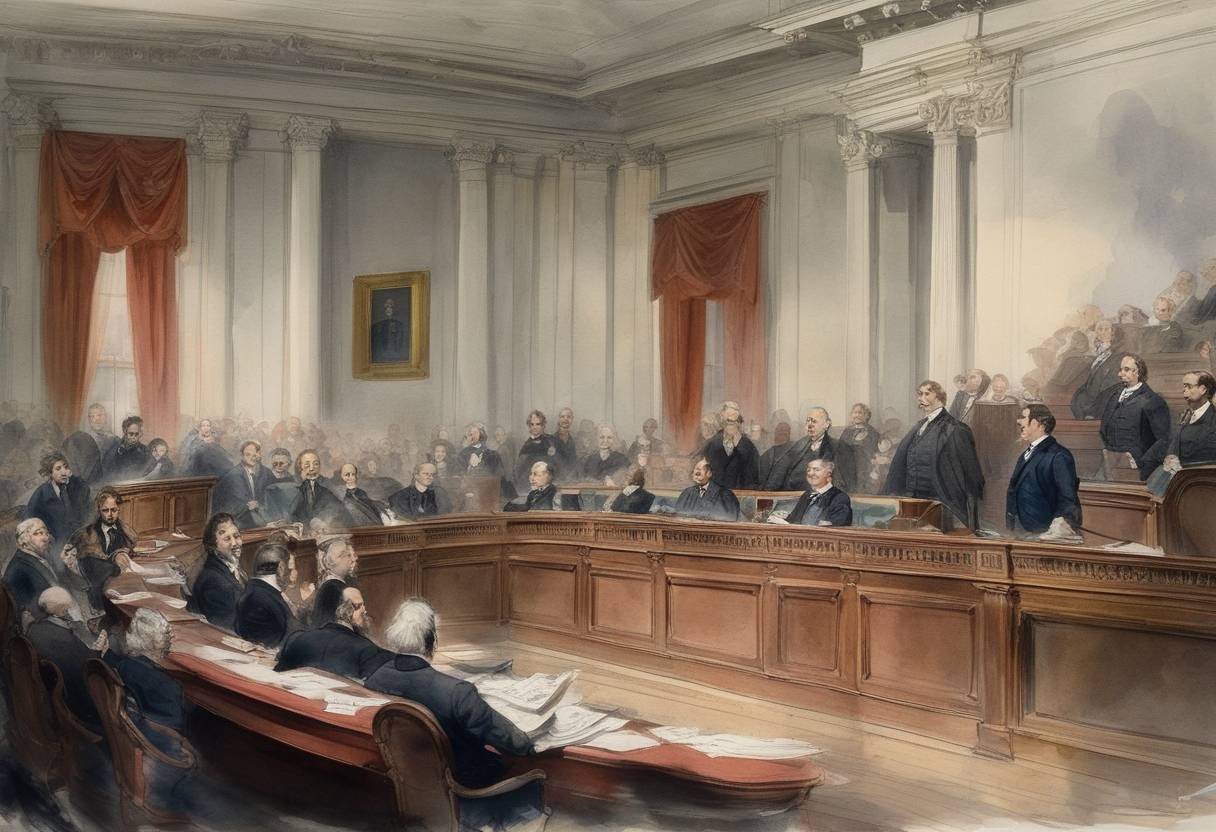
Impeachment Trial of William W. Belknap
On March 2, 1876, the United States Congress began the impeachment trial of Secretary of War William W. Belknap, marking the first time a sitting cabinet member faced such proceedings.
Background
- Role: William W. Belknap served as the United States Secretary of War under President Ulysses S. Grant starting in 1869.
- Accusations: Belknap was accused of accepting bribes in exchange for granting lucrative trading post contracts in Native American territory. These contracts were highly profitable and sought after by traders and military supply contractors.
- Resignation: On March 2, 1876, just before the House of Representatives could vote on his impeachment, Belknap offered his resignation to President Grant. Despite resigning, the House proceeded to impeach him by a unanimous vote on the same day.
Impeachment Trial
- Senate Proceedings: The Senate trial began amidst debates on whether a public official who had resigned could still be tried. Despite Belknap’s resignation, the Senate resolved to continue the proceedings to establish accountability.
- Legal Arguments: The primary legal argument revolved around the Senate’s jurisdiction over a resigned official. Belknap’s defense posited that since he resigned, he could not be legally subjected to impeachment. The House managers argued for the necessity of demonstrating accountability for wrongdoing while in office.
Outcome and Historical Significance
- Acquittal: After lengthy deliberations, the Senate voted in August 1876. Although a majority (37-25) favored conviction, the vote fell short of the two-thirds requirement to convict. The main barrier was the belief among many senators that the Senate lacked jurisdiction over a resigned official.
- Precedent: This trial set a significant constitutional precedent in American history, exploring the reach of congressional power to hold government officials accountable. It highlighted the complexities involved in the impeachment process and the challenges of legislative oversight over executive actions.
Belknap’s impeachment stands as a notable example of the tensions between different branches of government and the intricate balance of legal and constitutional interpretations in United States governance.