The Incorporation of the Baltimore and Ohio Railroad
1827 · Baltimore, United States
The Baltimore and Ohio Railroad is incorporated, becoming the first U.S. company to be granted a charter for the transportation of passengers and freight.
February 15, 1835
The first U.S. railroad convention is held.
Baltimore, USA | Baltimore and Ohio Railroad Company
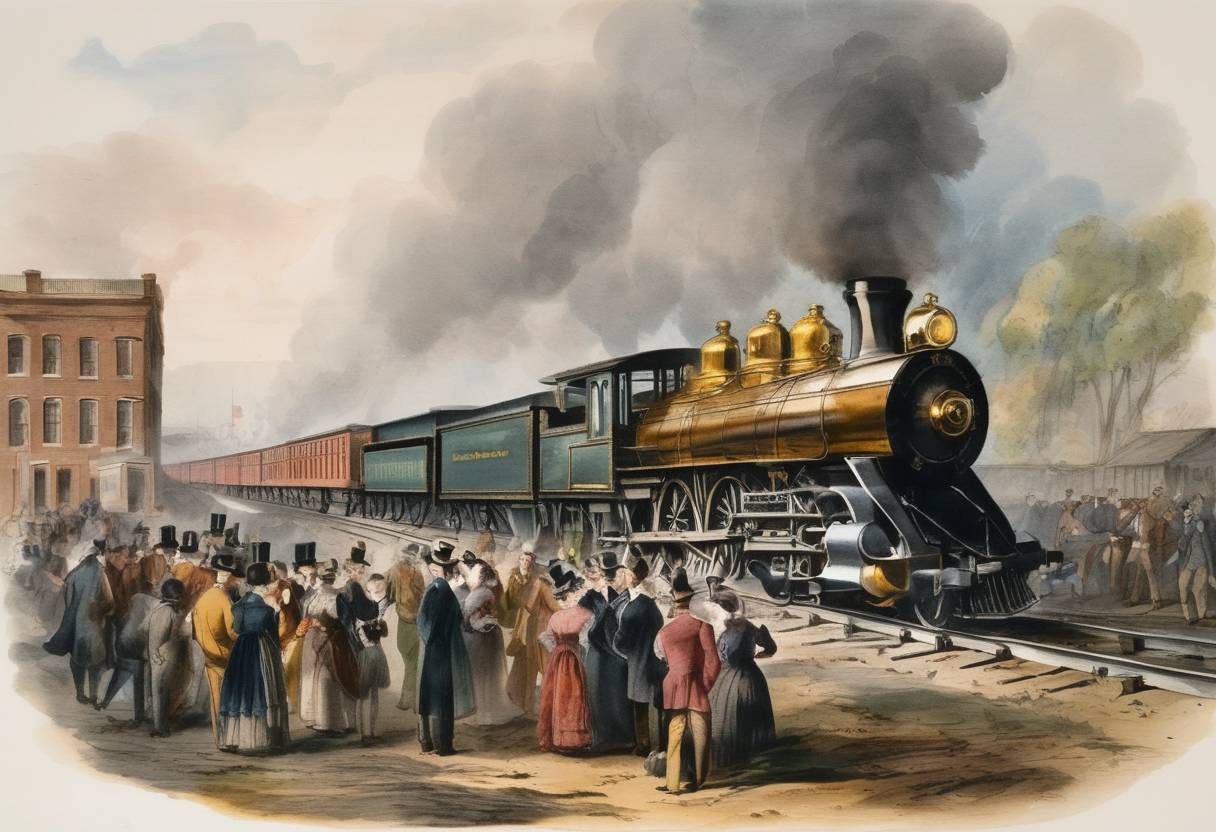
The first United States Railroad Convention was held on February 15, 1835, a pivotal event in the history of American transportation. This convention took place in Baltimore, Maryland, a city that was emerging as a focal point for early railroad development in the United States. The meeting marked a significant step towards the coordination and expansion of a national railroad network, which was crucial in transforming the country’s transportation infrastructure.
By the early 1830s, the notion of railroads had begun to capture the American imagination as an efficient means of overland transportation. The success of England’s Liverpool and Manchester Railway inspired American investors and engineers. The first commercial railroad in the United States, the Baltimore and Ohio Railroad (B&O), which started operations in 1828, had demonstrated the potential of rail transportation. There was a pressing need to standardize operations, share knowledge, and coordinate efforts among the scattered and unconnected railroads across states.
During the convention, delegates from numerous states gathered to discuss the future of rail transport in the nation. Representation included not only those with interests directly tied to the existing rail companies but also politicians, engineers, and business leaders eager to capitalize on the economic and logistical opportunities railroads presented.
The convention’s agenda focused on several key topics:
The convention spurred immediate interest in railroad construction and expansion among the states. Although it did not result in the creation of a national standard or direct policy changes immediately, it laid the groundwork for future cooperation and was a catalyst for spreading the enthusiasm for railroads across America.
Within decades, the United States saw a massive expansion of its railroad network, which played a crucial role in the economic development during the industrial revolution. Railroads facilitated westward expansion, allowed for the quicker movement of goods and people, and were instrumental in uniting the sprawling American landscape into a cohesive economic unit.
The first U.S. Railroad Convention represents an important moment in the history of transportation. It demonstrated the need for collaborative approaches to technological advancement and infrastructure development, lessons that continue to hold relevance today.
Source: www.borail.org