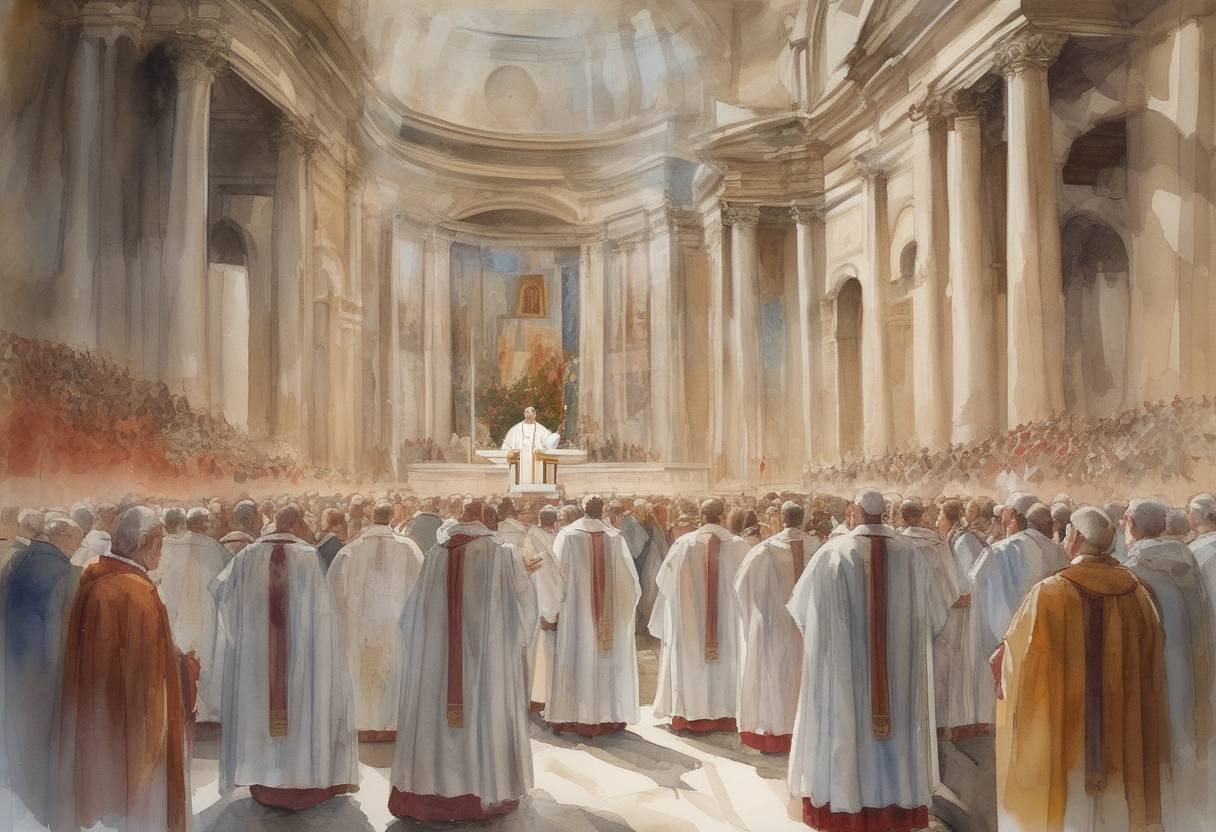
Pope Sylvester II and the Millennium Mass on December 31, 999
On December 31, 999, Pope Sylvester II, one of the most learned and influential pontiffs of the Middle Ages, celebrated a significant mass in Rome. This event marked the end of the first millennium and the beginning of the second, a momentous occasion that was imbued with both religious and cultural significance.
Context and Background
Pope Sylvester II
- Birth and Early Life: Born as Gerbert of Aurillac around 946 in the region of Auvergne, France, he was a scholar and teacher before becoming pope. Gerbert was renowned for his intellect and was a key figure in the revival of learning in Europe during the 10th century.
- Papacy: He ascended to the papacy in 999, becoming the first French pope. His papacy was marked by efforts to reform the church and promote education.
The Turn of the Millennium
- Medieval Perceptions: The approach of the year 1000 was a time of great anticipation and anxiety in medieval Europe. Many people believed that the end of the world might coincide with the end of the millennium, a belief rooted in apocalyptic interpretations of Christian doctrine.
- Cultural and Religious Significance: The transition from one millennium to the next was seen as a pivotal moment, prompting reflection on the past and hope for the future.
The Millennium Mass
- Location: The mass was held in Rome, the heart of Christendom, which added to its significance.
- Ceremony: As the spiritual leader of the Catholic Church, Pope Sylvester II led the mass, which was likely attended by a large congregation, including clergy, nobility, and laypeople.
- Symbolism: The mass symbolized continuity and renewal, emphasizing the church’s enduring presence and its role in guiding the faithful into the new millennium.
Aftermath and Significance
- Reforms and Influence: Pope Sylvester II continued to advocate for church reform and the promotion of learning throughout his papacy. His efforts laid the groundwork for the intellectual revival that would characterize the High Middle Ages.
- Legacy: Despite the fears surrounding the millennium, the transition was peaceful, and the church’s role in society remained strong. Sylvester II’s legacy as a scholar-pope who bridged the worlds of faith and reason endured long after his death in 1003.
In summary, the mass celebrated by Pope Sylvester II on December 31, 999, was a significant event that marked the transition from one millennium to the next. It reflected the hopes and fears of the time and underscored the church’s central role in medieval society.