The Spanish Armada Sets Sail - May 28, 1588
1588 · Lisbon, Portugal
The Spanish Armada, a fleet of 130 ships, sets sail from Lisbon, Portugal, under the command of the Duke of Medina Sidonia, with the intention of invading England.
July 31, 1588
The Spanish Armada was sighted off the coast of England, leading to the Battle of Gravelines, where the English navy defeated the Spanish fleet.
Gravelines, France | Spanish Armada
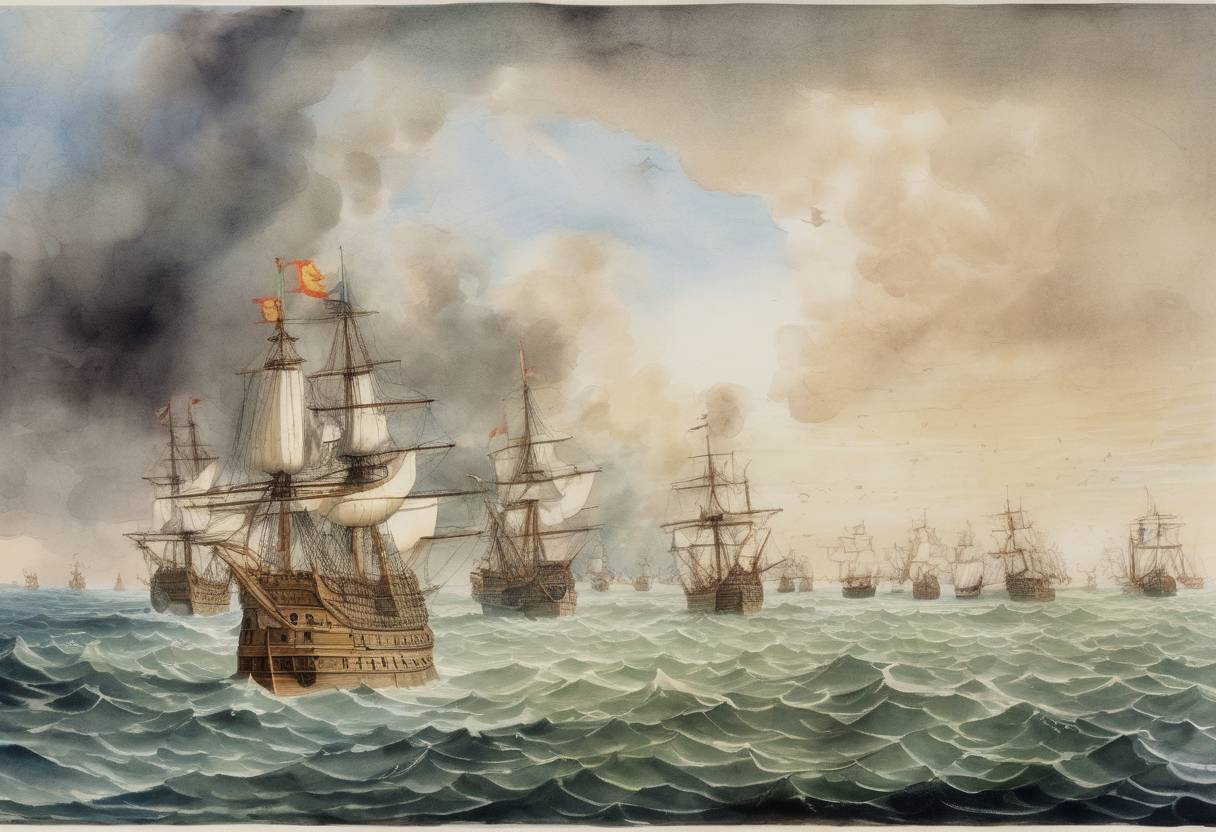
On July 31, 1588, a pivotal moment in naval history unfolded as the Spanish Armada, a formidable fleet sent by King Philip II of Spain, was sighted off the coast of England. This event set the stage for the Battle of Gravelines, a decisive confrontation in the Anglo-Spanish War (1585–1604).
The Spanish Armada was part of Philip II’s grand strategy to overthrow Queen Elizabeth I of England and re-establish Catholicism in England. The conflict was fueled by religious tensions, English support for the Dutch Revolt against Spanish rule, and English privateering against Spanish ships.
The Armada, consisting of about 130 ships and 30,000 men, was commanded by the Duke of Medina Sidonia. Its mission was to sail to the Netherlands, join forces with the Spanish army led by the Duke of Parma, and facilitate an invasion of England.
The English fleet, commanded by Lord Charles Howard and Sir Francis Drake, had been preparing for the Spanish approach. On July 31, 1588, the English navy engaged the Spanish Armada near Gravelines, off the coast of Flanders.
Tactics and Technology: The English ships were smaller, faster, and more maneuverable than the Spanish galleons. They employed innovative tactics, including the use of long-range artillery, which allowed them to inflict damage from a distance.
Fire Ships: On the night of July 28, the English sent fire ships into the anchored Spanish fleet, causing panic and disarray. This forced the Spanish ships to cut their anchors and scatter, setting the stage for the battle at Gravelines.
Battle Dynamics: The battle on July 31 was fierce and chaotic. The English capitalized on their superior maneuverability and firepower, maintaining a relentless assault on the Spanish ships.
The Battle of Gravelines was a turning point. The Spanish Armada, unable to regroup effectively, was forced to retreat northward. The fleet attempted to return to Spain by sailing around Scotland and Ireland, but severe storms wreaked havoc, resulting in the loss of many ships and lives.
English Naval Dominance: The defeat of the Spanish Armada marked the rise of England as a dominant naval power, laying the groundwork for its future maritime empire.
Impact on Spain: The failure of the Armada was a significant blow to Spanish prestige and military power, although Spain remained a major European power for some time.
Religious and Political Implications: The victory bolstered Protestant morale across Europe and solidified Elizabeth I’s reign, reinforcing the Protestant Reformation’s influence in England.
In summary, the sighting of the Spanish Armada on July 31, 1588, and the subsequent Battle of Gravelines were crucial events that reshaped the balance of power in Europe and had lasting impacts on the course of history.
Source: www.britannica.com