Inaugural Session of the International Criminal Court (ICC)
2003 · The Hague, Netherlands
The International Criminal Court held its inaugural session in The Hague, Netherlands, marking a significant step in international law and justice.
July 29, 1899
The First Hague Convention, which sought to establish codified laws of war and war crimes, was signed by major world powers.
The Hague, Netherlands | International community
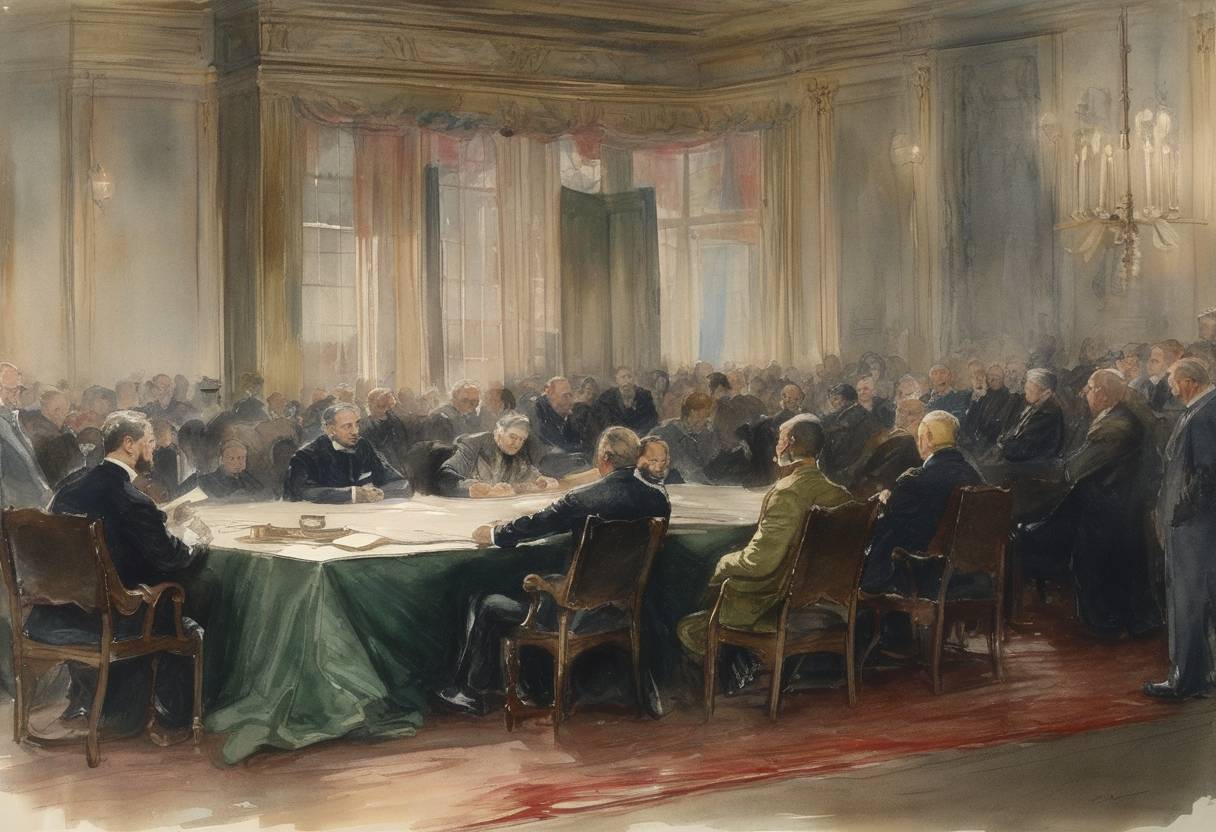
On July 29, 1899, representatives from 26 world powers gathered to sign the First Hague Convention, a groundbreaking international treaty aimed at establishing codes of conduct during war, which marked a significant move towards the modernization of international law. The convention was a result of the first International Peace Conference held in The Hague, Netherlands, convened on the initiative of Czar Nicholas II of Russia.
The late 19th century was a period marked by rapid advancements in military technology and heightened tensions among imperial powers. The devastating consequences of modern warfare became increasingly apparent, prompting the need for legal frameworks to regulate armed conflict. The Hague Convention sought to:
Regulations on Hostilities:
Forbidden Practices:
The signing of the First Hague Convention established fundamental precedents for the laws of war, laying the groundwork for future international humanitarian laws, including the Geneva Conventions. While not all initial provisions were adopted universally, the convention was significant as it symbolized a collective acknowledgment among nations of the need for a moral and legal framework in warfare.
The success of the 1899 conference led to a follow-up convention in 1907, which sought to expand and refine the principles laid out in 1899. Though compliance varied and enforcement mechanisms were limited, the early Hague Conventions represent a critical step towards developing international law focused on the protection of participants and non-combatants in times of conflict.
These developments demonstrated an ongoing commitment by the international community to reduce the barbarity of war and influenced the evolution of the legal instruments governing international conflicts throughout the 20th century and beyond.
Source: www.britannica.com